Dancing mania: why would people dance themselves to death?
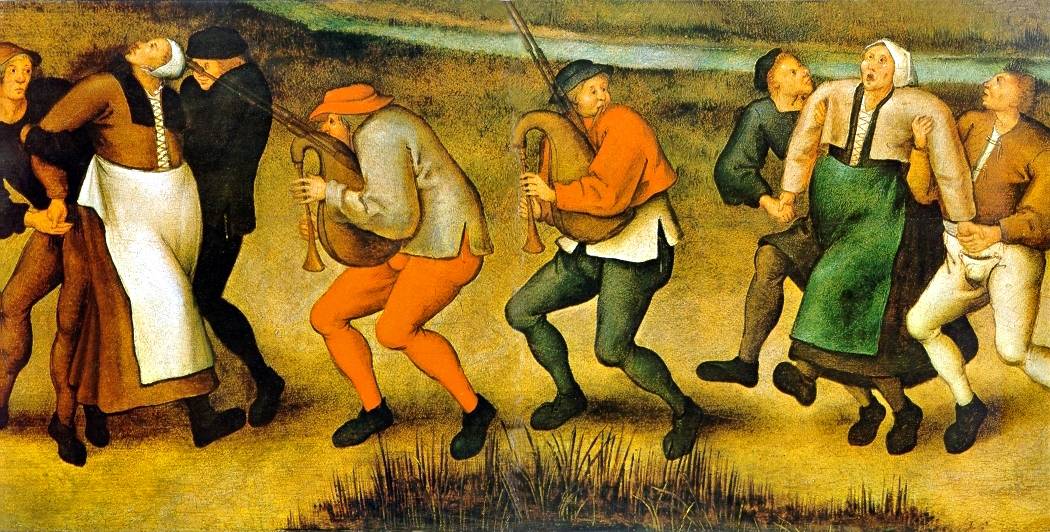
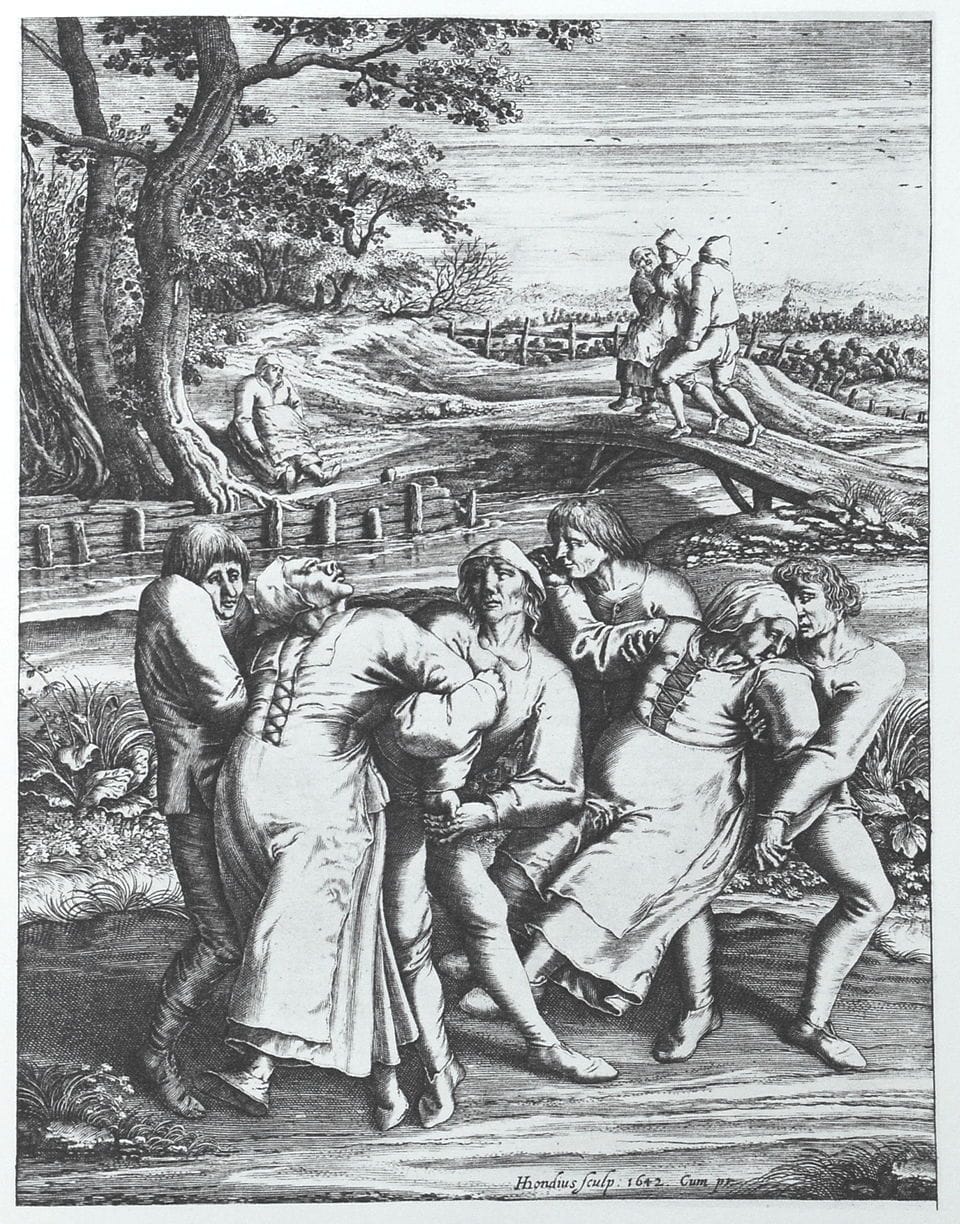
In the Bruegel painting above, the two women cannot stop dancing and they are being led to the church nearby because, possibly, they have been possessed by the Devil or cursed by a saint and only Saint John the Baptist or Saint Vitus can help. The musicians are there because it was thought that music could help too, along with quarantines and exorcisms.
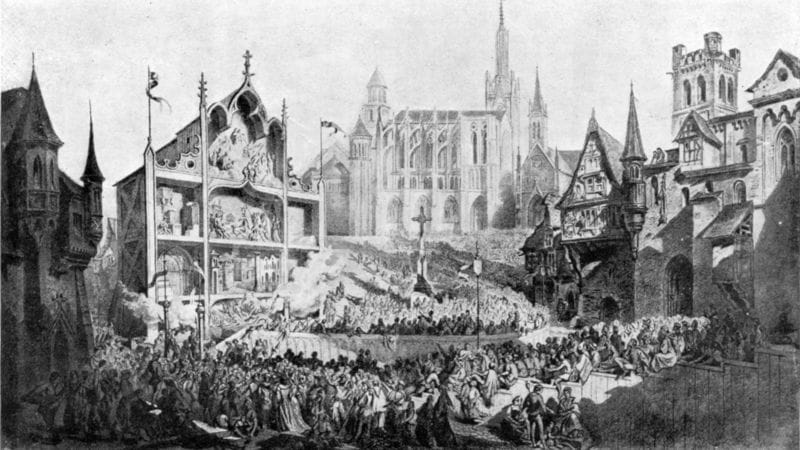
This was a thing in Europe from the 14th to the 17th century. Dozens, hundreds or even tens of thousands would enter a state of delirium and literally dance till some of them dropped dead. It was focused mainly on Germany, the Netherlands, and Belgium - along the Rhine basically - with smaller outbreaks in, for example, southern Italy known as Tarantism. The most famous incident was in Strasbourg in 1518 and it lasted for days. Nobody really knows why but, if I had to pick from the historians' explanations, I can accept that humans can enter a self-induced trance-like state, but I'm also inclined to think this was inspired by religious fervor. It was the heyday of the touring troupes of Mummers and the Mystery and Miracle Plays and, as Europe careened toward the Reformation, religious-inspired dancing mania relieved dull lives and spread virally. Below is a 19th century interpretation of a large scale Mystery Play in Metz in medieval times.
Explanations these days for "dancing mania" or St. Vitus Dance or Saint John's Dance or "choreomania" tend to focus on the religious and the psychological rather than the medical and pathological. This was, after all, the time of witchcraft trials and visionary Catholic saints and stigmata, as well as the Black Death which caused a horrendous number of deaths. Poor harvests, wars and the mini-Ice Age didn't help and with travelers on the road bringing bad tidings, ecstatic dancing was a way to deal with the distress and the suffering (c.f. Joan of Arc's visions). It's why I chose the painting below to capture this apocalyptic mood: Bruegel's The Triumph of Death. It's not a stretch to imagine that many villagers and townspeople became afraid of everything and that this form of ecstatic expression was related to the Danse Macabre or Dance of Death from the same period (also c.f. Pied Piper of Hamelin).
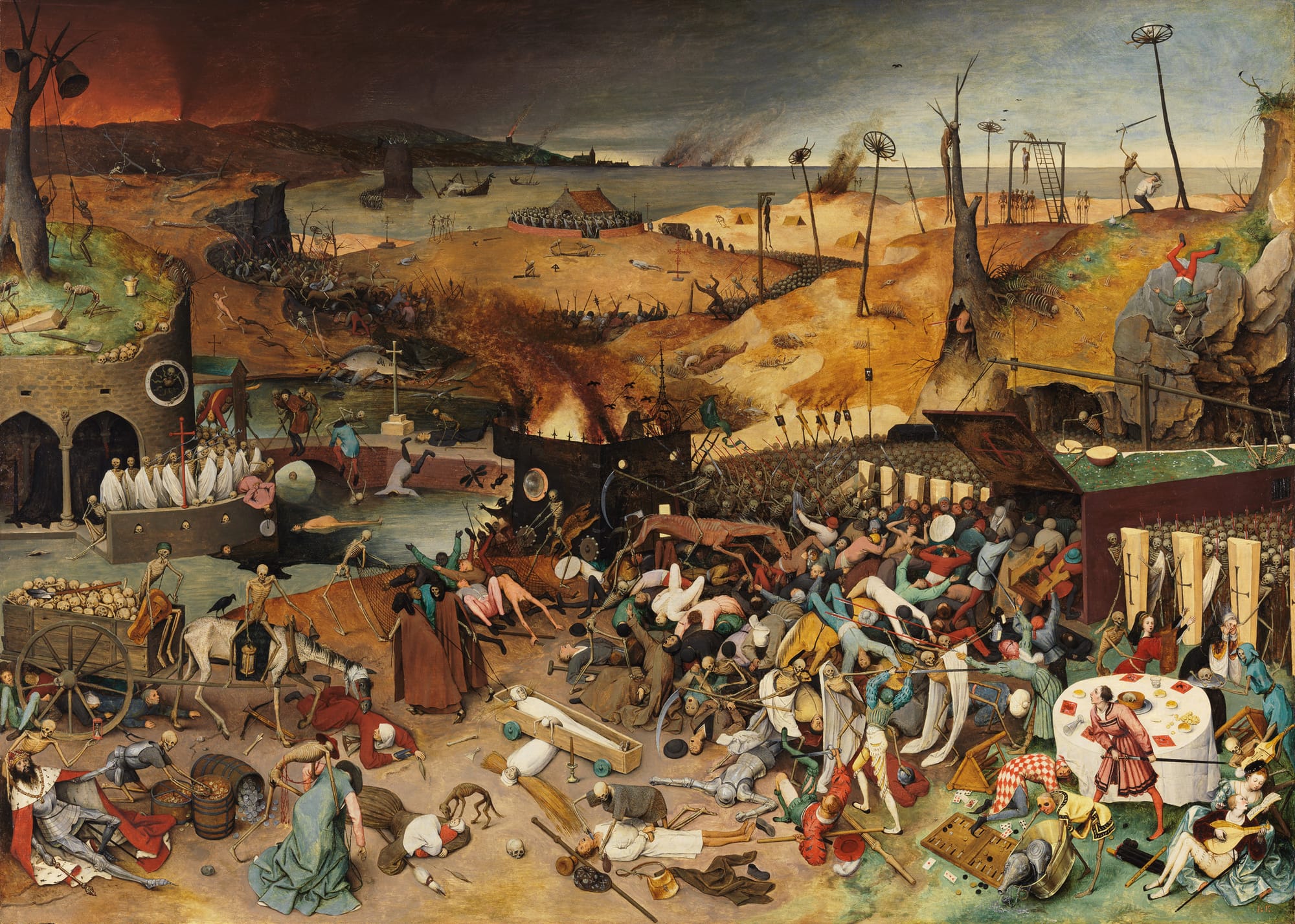
Yet, the language used by academics and journalists today sounds medical and pathological anyway, hence the use of the words plague, mania, mass psychosis, mass hysteria, psychogenic illness, and so on. The theories about ergot poisoning, epilepsy and spider bites are now less widely accepted.
This is not unlike today, where drug-fueled raves promote a joyful, ecstatic sense of belonging and unity, being a part of something bigger. Then there's the negative pole: social media and the dark web promote cults and conspiracy theories which resemble being in a trance.
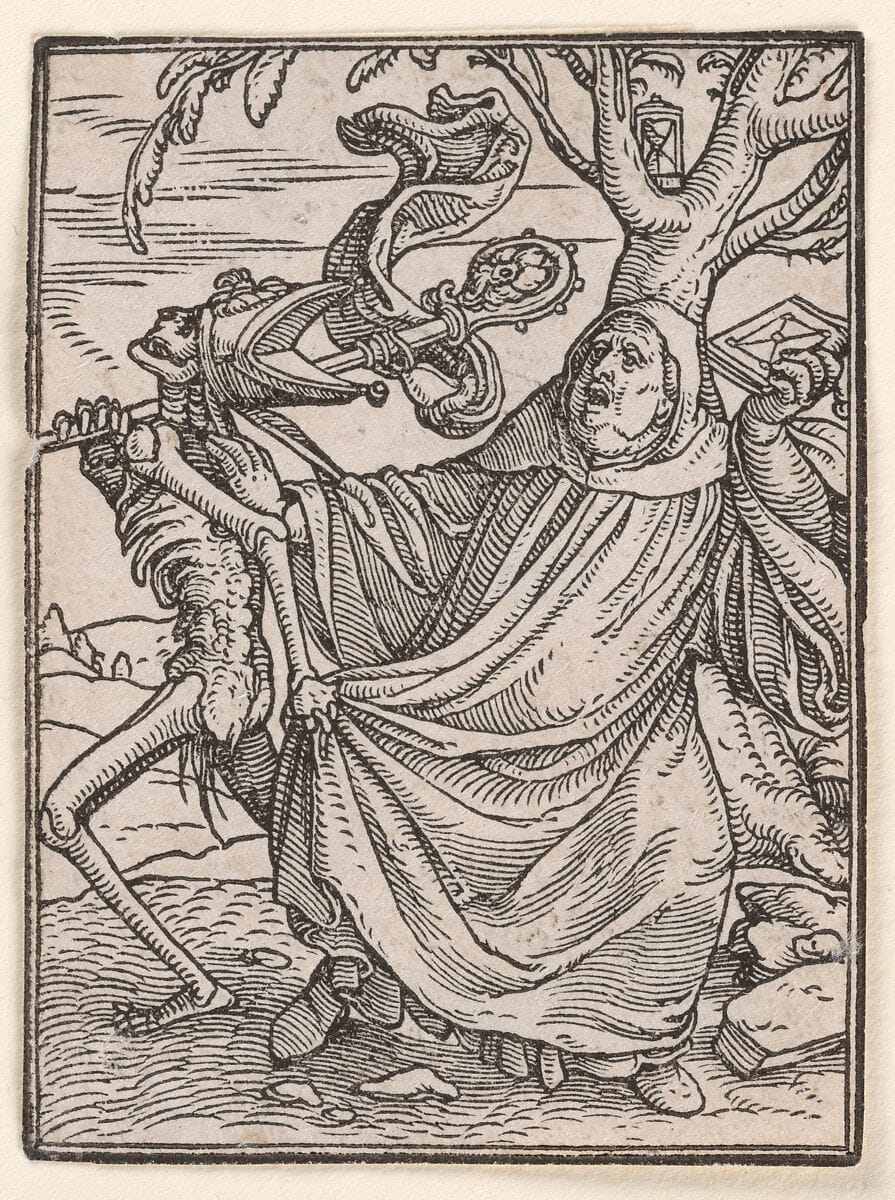
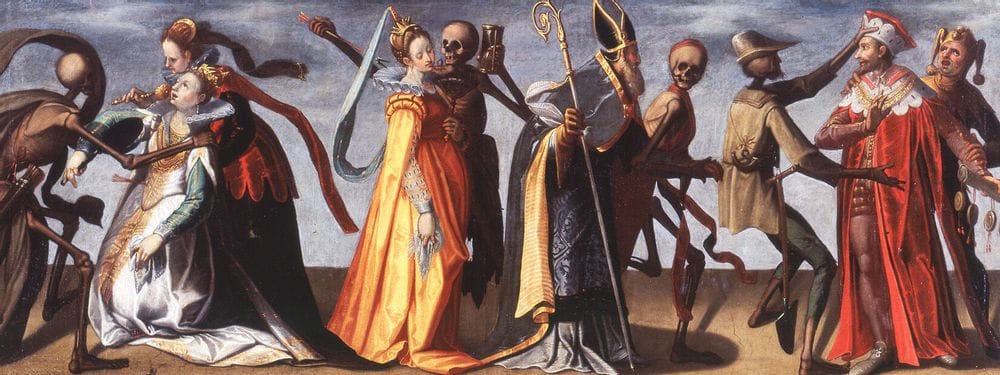
In associating this dancing mania with Danse Macabre/Dance of Death, where the dying would be accompanied to their grave by ghastly figures, I've come to find Dancing Mania more interesting than the other terms, because it is about ordinary people and may even have had subversive intent if the dancers were pushing back against official messaging that we all must die. Images of Danse Macabre and Dance of Death were used in the service of the Catholic Church to show everyone - royal, clerical, military and merchant figures - that the Church was the sole authority in these spiritual matters - hence memento mori, vanitas, Ash Wednesday, and so on. But, maybe this provoked rage at the unfairness of it all. In Hans Holbein's subversive woodcuts, no one is spared, even children, and certainly not powerful clergy. This is partly why there was a Protestant Reformation:
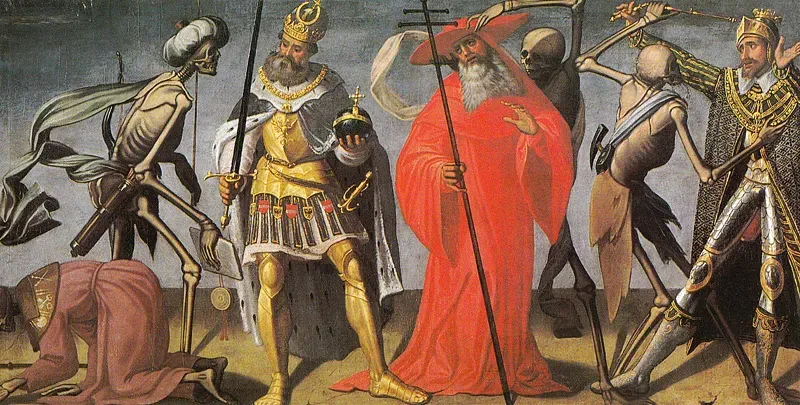
To illustrate the official view, below are two images from Jakob von Wyl in the local canton administration office (formerly the Ritterscher Palace) in Lucerne, which has seven pictures in all and 23 scenes, presenting various classes being confronted with death (it is not to be confused with the Dance of Death images in the historic covered Spreuer Bridge nearby):
In other words, I'm arguing that Dancing Mania was a populist reaction against conformity, like other mundus inversus (world upside down) traditions, like the Lord of Misrule, the Feast of Fools, Carnival and Mardi Gras, topsy-turvy and so on, all of which mostly annoyed the Church and secular rulers alike.
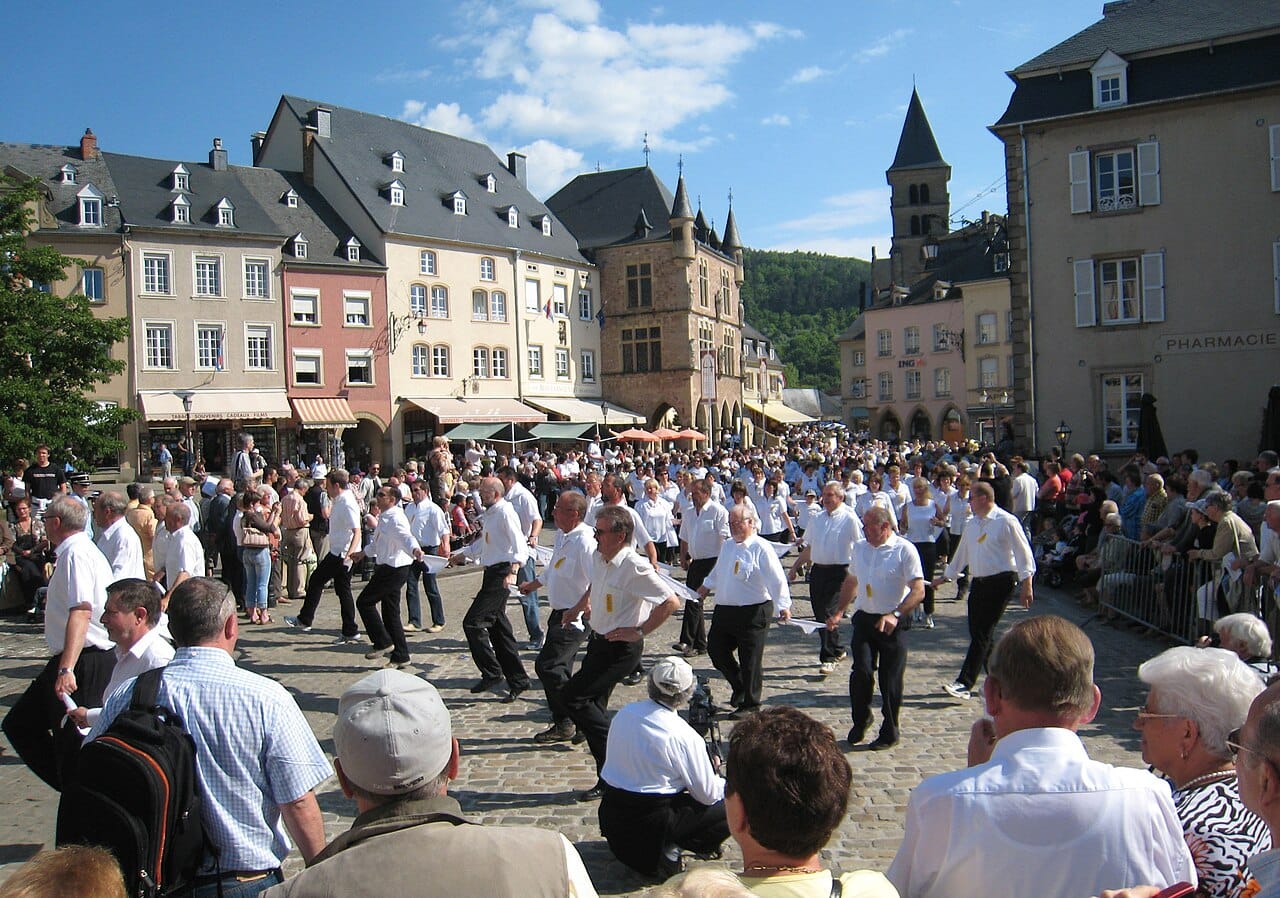
Dancing Mania hasn't popped up in a while, but there is still one town that keeps it alive as a tradition (and a draw for tourists). It's the Echternach Dancing Procession (Sprangprozessioùn) in Luxembourg and UNESCO lists it as a religious site in the Representative List of the Intangible Cultural Heritage of Humanity: