Horror: and the problem of expressing it...

When I think of how artists have tried to convey horror, I have come to accept that Picasso got it right with his giant masterpiece Guernica. I do admire the memento mori artists, and Bosch, Goya, and Edvard Munch, but Guernica was painted in a rage and that's what's missing in the work of most other artists.
It's why the photo below makes sense: Zelenskyy visiting the Reina Sofía last year to draw a parallel between German Nazis and Italian Fascists bombing a Basque Spanish town in 1937 and Russia's current bombing of Ukraine. As I post this, Israel and the U.S are doing the same thing to Iran, Gaza and Lebanon.
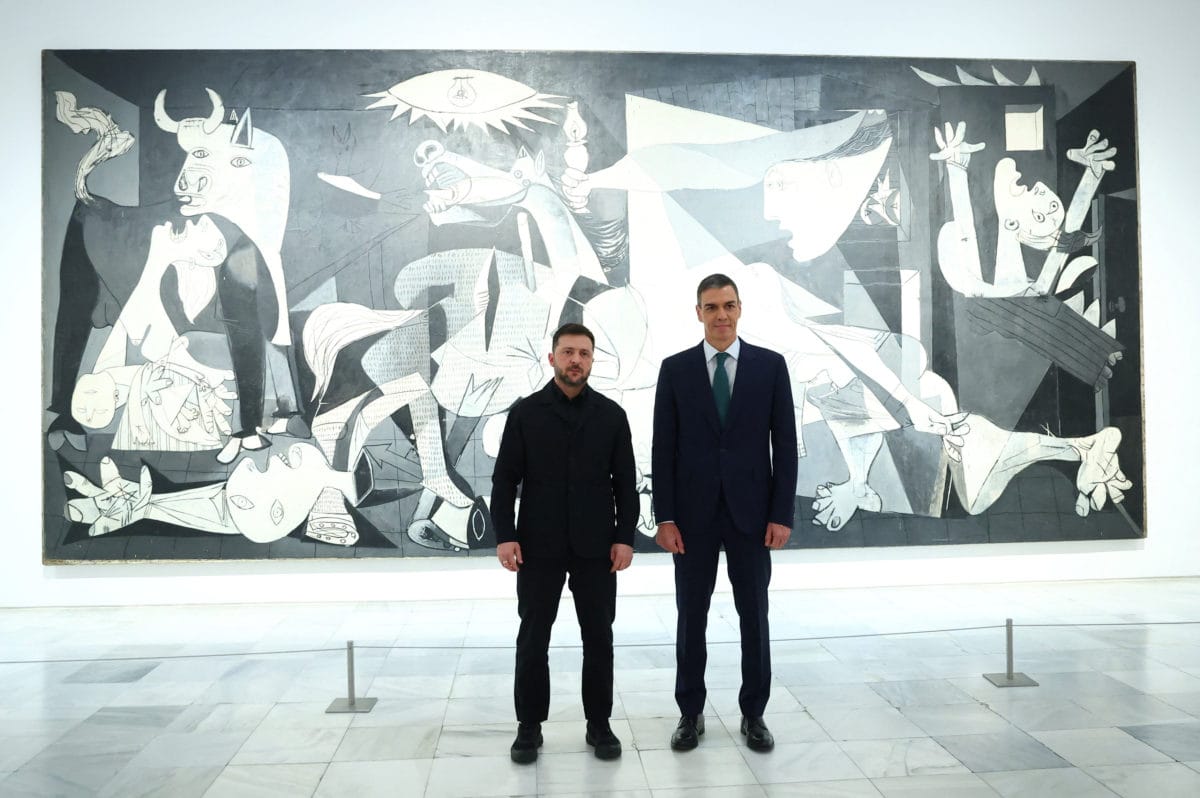
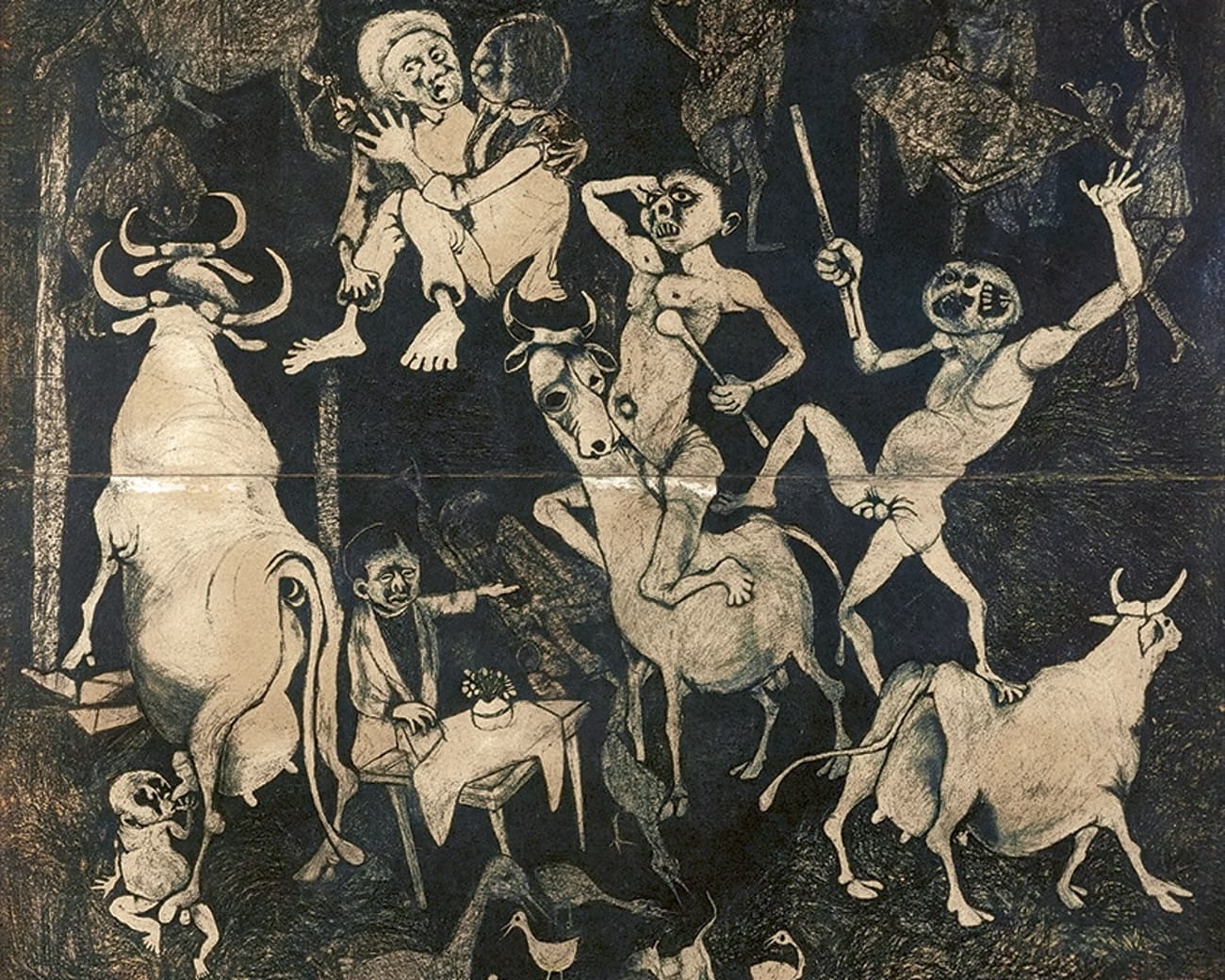
What Picasso has done here is an effective technique to be emulated. Below is a pencil and charcoal work by the South African artist Dumile Feni in 1967. It was a rage against Apartheid, which he almost lived to see vanquished - he died in 1991 after a life lived mostly in exile. It was exhibited this year on the wall opposite Picasso's Guernica.
This is why paintings, sculpture and photography get to the point quickly and are more effective in a way that literature and cinema are not. For me at least. I read Kafka, Hardy, Henry James, Faulkner, Orwell; I didn't enjoy them. They seemed manipulative and cliché and they took forever to get to the point. They reminded me of a line I once read that writers create prison bars of the mind. That resonated with me because that's what these writers were doing to their characters, and modern literature has never gotten out of that prison. In cinema, it was the same; I just don't want to sit through hours of oppression.

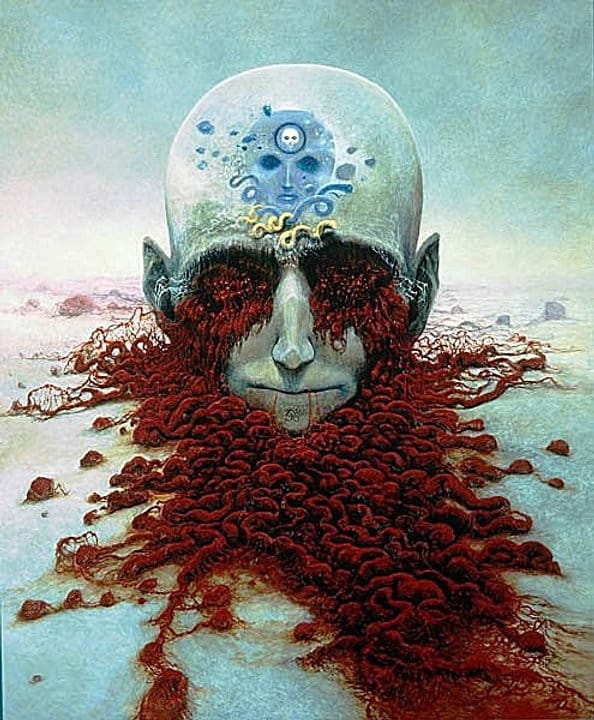
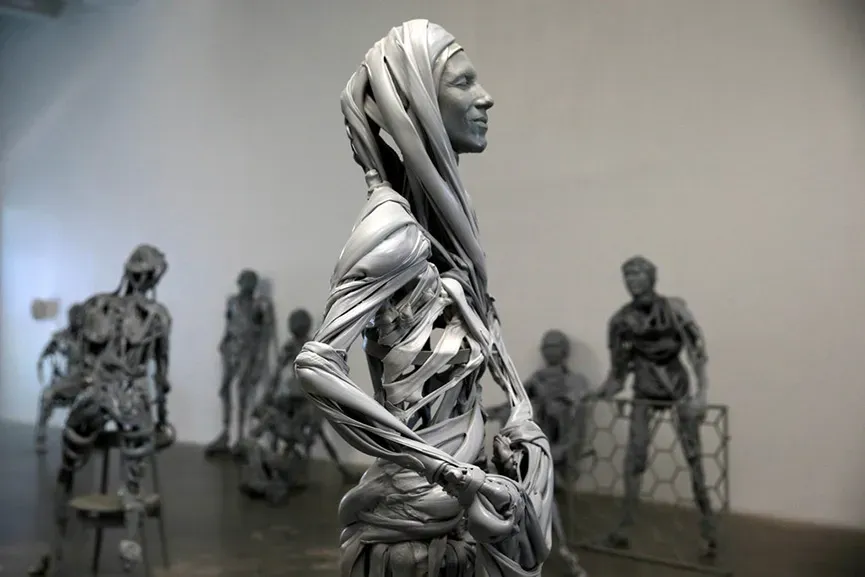
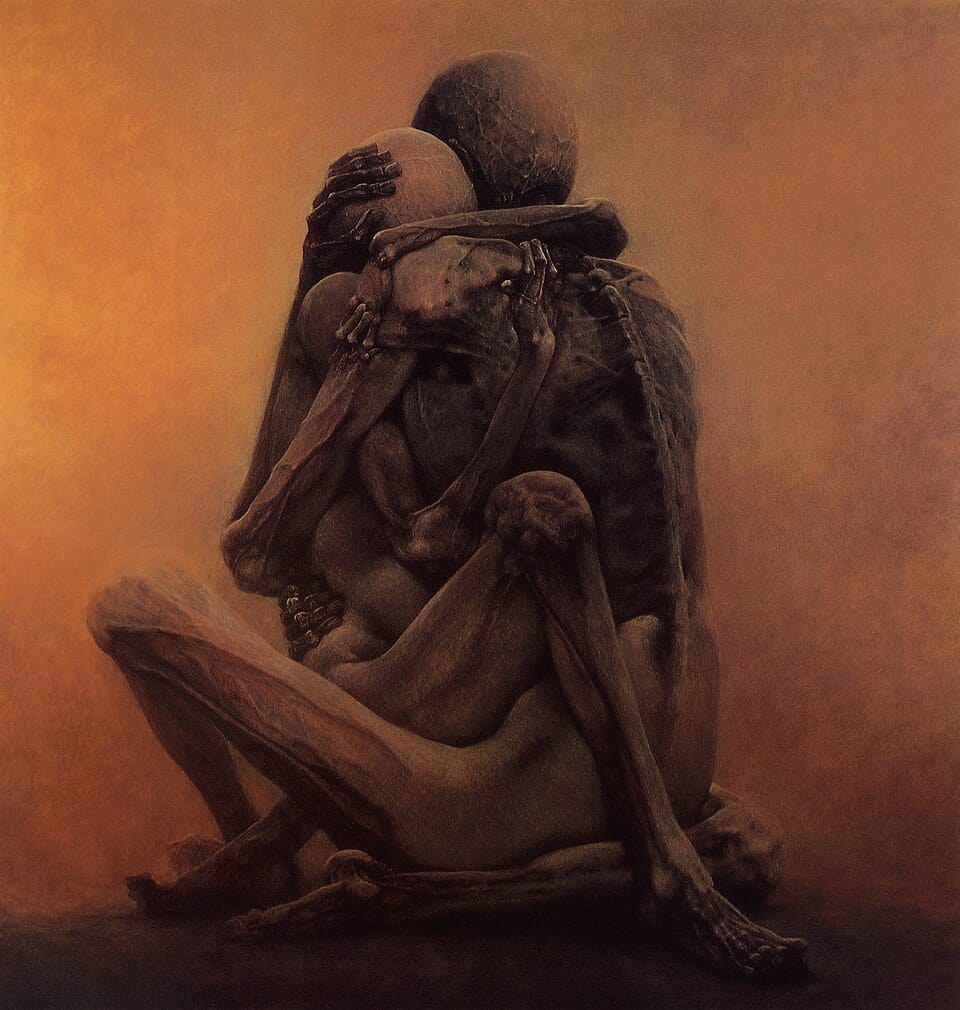
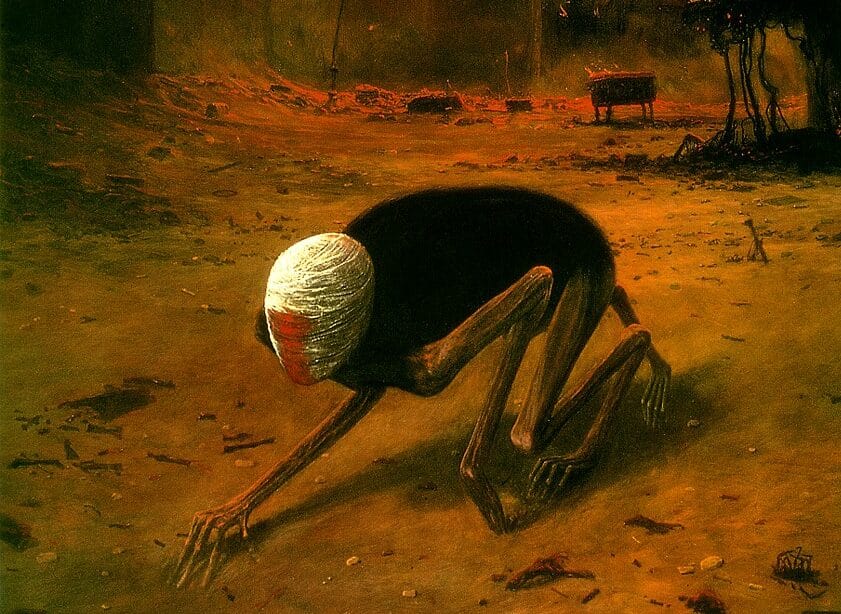
What about rage in newer art? In sculpture, H.R. Giger is effective, but his work seems more like dread than rage. I also find the work of Polish artists like the sculptor Paweł Althamer and the (late) painter Zdzisław Beksiński compelling. The image up top is from Althamer's The Neighbors and it seems designed to thrust the sad and ragged world of the homeless in our faces (which I approve of but many critics do not; they see his work as exploitative). The first image below - by Beksiński - may be untitled but for me it universalizes famine, which I think of as horrific because it's human-caused and deeply personal. Unfortunately, it turns these figures into victims and I think that's less effective than rage-inducing art. The painting below that better captures the horrors of genocide and nuclear war, by crossing into Surrealism. At least, that's my take on them.
I did enjoy the moment in Coppola's Apocalypse Now (1979), when Kurtz speaks about "the horror... the horror." But, to anyone even remotely familiar with post-colonialism, it's all so over-the-top melodramatic, even if it impressed me at the time... People behaving cruelly to others out of some misguided sense of their own superiority. Apocalypse Now was for me the movie that marked the end of the myth of "American greatness." It worked very hard to create a sense of dread, the uncanny and unease that mark great horror films. But, I've concluded that Hannah Arendt's "the banality of evil" only makes sense to people if they already have an awareness of just how disgusting imperialism, racism and war are, and if they have some empathy for the exploited and oppressed.