Imperia the courtesan: and pride of Konstanz

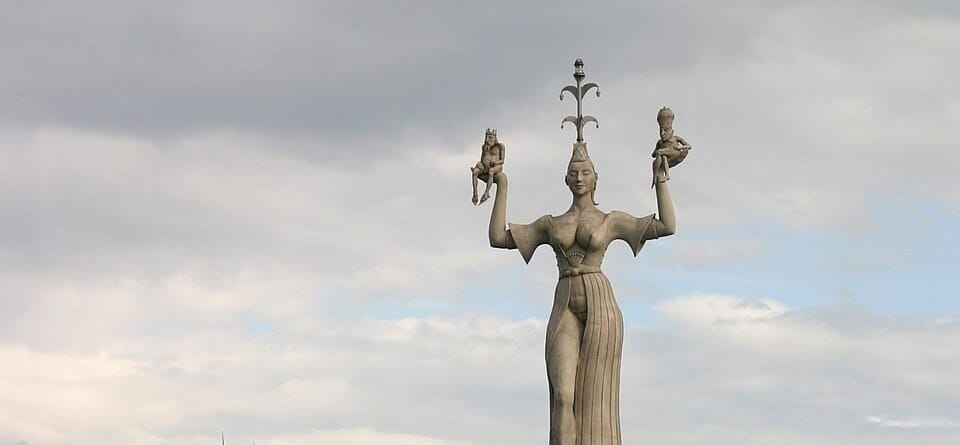
There is a giant statue of a Roman courtesan by the harbor in Konstanz, Germany, and it's rather fun. It was erected in 1993 by sculptor Peter Lenk and it rotates every four minutes. How did Imperia Cognati, a courtesan in late 15th century Rome, get her own statue in modern Germany? Imperia maintained an exclusive client list that included the wealthy banker Agostino Chigi, the painter Raphael and men of the Papal court, but she was, after all, a famous courtesan. Here she is closer up:
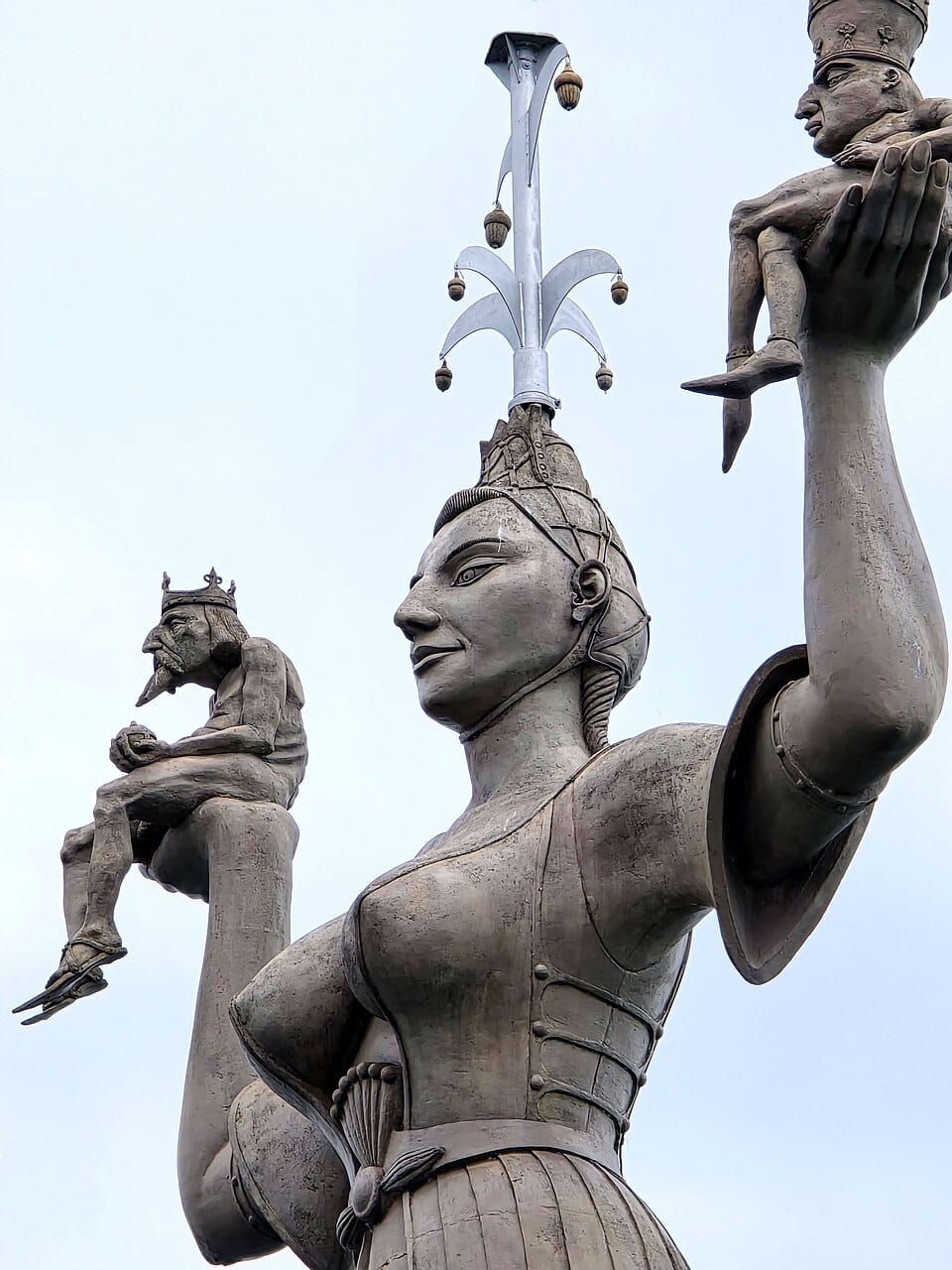
Konstanz celebrates her now because she's a great tourist attraction. Officially though, she is there to commemorate the Council of Constance, held between 1414 and 1418, which ended the Western Schism in the Catholic Church. On the statue are two small, rather measly figures and Lenk has commented they "are not the Pope and not the Emperor, but fools who have acquired the insignia of secular and spiritual power" so, yep, that's them. Imperia herself sports a jester's cap and bells.
Yet, Imperia was born well after the Council (she lived from 1486 to 1512), so why did Lenk (and Konstanz) choose a statue of her? Because she is the main character in an Honoré de Balzac story La Belle Impéria (1832), which is set at the Council of Constance and satirizes the Catholic Church and political leadership of the time. I assume that appealed to Lenk. As for Balzac, he was religious but he was ambivalent about the Church, and Imperia exploits what he saw as the moral hypocrisy of the clergy. He once wrote to a friend saying:
You know what my religion is. I am not orthodox, and I do not believe in the Roman Church. I think that if there is a scheme worthy of our kind it is that of human transformations causing the human being to advance toward unknown zones. That is the law of creations inferior to ourselves; it ought to be the law of superior creations. Swedenborgianism, which is only a repetition in the Christian sense of ancient ideas, is my religion, with the addition which I wish to make to it of the incomprehensibility of God.
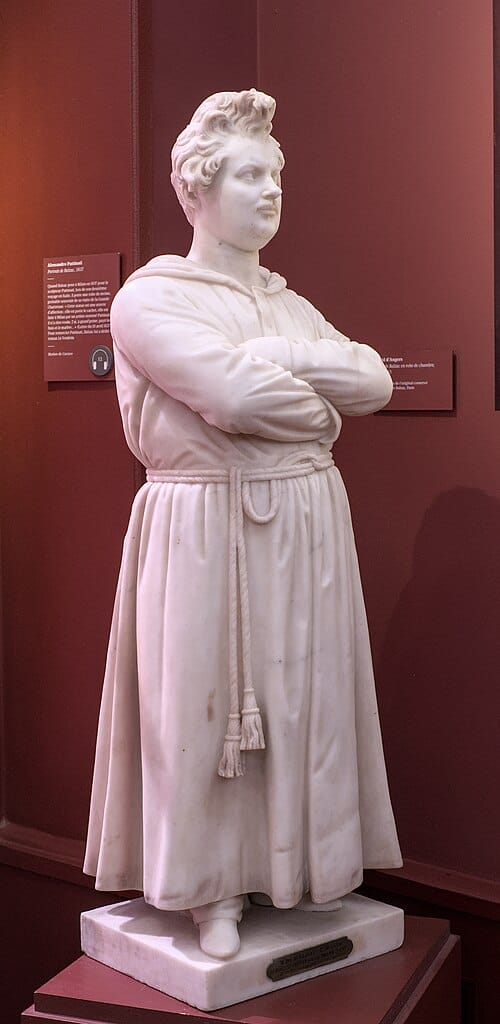
Keeping with this theme, there is a cool marble statue showing Balzac in a monk's robe because he was known to wear a white cashmere monk-like robe like this while working late into the night on his novels.
The story of Lenk's Imperia statue is interesting too. It wasn't erected without controversy, for obvious reasons. Konstanz is a fairly conservative town but the timing was good - this was when the Berlin Wall was falling and change was in the air. The drama is laid out here.