In praise of Colette: ageism in love is the last prejudice

A modern writer I have enjoyed reading is Colette, sometimes dubbed "the most beloved French writer of all time." Maybe it's because of her wit and that she loved cats and gardening and keeping fit. Or, maybe it's because she writes about people in a way I'm interested in, especially in her book The Pure and the Impure. She once wrote:
My strain of virility saved me from the danger which threatens the writer, elevated to a happy and tender parent, of becoming a mediocre author ...
So she has virilité and isn't afraid to use it. That word pops up a lot in Colette's writing, but can it also apply to women? She thought so. After all, there is no female equivalent. It doesn't mean she felt she was adopting a male attitude or point of view. Just because etymologically speaking (and historically) virility has been associated with men, and fertility associated with women, this is a sexist construction and words like "libido" and "sex drive" and "female desire" don't really deliver, do they?
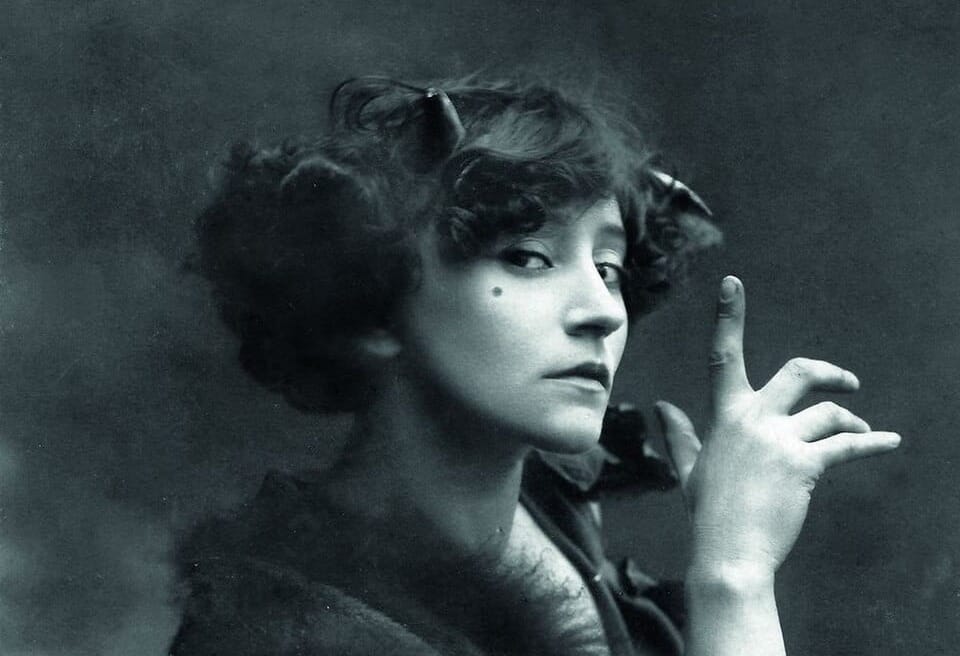
Colette obviously felt that virility has more to do with the life force that runs through us all, and is therefore a woman's right too, not just in writing but on stage and in the bedroom. I'm not saying anything new here, but Colette was on to something and it's disappointing to see only lesbian writers claiming virility; why not more cishet women? But, I also wonder, was Colette the greatest writer to understand and write about aging - and ageism?
In these days of diminishing birth rates and concerns about male fertility, fertility clinics argue strenuously that there is no correlation between fertility and virility. Their reason: the foolish men who think their virility confirms their fertility. But who cares about them, or the men who praise "masculine energy"?
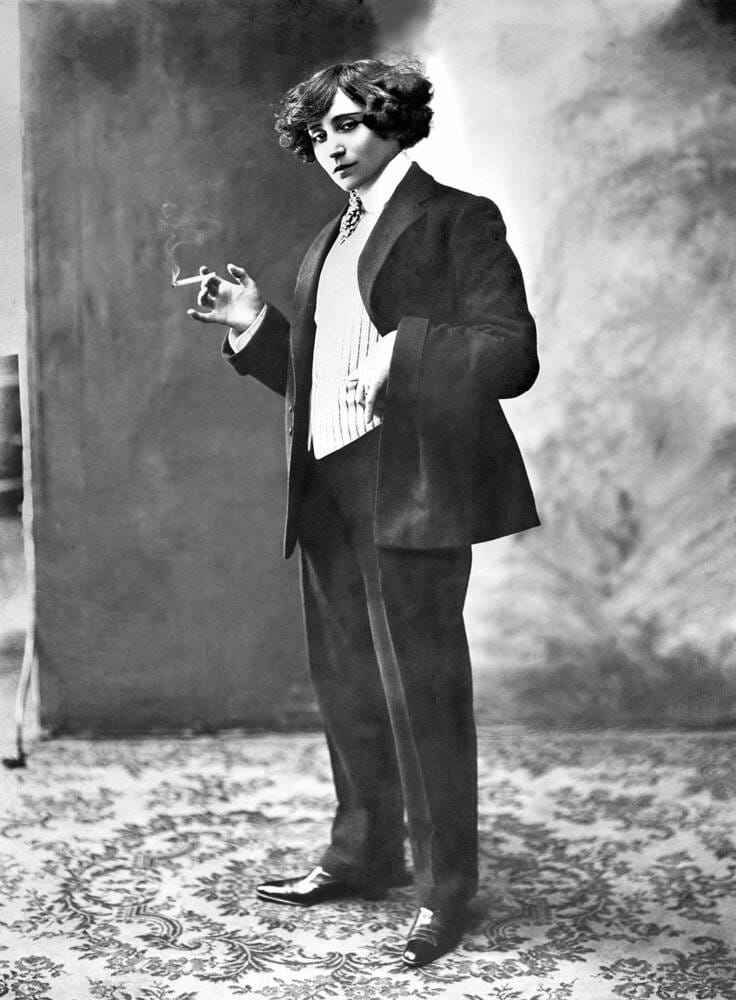
What about female virility? To go back a bit, Colette's namesake, Saint Colette of Corbie, a 15th-century French abbess and reformer of the Poor Clares, urged her nuns to live viriliter, which in this context meant "like a man." Colette embraced this but for different reasons, not to write or dress "like a man," but rather to be wise and independent, which meant being able to make love with, and be in love with, whomever she pleased, where nudity was expressive, not shameful, and where she could write about it freely. Colette was rewarded for this, with the Legion of Honor in 1920! I'm amazed her writing evaded the censors; conservative watchdogs felt deeply threatened by her.
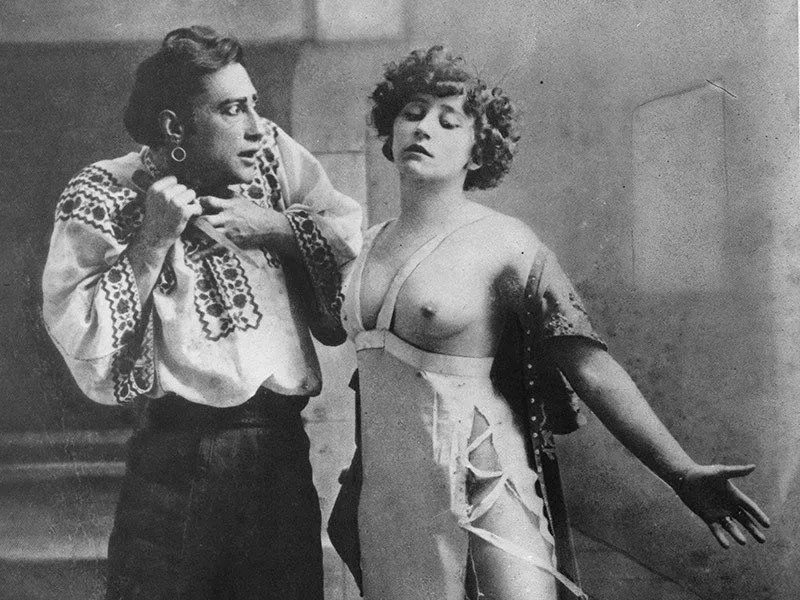
In the first phase of her life, she wrote the successful Claudine novels (Claudine at School was published in 1900). She was already 27. Lesbian kisses and nudity and the age difference between lovers were among the transgressive themes of the day, so her novels tapped into this (c.f. my chapter Life as Opera). It was followed by her stage work as a mime - look at this pose above, in her popular stage show The Chair (The Flesh), in 1906. Yes, many were shocked, because theater work was practically prostitution in some eyes, but each sensation or scandal was quickly replaced by the next one (and arrests and court cases followed). The following year, Colette's performance at the Moulin Rouge with her then-lover, Mathilde de Morny, in Rêve d'Égypte closed after only one night because of a controversial kiss. That relationship ended in 1912 when she married again. It's worth reading her novel La Vagabonde (1910) for more on this period, as well as Dialogues de bêtes (1904-) which made her famous. Colette, by now, was widely admired.
Then World War I crashed upon Europe and Colette had to adapt. She worked as a night nurse in a military hospital and joined her new husband Henry de Jouvenel at Verdun for three months (they had married in 1912), served as a war correspondent in Italy, and managed a hospital on the estate of her husband. All through these years she wrote newspaper articles (crime, fashion, domestic abuse, gardening...).

Colette's middle phase comes after this, with Chéri (1920), Le Blé en herbe - aka The Ripening Seed (1923) and The End of Chéri (1926), often acclaimed as her best novels. They are works of nostalgia really - and they are about aging. She was in her late 40's and early 50's by then and Chéri is set around 1910, before the War blew away 19th century illusions.
In Chéri, there is a significant age difference between Chéri and the courtesan Léa, who may well have been based partly on La Belle Otero, a famous courtesan of extraordinary virilité. Léa comes across as a strong woman who is only too aware of growing old; Chéri and his "impudence and boyishness" doesn't fare so well. Colette would later write: "Youth is not the age to seduce, it's the age to be seduced." Which she did - around the time the book was being published, she began an affair with her step-son, Bertrand - she was 47 and he was 16. There was also a large age gap between her and some of her other male lovers - like her third and last husband, Maurice Goudeket, who was 16 years younger. Again, the fascination with age and virilité.
Ageism in love is just the last prejudice, isn't it...
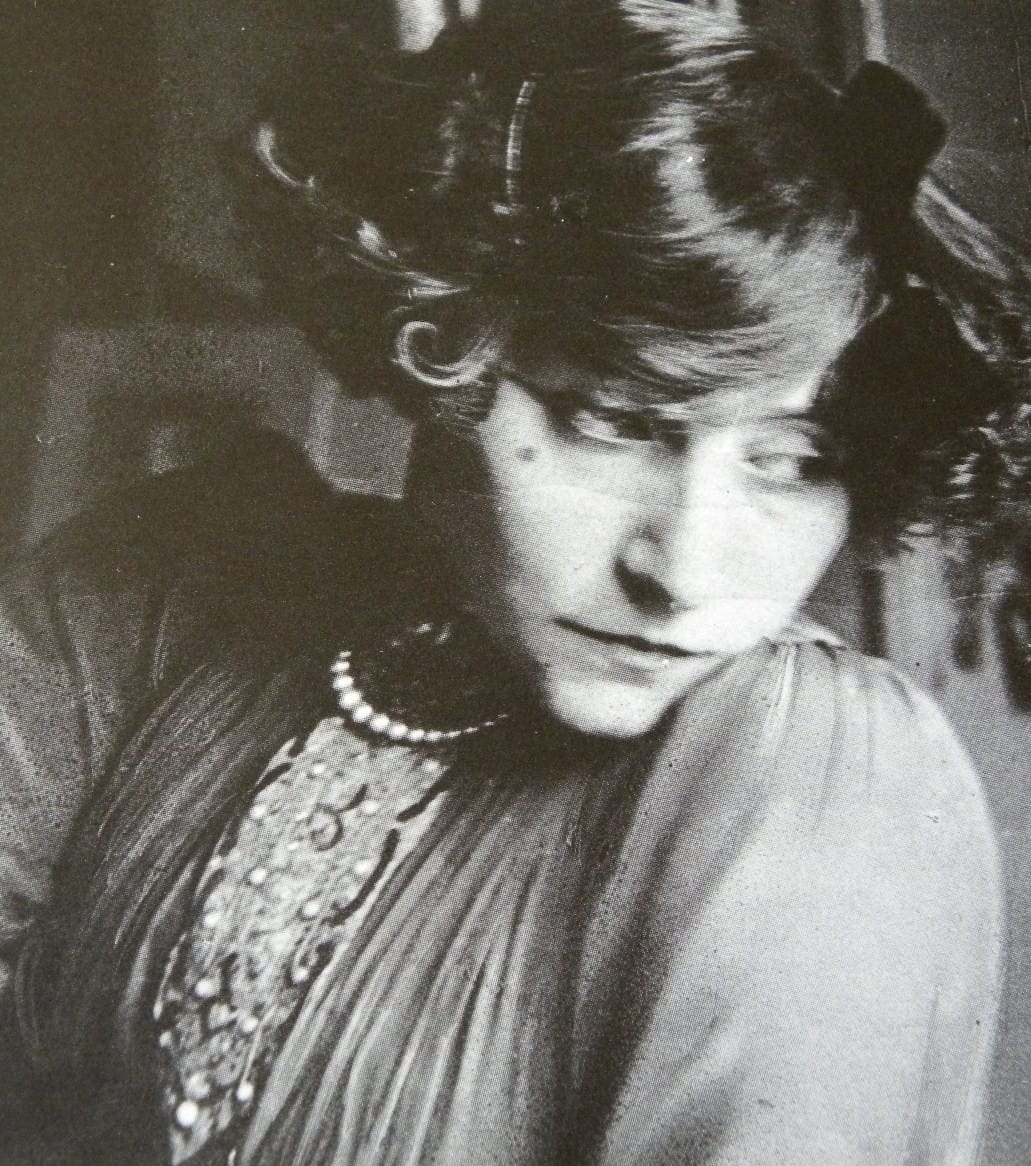
If there was a third phase, it was when Colette reflected on these earlier years, and this for me is when she produced her best writing - "memoir-as-fiction" as one critic puts it. She was in her Fifties and coming to terms with it. It includes La Naissance du jour (Break of Day, 1928), which she wrote in St. Tropez and Le Pur et l'Impur (The Pure and the Impure, 1932), which she wrote in Paris, the year before she crossed 60. In the former book she addresses menopause and celibacy, seeing them as a form of liberation. Virilité may no longer be physical, but it persists in her writing.
In the latter book, about her early years in Paris' demi-monde, every sentence sparkles - she muses on how an older woman can fake orgasms with her much younger lover ("a weak and sensitive boy") to give him confidence, and there is gentle derision for - well - most other people. Certainly the vain men who fancy themselves as "voluptuaries," the lesbians of "vanished charm," and the sad, domesticated women with their "resignation, secretly enjoying abnegation, needlework, housework, and sky-blue satin bedspreads." And she could write this exquisite nugget, about gay men:
They allowed me to share with them their sudden outbursts of gaiety, so shrill and revealing. They appreciated my silence, for I was faithful to their concept of me as a nice piece of furniture and I listened to them as if I were an expert. They got used to me, without ever allowing me access to a real affection.
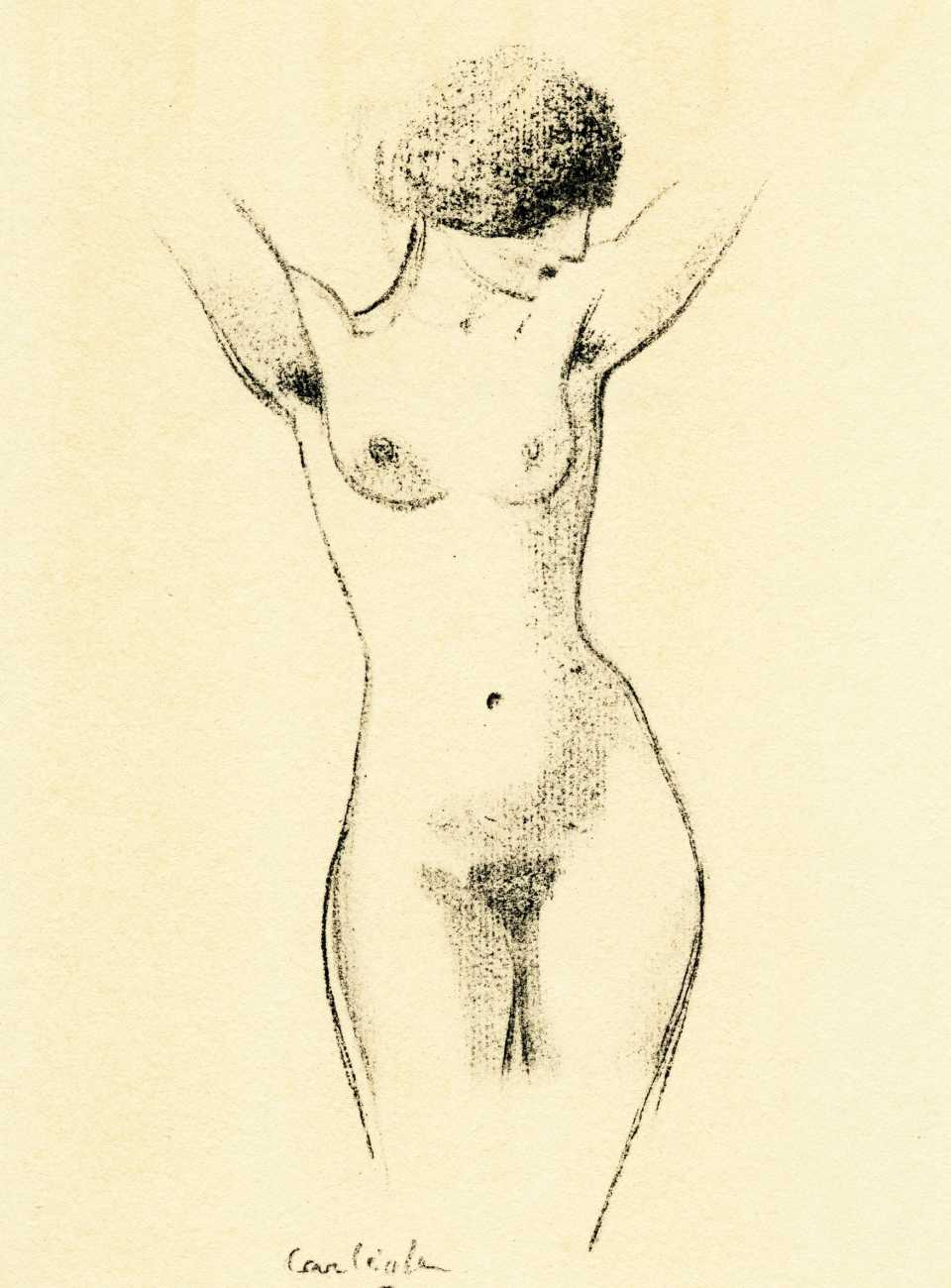
Her memoirs (My Apprenticeships) appeared in 1936 and in it, among other things, she is dismissive of her first husband, recently dead. She also wrote about nudity in depth in 1938-1939 (published as a limited-edition book Nudité in 1943) - frank discussions about the beauty of the human body, especially the female body, as her own body began to betray her.
Which all sounds very complimentary but is there a caveat? Biographers grapple with her bisexuality, her opinions on feminism and motherhood (uncomplimentary), how she treated her mother and her lovers and her husbands (badly), the way she treated her daughter (it's a long story), and whether she embroidered the truth (which is rather a strange criticism for a writer).
I'm more interested in what she had to say about how to live life and age gracefully. Most of her books were - like those of Virginia Woolf, Anaïs Nin and George Sand - somewhat autobiographical. This made these writers seem a bit dangerous to others who knew them. Some see her books as a form of confession; I disagree. I see it more as her literary quest for that life force, the virilité that comes with the young, both male and female. It's vital to sustain it as we age - "Everything that astonished me when I was young astonishes me even more today."
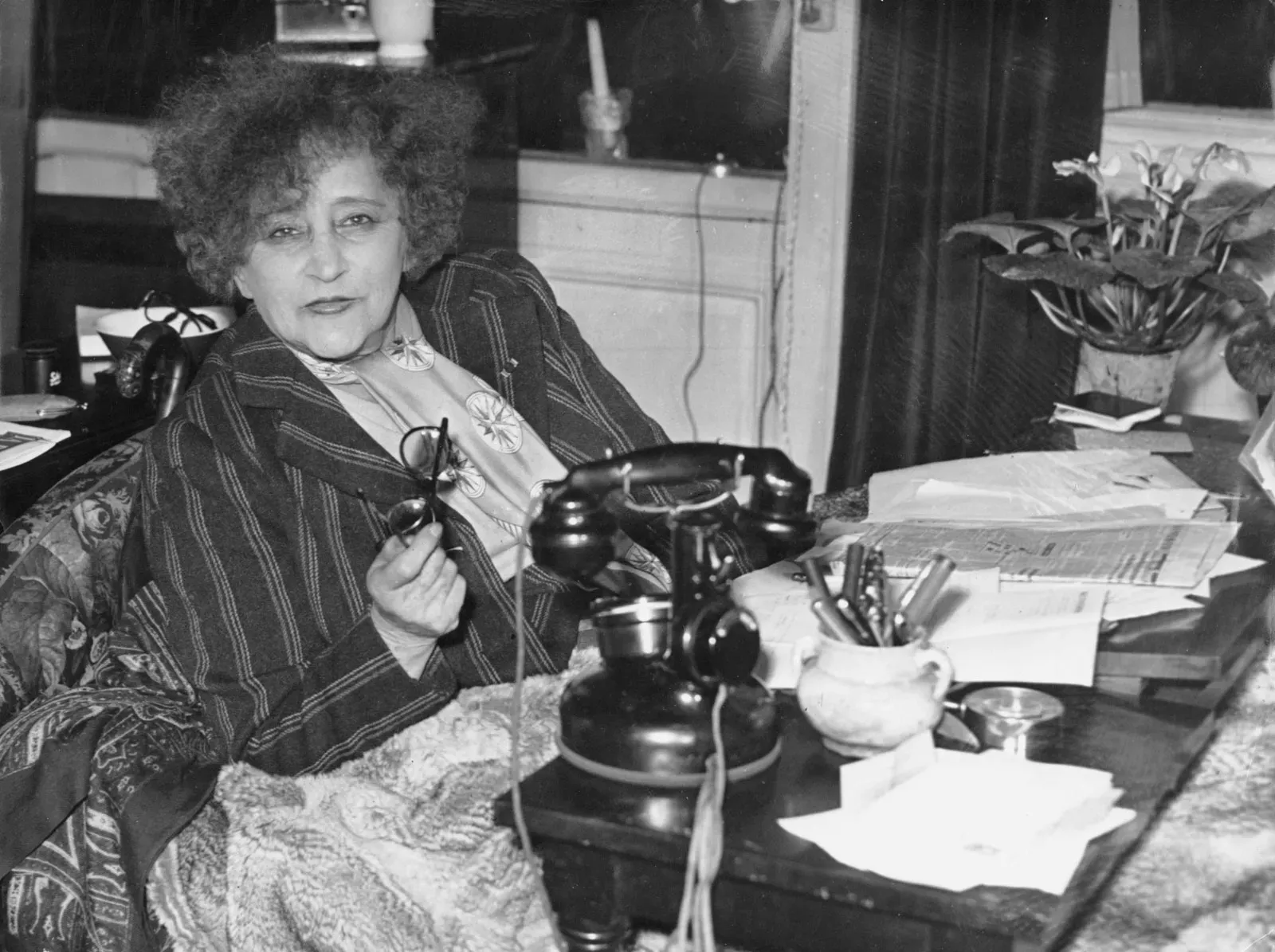
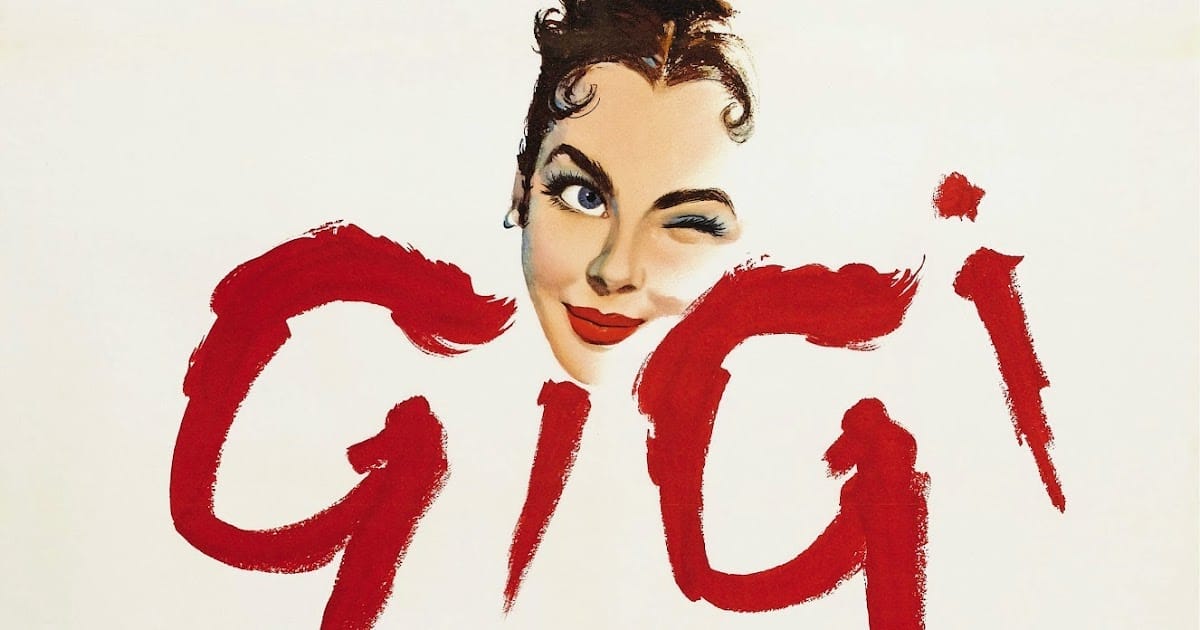
I think this is what she saw in a 22-year-old Audrey Hepburn. During World War II, when Colette turned 70, she wrote her last fictional work, Gigi. Set in the late 19th century, the age of the famous courtesans, the story is about love and youth, and it has a happy ending. Gigi is being groomed for a career as a courtesan but she turns her back on it. It became a Broadway play with a young Hepburn - because it was Colette who famously had "discovered" her while being pushed in her wheelchair along the seafront at Monte Carlo in the summer of 1951. Colette was 77 and crippled by rheumatoid arthritis and years of significant weight gain. (After her death in 1954 at the age of 81, a movie version of Gigi with Leslie Caron won the Academy Award for Best Picture in 1958.)

During her Seventies, Colette continued to write and enjoy her status as a national icon, a survivor. But in this period of physical decline, she was largely stuck in her apartment, overlooking the Jardin du Palais-Royal. She addressed her arthritis in L'Etoile Vesper (The Evening Star, 1946) and Le Fanal Bleu (The Blue Lantern, 1949).
I keep coming back to the theme of virility because I'm not sure there is a better word. While a few writers and filmmakers have tackled it, it's usually a male problem - the ennui in Shakespeare's Hamlet and Henry James' novels, Virginia Woolf's critique of the "self-conscious virility" of Hemingway, Joyce and D.H. Lawrence. Perhaps the floodgates opened, so to speak, with the successful publication of Lawrence's Lady Chatterley's Lover unexpurgated edition in 1960. But, it is amusing really that Colette had been writing about this for more than half a century - in a positive way - and she was the least neurotic of the lot of them.
So now, whenever I despair, I no longer expect my end, but some bit of luck, some commonplace little miracle which, like a glittering link, will mend again the necklace of my days.