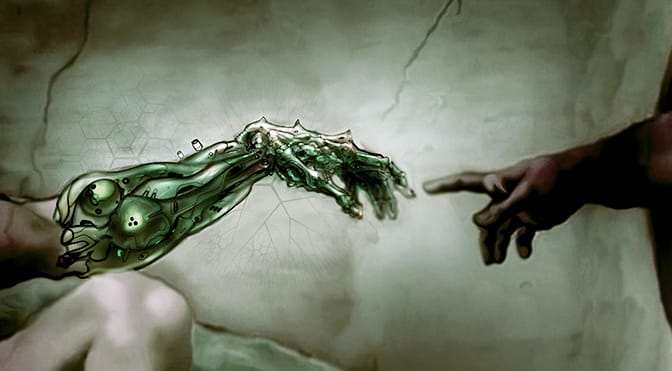
Mechanical toys from Leonardo to sexbots

I once had the pleasure of being a publicist - briefly - for the world's first sex robot (sexbot). Her name was Roxxxy. That was 20 years ago and sex robots have come a long way since then, especially in China and the U.S. This isn't her; this is Harmony....

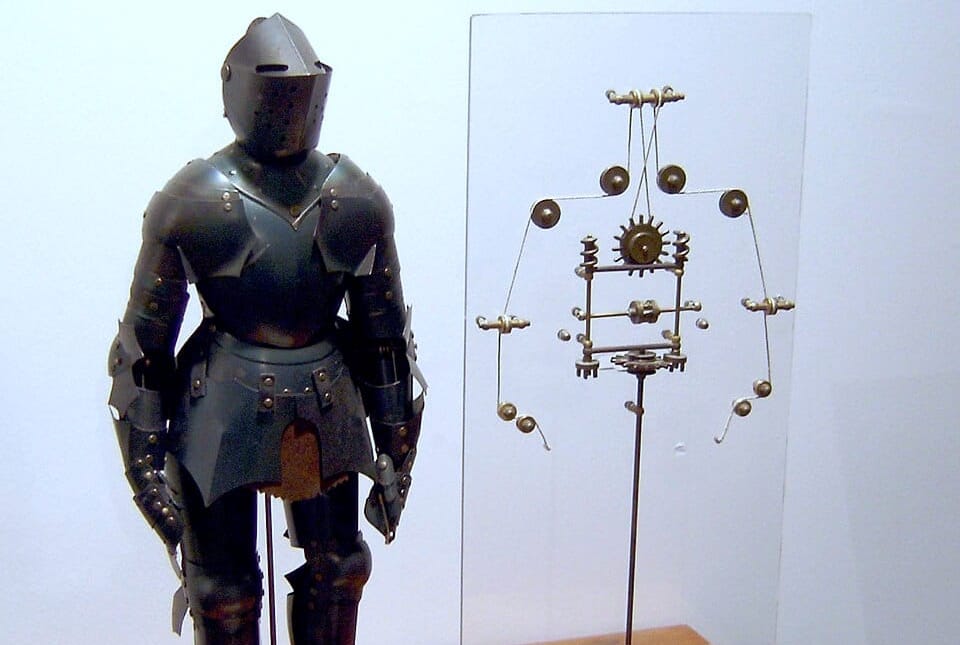
Mechanical engineering of this sort goes back centuries to the Greek, Islamic and Chinese worlds, but nothing exists from those civilizations beyond written descriptions. With Leonardo da Vinci we really have a pioneer of modern robotics. He designed and possibly constructed a mechanical knight (Automa cavaliere) around 1495 while he was in Milan. Reconstructions like the one shown up top are based on Leonardo’s sketches which were discovered in the 1950's. It uses pulleys to mimic human movements - sitting, standing, moving his arms and raising his metal visor.
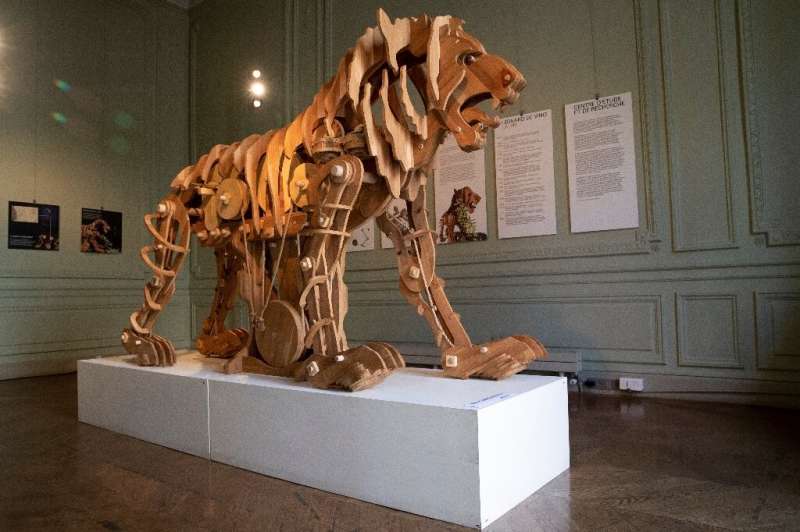
Leonardo also designed a mechanical lion (this one may have been constructed - for King Francis I of France - but it no longer exists; a modern replica is shown below). Then there was a self-propelled cart (considered by many to be the first car), a mechanical drum, a hydraulic clock, and more.
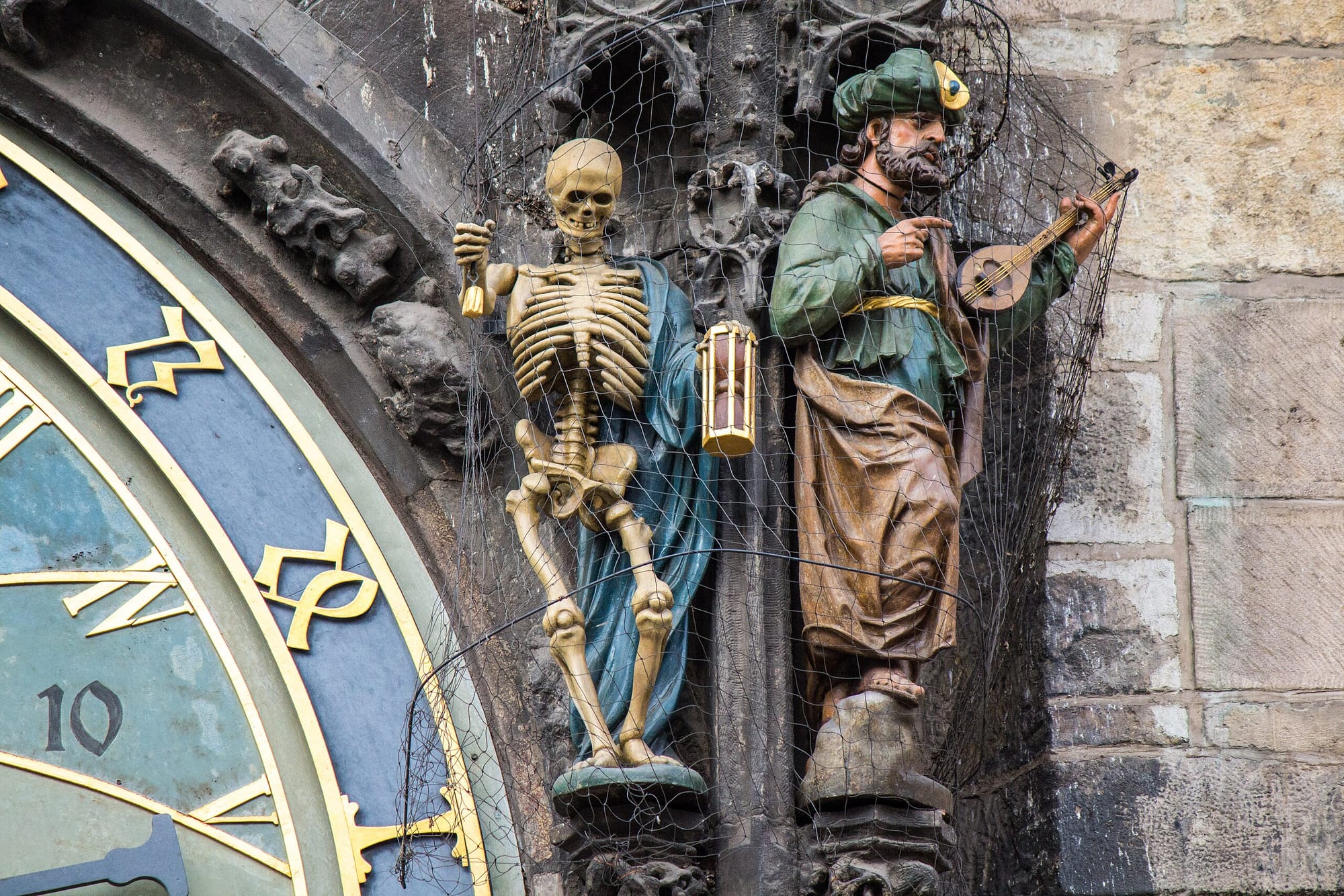
During and after the Renaissance, it was clockmakers who were most active in building "automatons." The statues on Prague Town Hall's Astronomical Clock are a good example: Death is ringing a bell, marking the time.
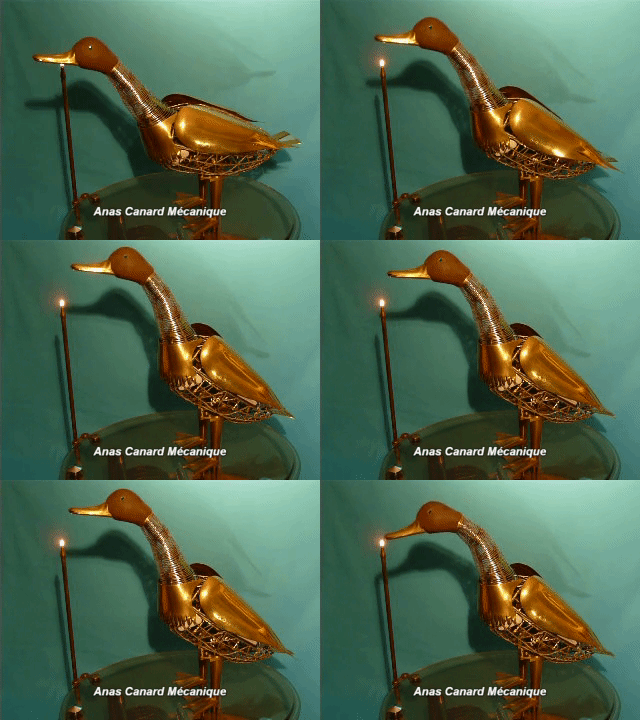
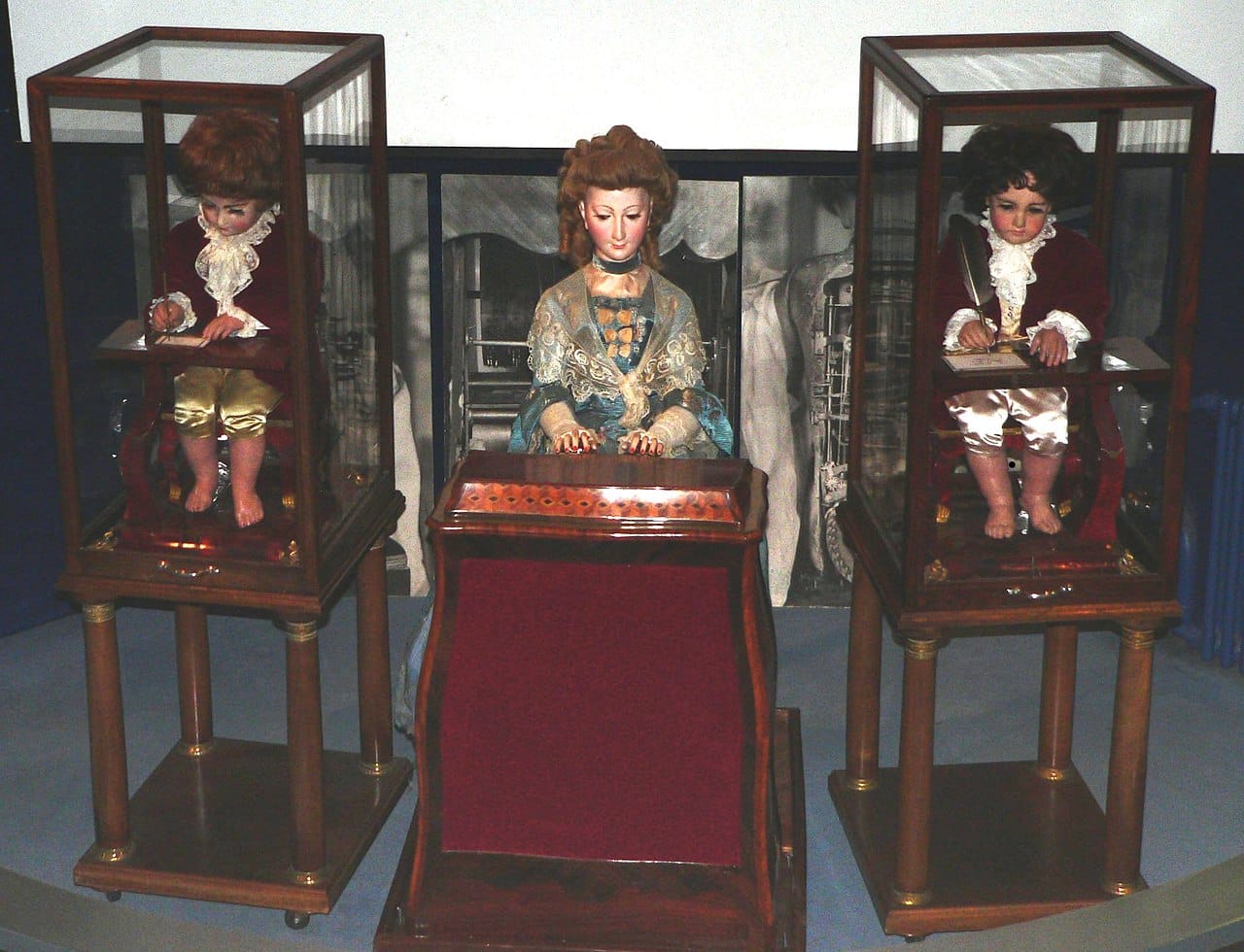
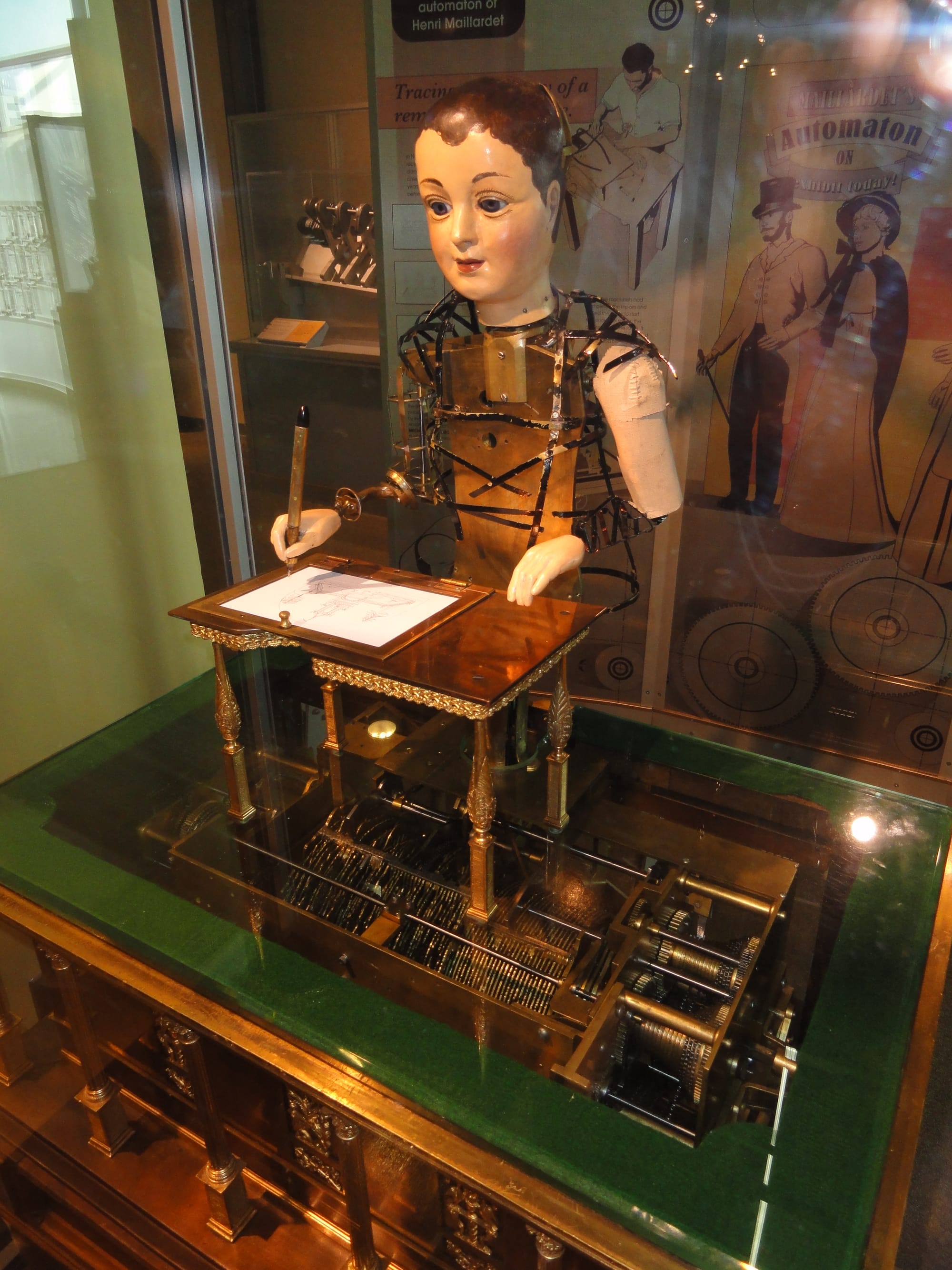
Such extraordinary works of engineering mostly ended up in the "cabinets of curiosities" (Wunderkammern) of wealthy collectors. Some are now on display in museums or are in private collections, such as: (1) Jacques de Vaucanson’s 1739 Canard Digérateur ("Digesting Duck") - the original is lost but a replica from 1998 exists in Grenoble where Vaucanson was from; (2) the Jaquet-Droz family's singing bird boxes and their triple masterpiece “The Draughtsman,” “The Musician” and “The Writer”; (3) Maillardet's Automaton, from around 1800-1810; and (4) Fabergé's Easter Eggs, which sometimes contained automatons, like The Peacock Egg (1908).

Historically speaking, Steampunk came along next and it is still with us today in every genre - there are hundreds of cool toys available online. I grew up with meccano and toy soldiers and I have always admired elaborate model train sets. My kids though grew up with k'nex and Lego before toys went digital and video games ruled childhood.
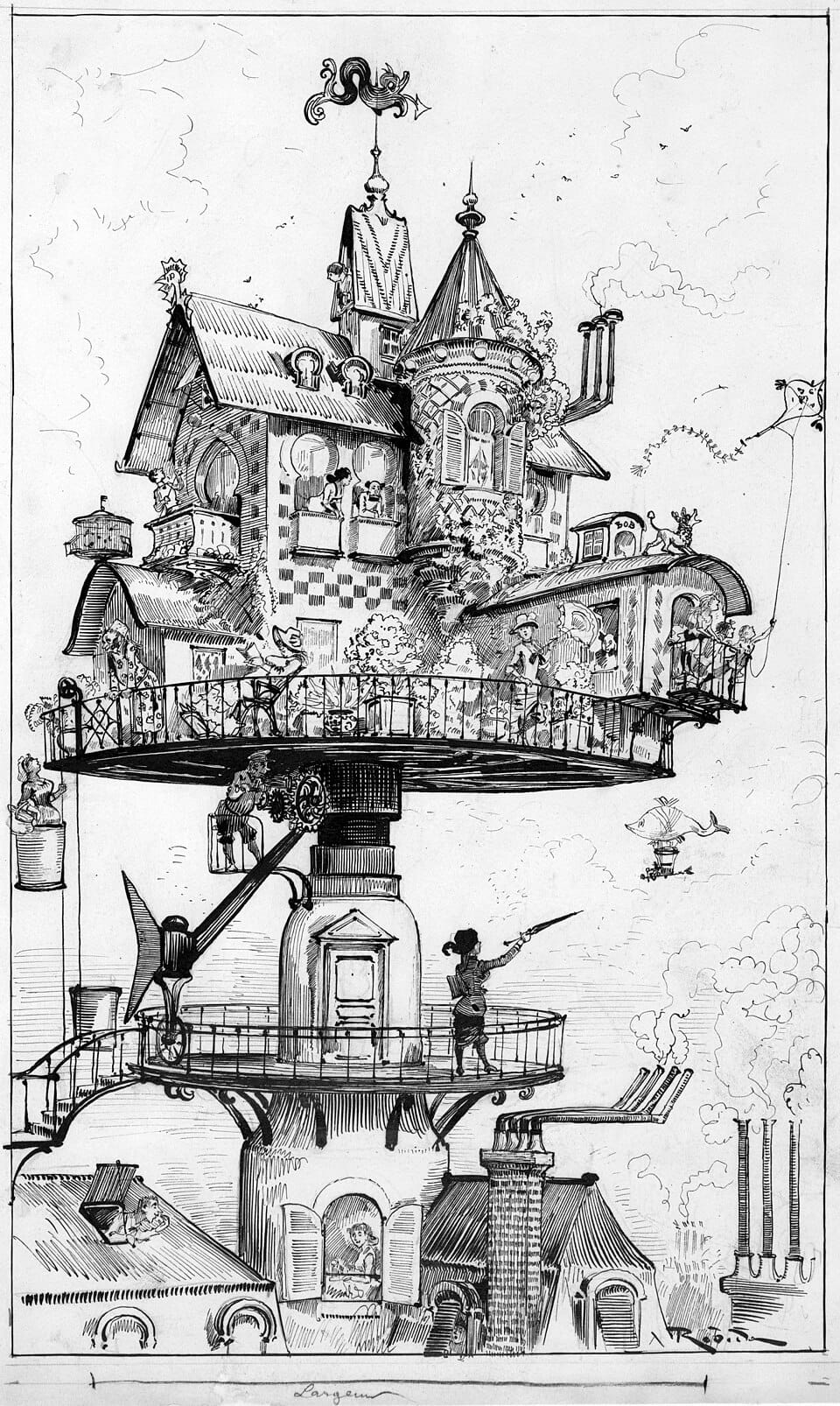
I particularly like this design for an aerial rotating house by Albert Robida in the late 19th century, even if it was never made. Hayao Miyazaki acknowledged Robida's influence when he made Howl's Moving Castle (2004).
And so now we go on to an uncertain future with sexbots and AI, sexting with chatbots, transhumanism....