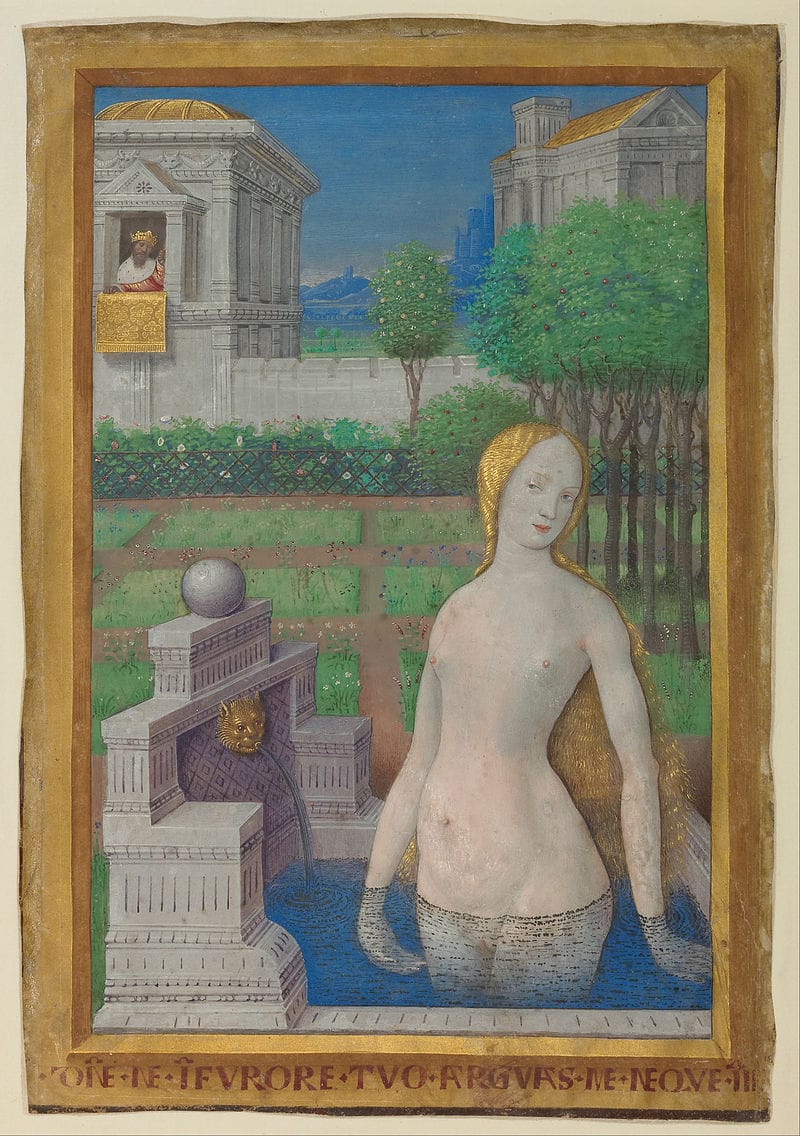
Semiramis and Bathsheba

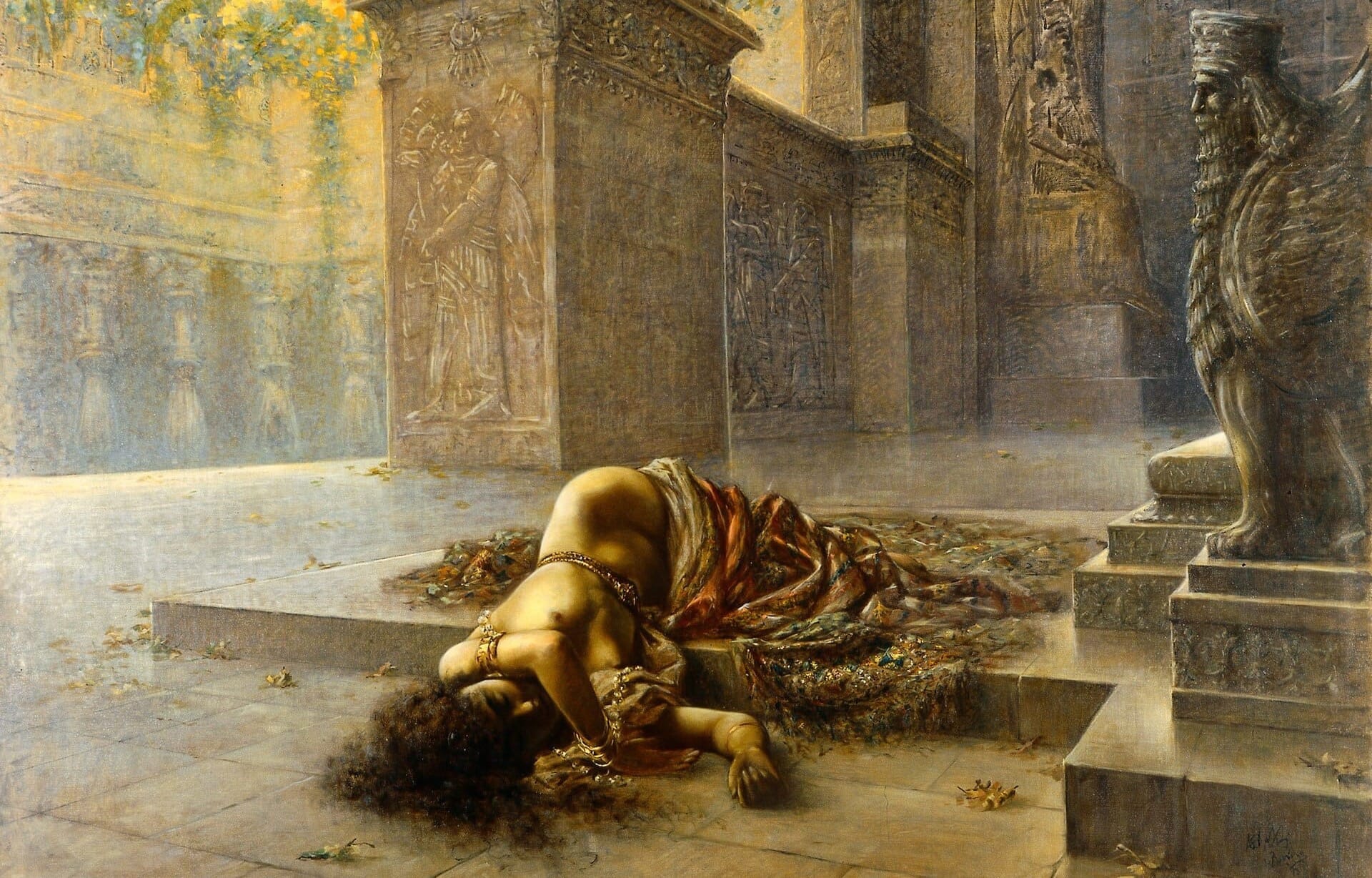
In the hilariously operatic painting above, Assyrian beauty Semiramis seems to have killed herself after the death of her second husband, King Ninus. This didn't happen of course because, in the legend, she went on to become a powerful warrior queen after her husband's death.
Years earlier, Semiramis had been married to one of Ninus' generals, but when Ninus became entranced with Semiramis, he demanded the general give her up, as one does, offering his own daughter in exchange. Ninus also threatened to put out the general's eyes if he refused; the general hanged himself. Ninus then married Semiramis and she has been a notorious femme fatale ever since.
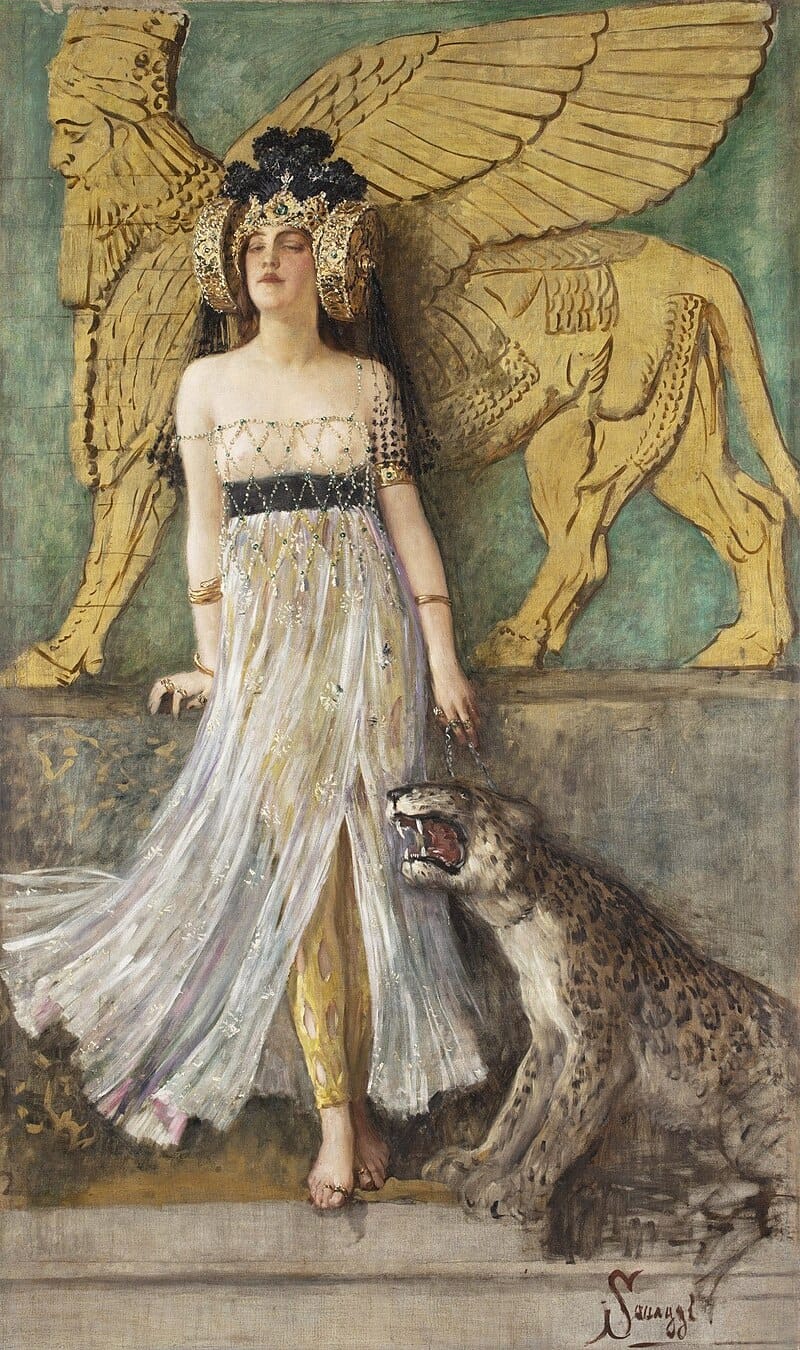
This is all based on unreliable Greek sources, but we do know that Semiramis was based on the real and historical Queen Shammuramat (who died circa 798 BCE), while the Assyrian Empire was expanding over much of the Middle East. Even if none of the melodrama described above actually happened, we know that Shammuramat did successfully manage this vast empire for a time.
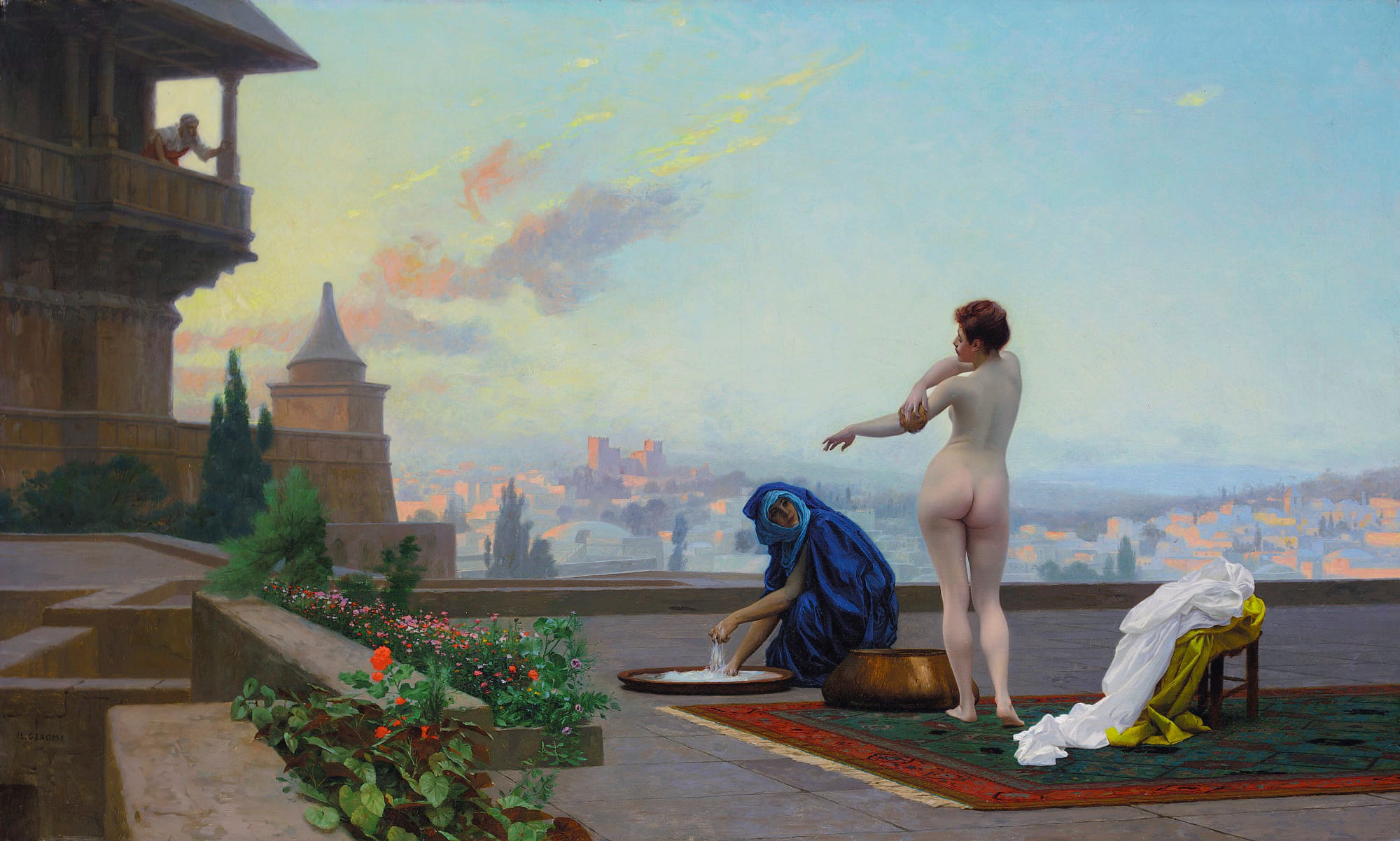
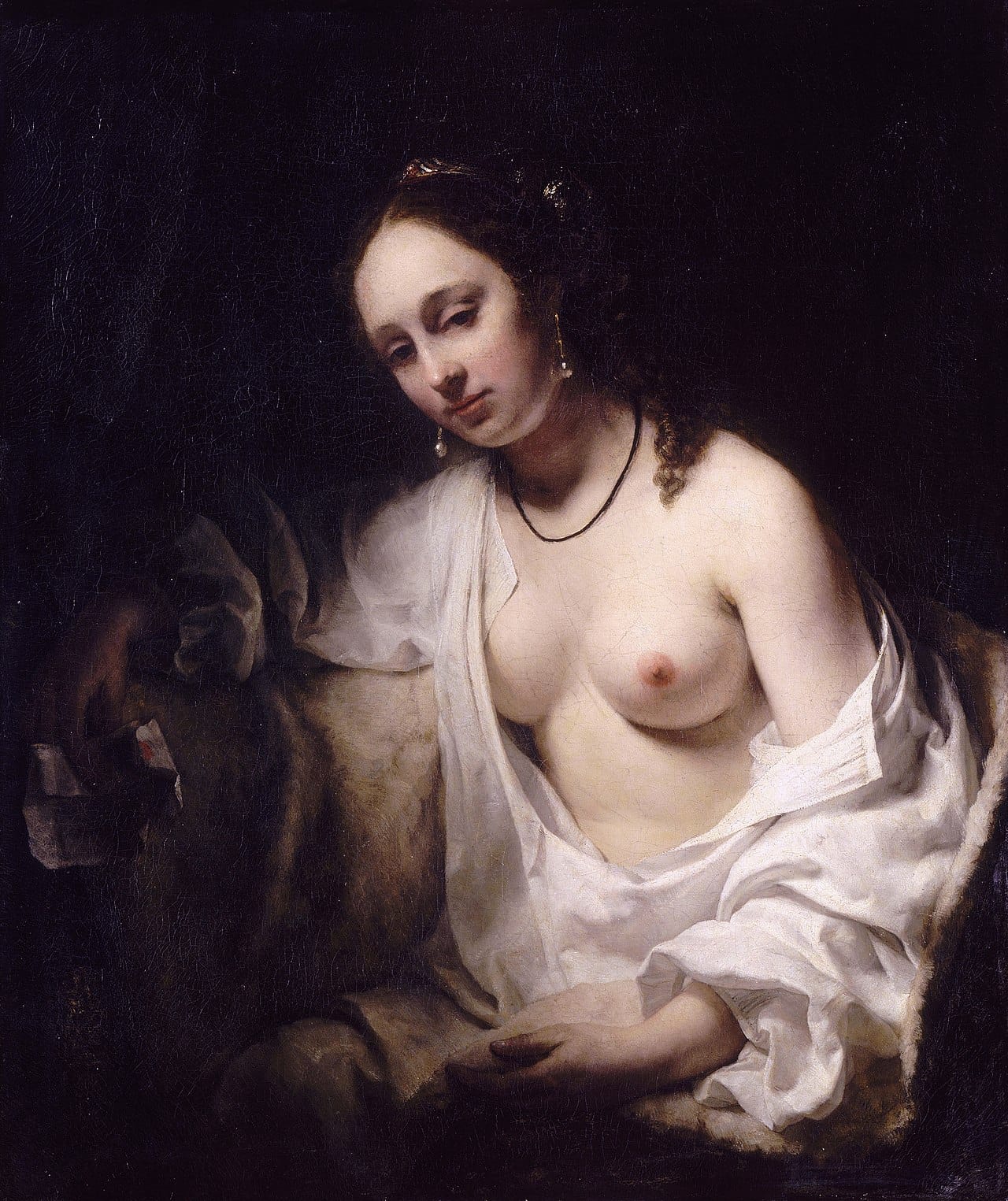
The Semiramis story is less well known than King David of Israel and Bathsheba, which it rather resembles (in Book of 2 Samuel). Above, that's King David watching Bathsheba bathing - in another ridiculous Orientalist fiction.
Next thing you know, King David has gotten her pregnant and arranged for the death of her husband, one of his loyal soldiers, Uriah the Hittite. Afterwards, she becomes one of David's wives and has five children with him. One of them was Solomon and she later indulged in her own murderous intrigue to have Solomon made king. Clearly a dangerous temptress:
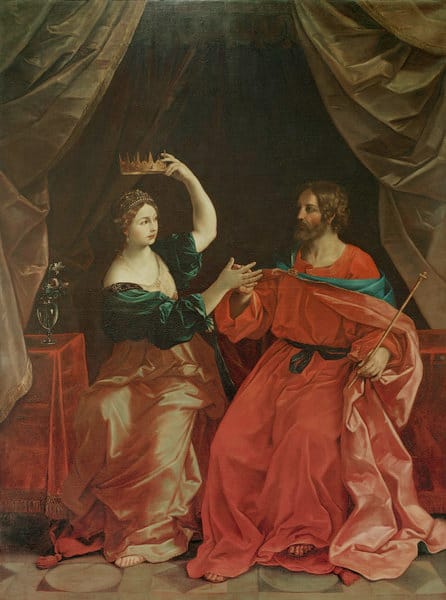
Both Semiramis and Bathsheba have been a constant theme in art and history for two thousand years, with Semiramis as a femme fatale and Bathsheba usually as a victim. Below is Ninus Offers His Crown to Semiramis (circa 1625), a reconstruction of a lost painting by Guido Reni - the original was destroyed in 1945. It's a strange painting: a king willingly giving up his crown to his wife? One ancient Greek historian, Diodorus Siculus, argued that Semiramis had Ninus executed in order to assume power.
By the 17th century, as powerful women monarchs began to appear in Europe, things became more ambiguous. In dozens of florid and popular Western plays, operas and paintings (all by men), Semiramis appears as a power-hungry, lusty woman, including Pedro Calderón de la Barca's La hija del aire (The Daughter of the Air) (1653). Voltaire's tragedy Sémiramis (1748) adds some new ideas - he has her poisoning her husband Ninus, marrying her son (see the woodcut below), and finally dying accidentally by his hand. Perfect femme fatale material for an opera: Rossini's Semiramide (1823) is based on the Voltaire version.
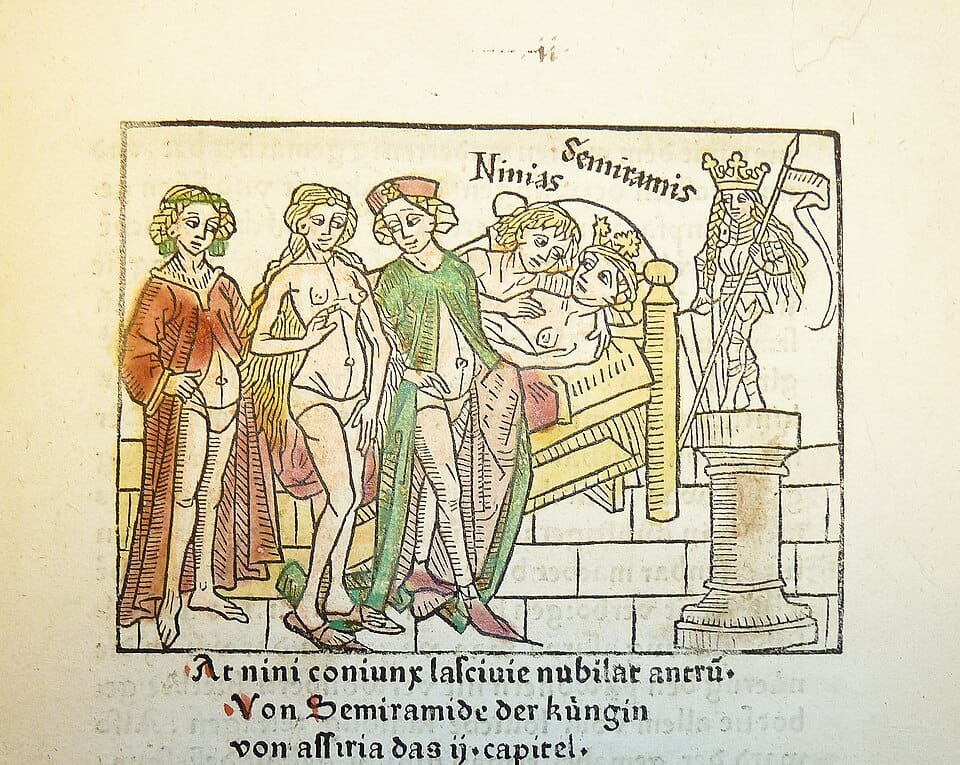
That looks like underwear to me... Further mythologizing occurred in 1853 when Scottish minister Alexander Hislop argued in The Two Babylons that Semiramis was associated with Ishtar, Isis, Venus and other goddesses. He also argued she was married to the Biblical figure Nimrod, whom, he said, founded Babylon. There is no evidence to back this up, but Hislop saw the Catholic Church as the corrupt Babylon of the Apocalypse in the Bible. It's still a popular view among evangelical Christians today, whereby Semiramis is the Whore of Babylon.
To finish, one more portrait of poor Bathsheba...