Stories with giant disembodied heads, sometimes floating...
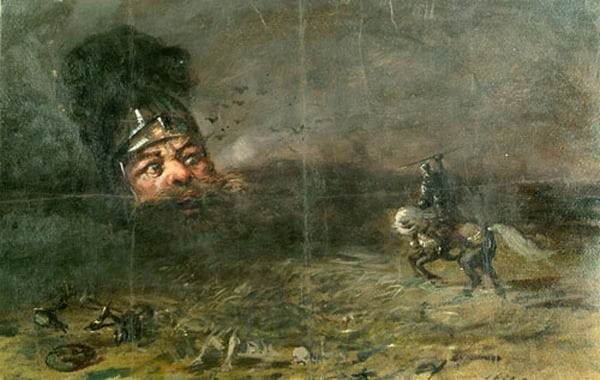
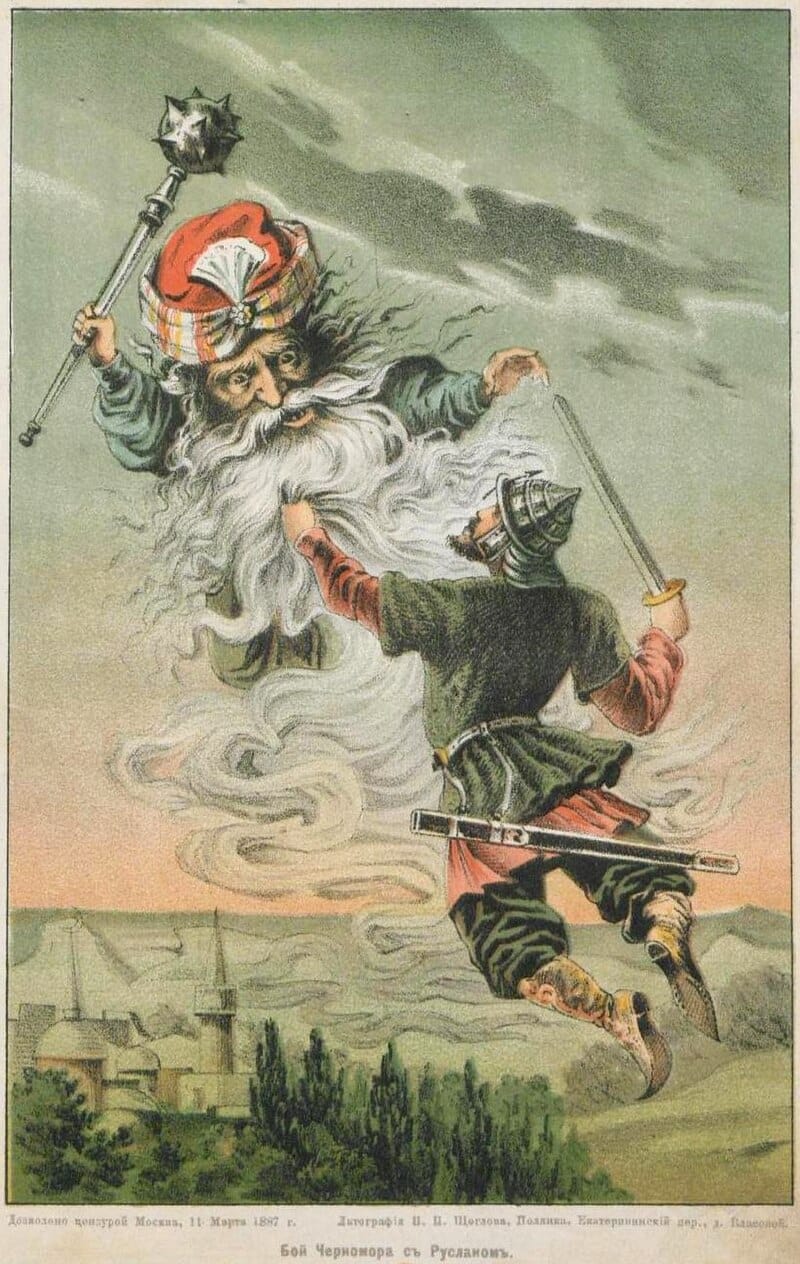
It is a curious thing: there are giant disembodied heads that pop up in stories. What's the symbolism here? I'm not thinking of giant video screens or holographs (The Wizard of Oz, Nineteen Eighty-Four, Star Wars). I'm thinking real giant heads. The biggest of them appears in Alexander Pushkin's Ruslan and Ludmilla, a lengthy fantastical poem of 1820. The hero, Ruslan, encounters a giant sleeping head, which he manages to subdue by using a spear to pin down its tongue. The head ends up being quite chatty and helpful in how to defeat his brother, the sorcerer Chernomor, shown below, whose magic strength lies in his beard. After two days fighting in the air, Ruslan manages to cut off the beard.
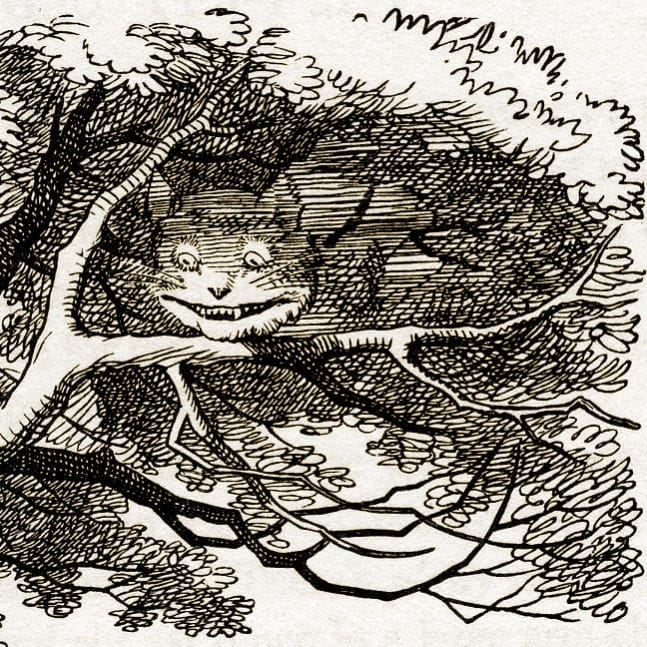
Then there is this famous cat........ These are all whimsical stories and perhaps that's the point, but cat owners will understand.
I don't count The Headless Horseman from The Legend of Sleepy Hollow, Washington Irving’s classic 1820 story, because it's not giant and it appears to need to rejoin its body, but it's a great idea.
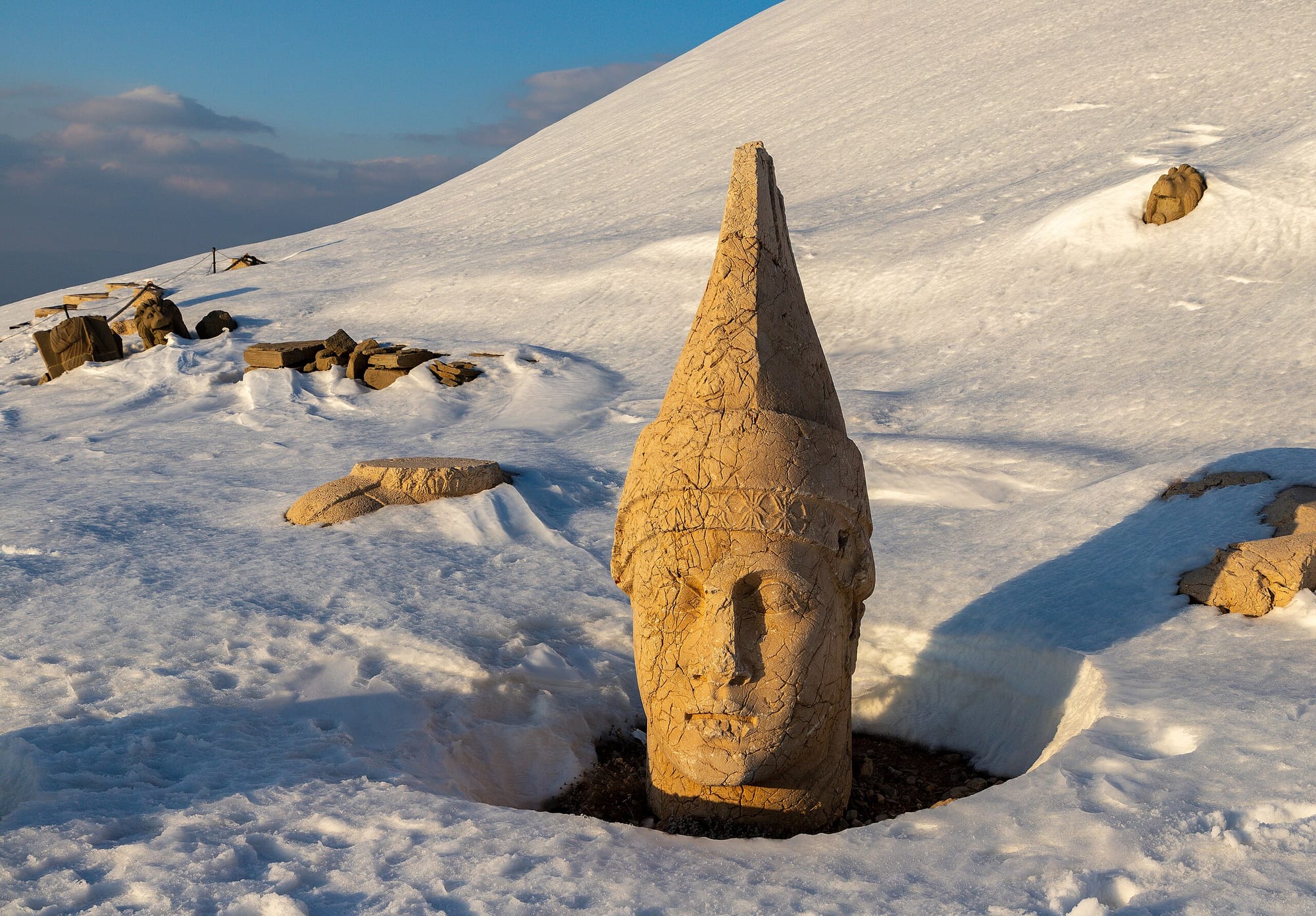
In various parts of the world, large heads can be found in remote places. Below is one of the statues at the summit of Mount Nemrut in Türkiye. These statues are what remains of a royal tomb believed to be Antiochus I from the 1st century BCE. He ruled the small kingdom of Commagene, a buffer state between the eastern Roman Empire and the Kingdom of Armenia, with Greek and Iranian influences. In reality, at some point the heads of the statues were removed from their bodies, whether from vandalism or earthquakes, and they are now scattered throughout the site.
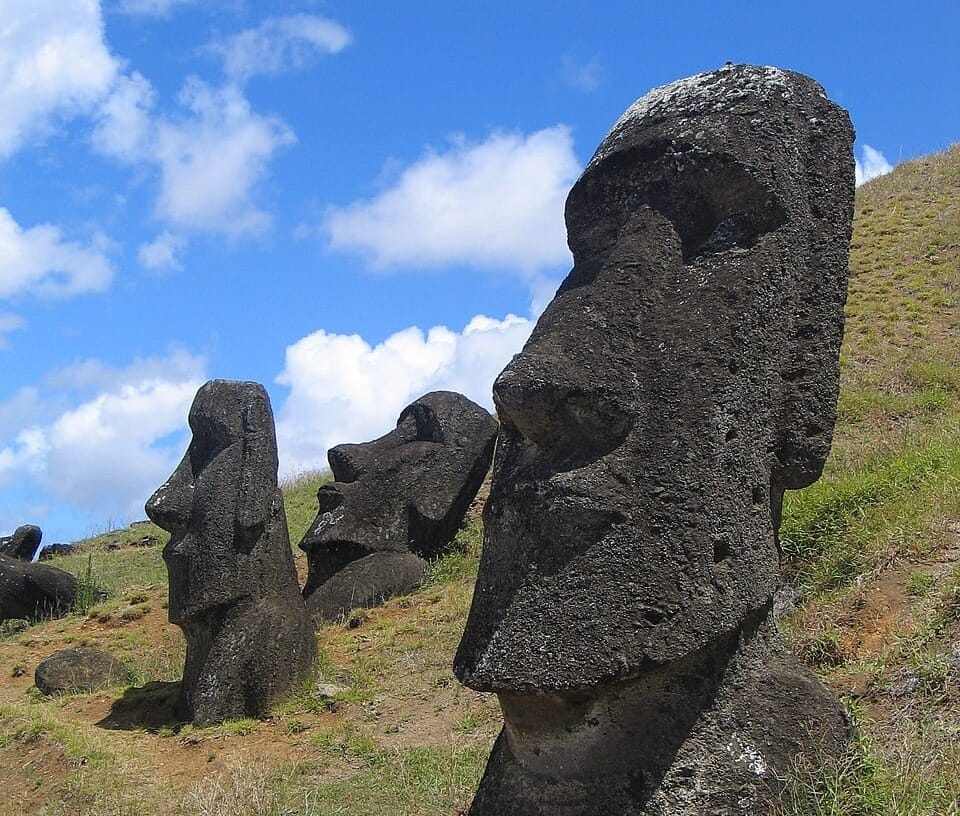
Then there is Easter Island/Rapa Nui and its moai:
In Iroquoian and Wyandot mythology, there is a giant disembodied head with fangs, which seems to enjoy human flesh. Perhaps an angry nature spirit wreaking vengeance on humans?
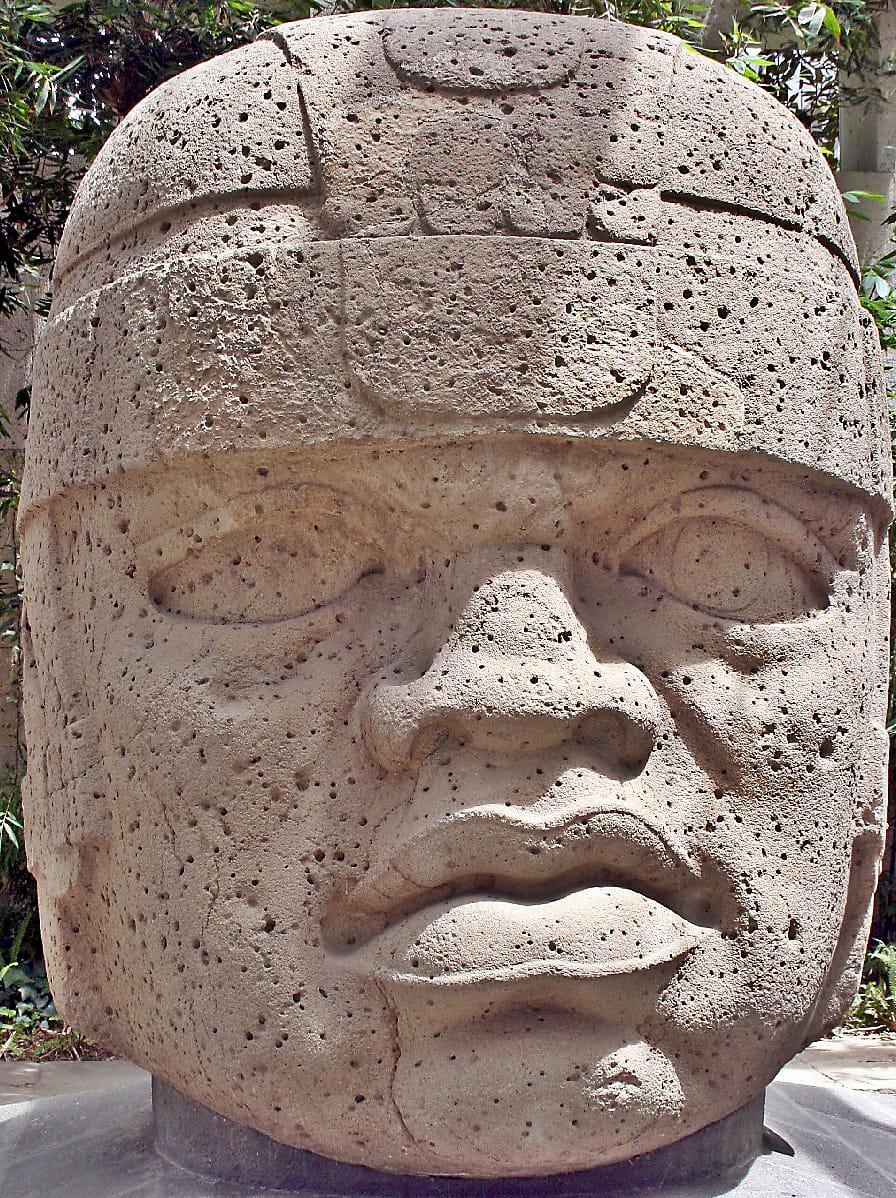
The Olmecs have some colossal heads too, primarily in Veracruz and Tabasco:
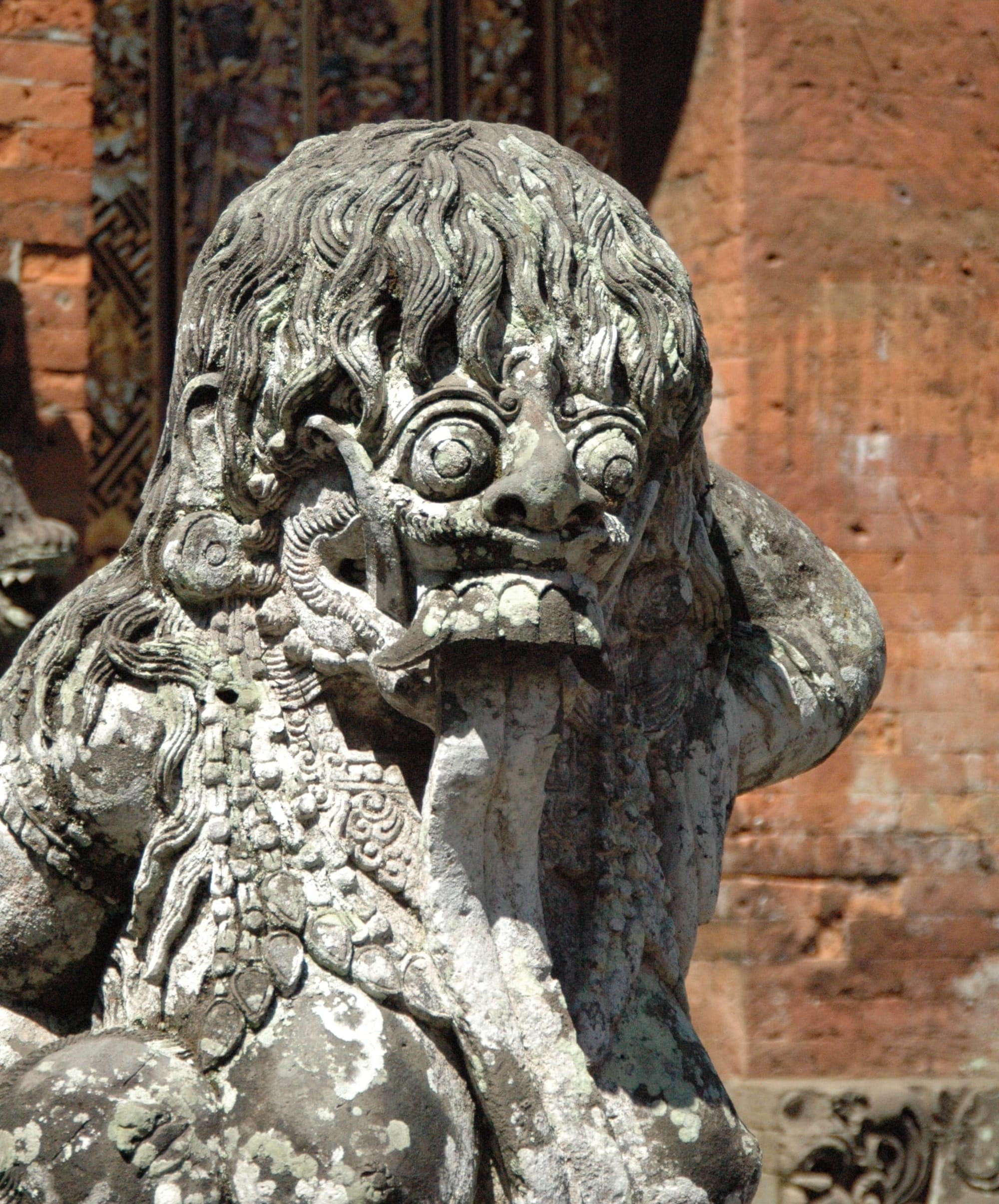
A variation appears across all of Southeast Asia like the Krasue of Thailand or the Léyak of Bali - these are floating women's heads, with organs and entrails hanging out, that behave like Western witches or vampires. Below is a statue of Rangda, the queen of Léyak in Balinese Hinduism. Because these figures are often associated with magic and threats to fertility, pregnancy and childbirth, some make the case that they are misogynistic, while others argue that they are the opposite, an empowering expression of women's vengeance against mistreatment.
In Japanese yōkai tales about folklore spirits, there are two types of shapeshifters - the Rokurokubi (where the neck stretches) and the Nukekubi (where the head is detached and can fly around). Below are two Rokurokubi by Hokusai and then a Nukekubi.
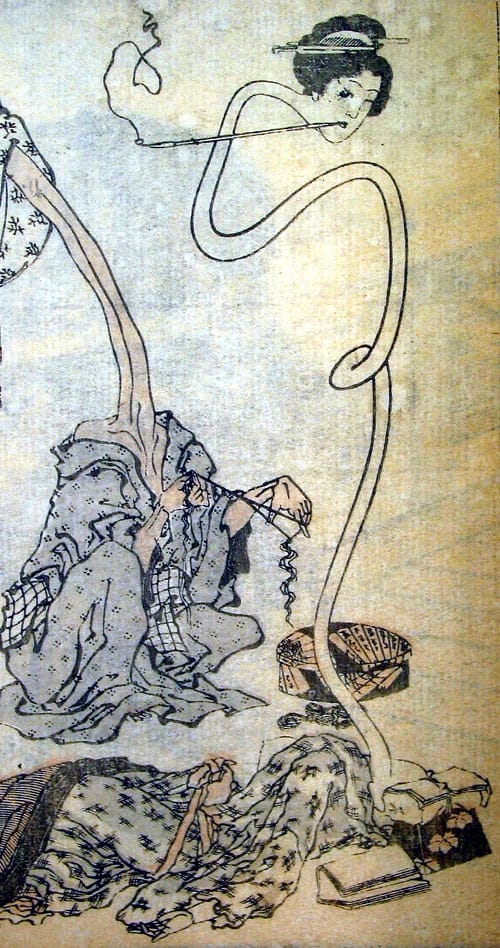
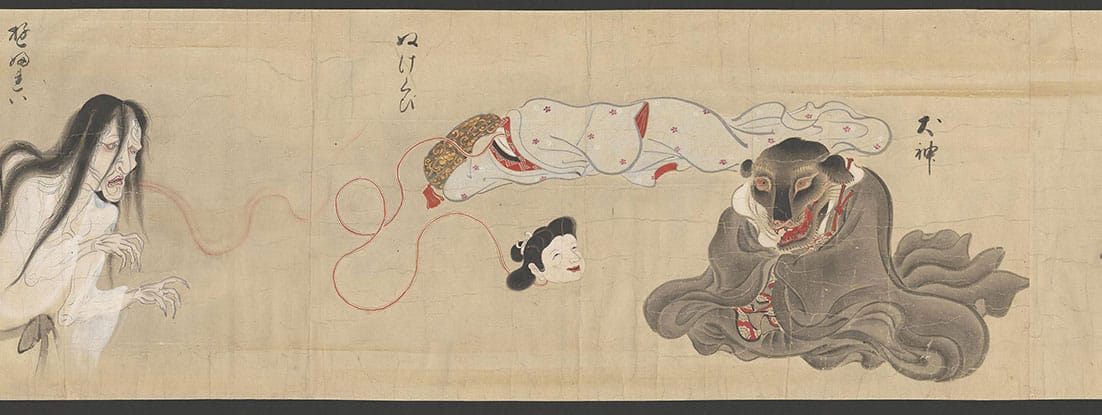
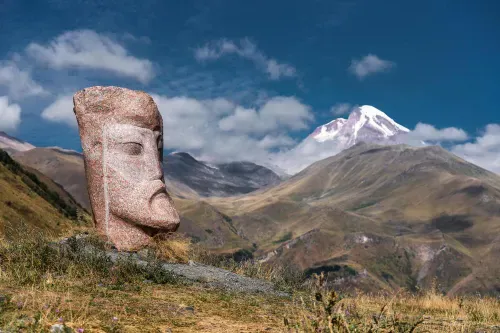
Such giant heads have inspired others in more recent times to create their own. A stand out is Merab Piranishvili in the village of Sno, in the foothills of Georgia's Caucasus mountains. This is one of his giant heads:
Also see: Antinous' head