The weirdest headdresses

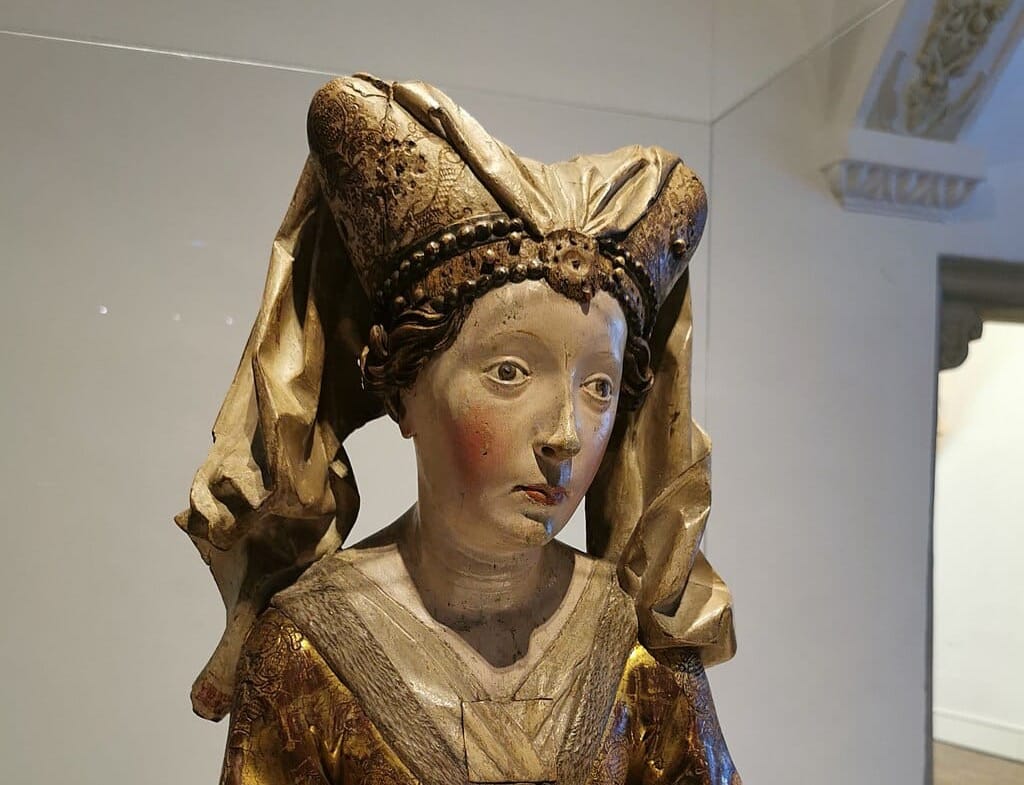
If there were a contest for the weirdest headdresses, I would nominate the escoffion, hennin (a broader term) and wimple which were popular in Europe 1250–1500, especially among the royals and the smart set in France and Burgundy. The clothing of the time was dictated by strict laws: only royals and wealthy women could wear these extravagances. Many were identified with the Virgin Mary or Mary Magdalene, even though the moralizers declared the "horns" were demonic.
The double horns of the escoffion could be broad and really heavy and they could make it difficult to get anything done. Imagine going through a low or narrow doorway. They were made of wool, felt, velvet or silk and held together by a network of wires, hair nets, cardboard and stitching and usually covered the woman's hair completely to convey religious modesty. The high forehead was popular.
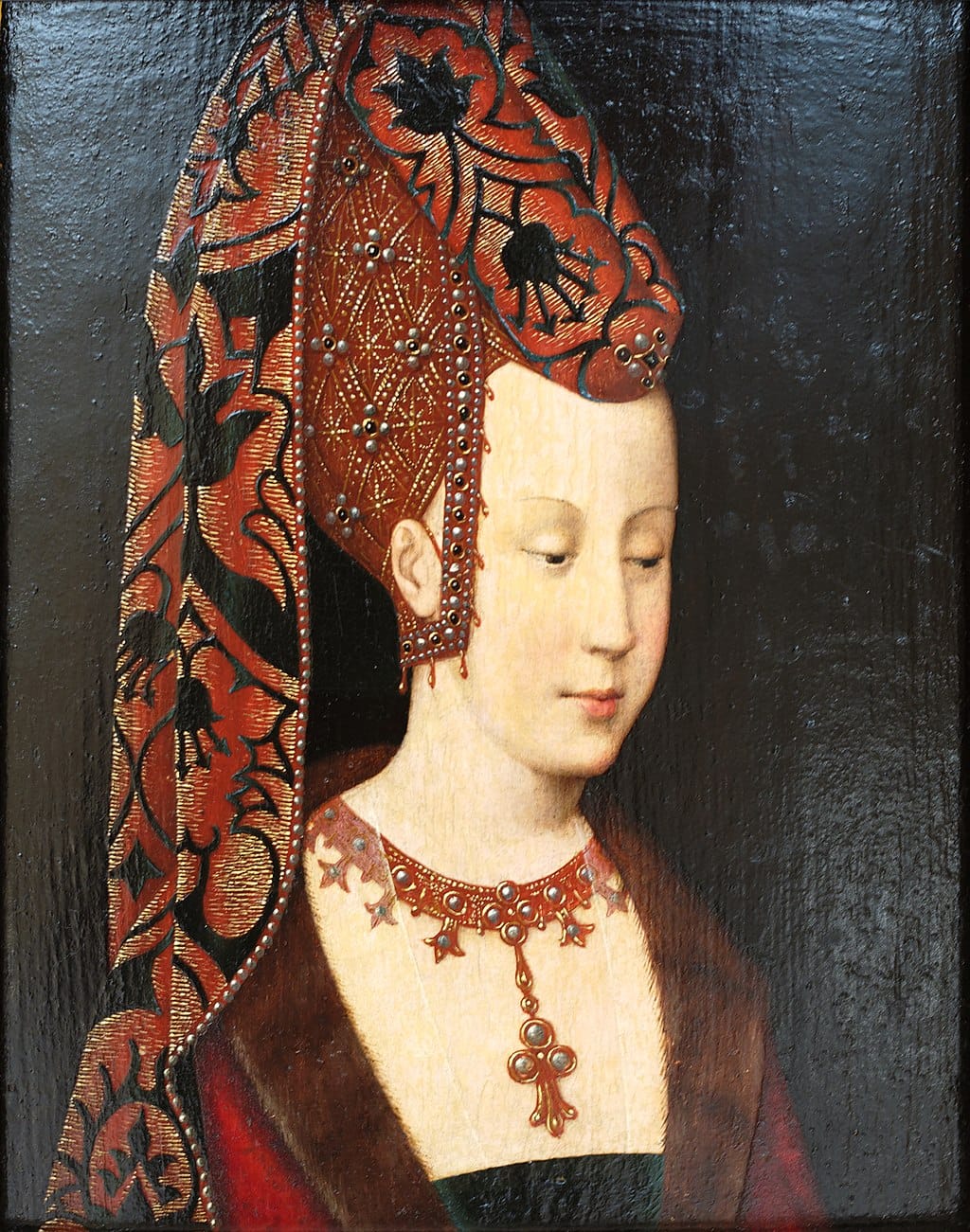
The hennin typically went in for height rather than width: a tall, conical headdress, to which long strips of gauze or silk were sometimes attached. The headpiece itself could be so tall that it made the wearer stand up to 12 feet in height.
The 15th century saw a tremendous growth in the textile industries, like silks from Italy and wools and linens from Flanders. It led to greater experimentation and extravagance, and not just in headdresses - longer sleeves and gowns, cloaks, hoods and hats, boots... Below is Margaret of Austria, Duchess of Savoy as Mary Magdalene holding an ointment jar. She held the important role of regent or governor of the Habsburg Netherlands. Her hennin is enhanced by a jeweled padded roll, and a veil.
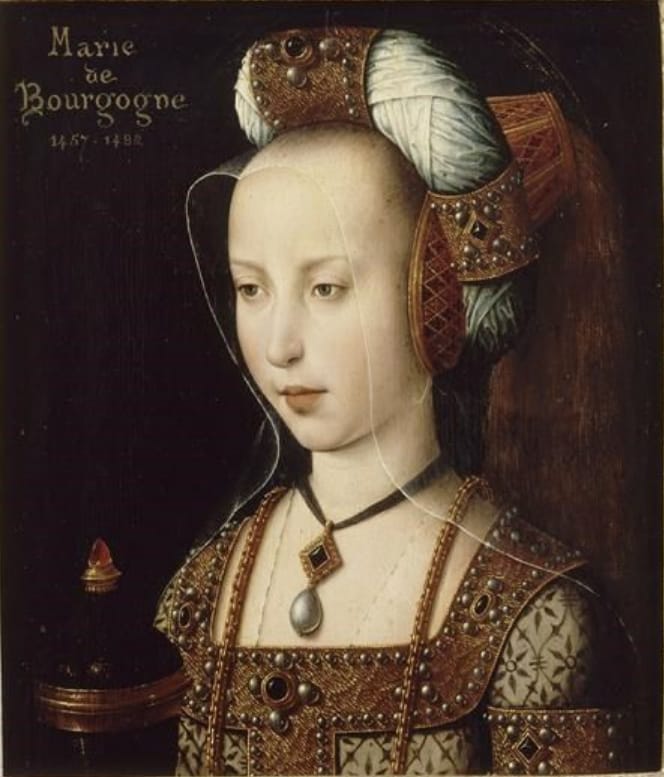
The escoffion, hennin and wimple are best seen in the paintings and altarpieces of the Early Netherlandish artists and their workshops in the 1400's: Jan van Eyck, Robert Campin, Rogier van den Weyden, Petrus Christus and Hans Memling. The first painting below is another portrait of the influential Isabella of Portugal, who became Duchess of Burgundy in 1429 and lived until 1471.
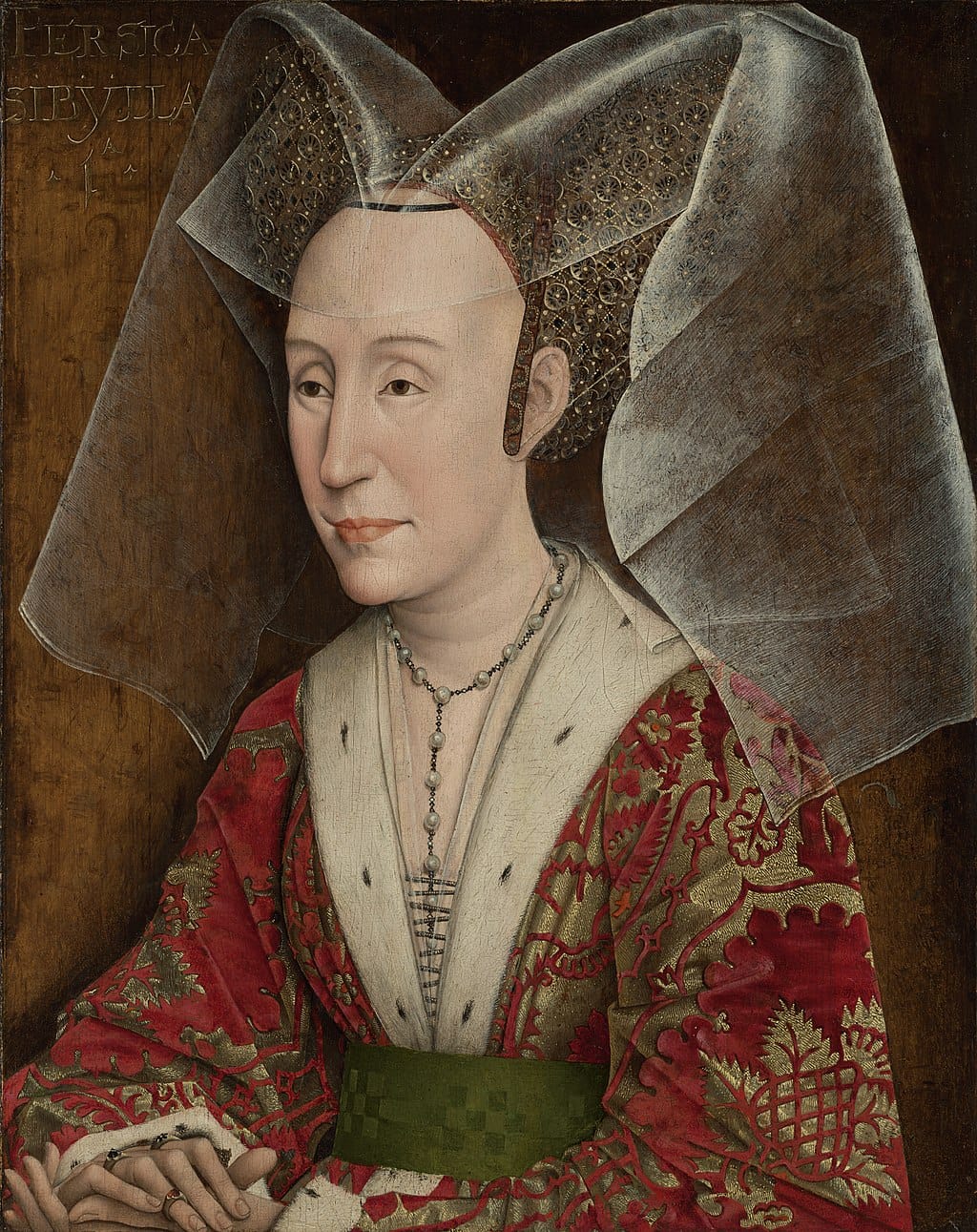
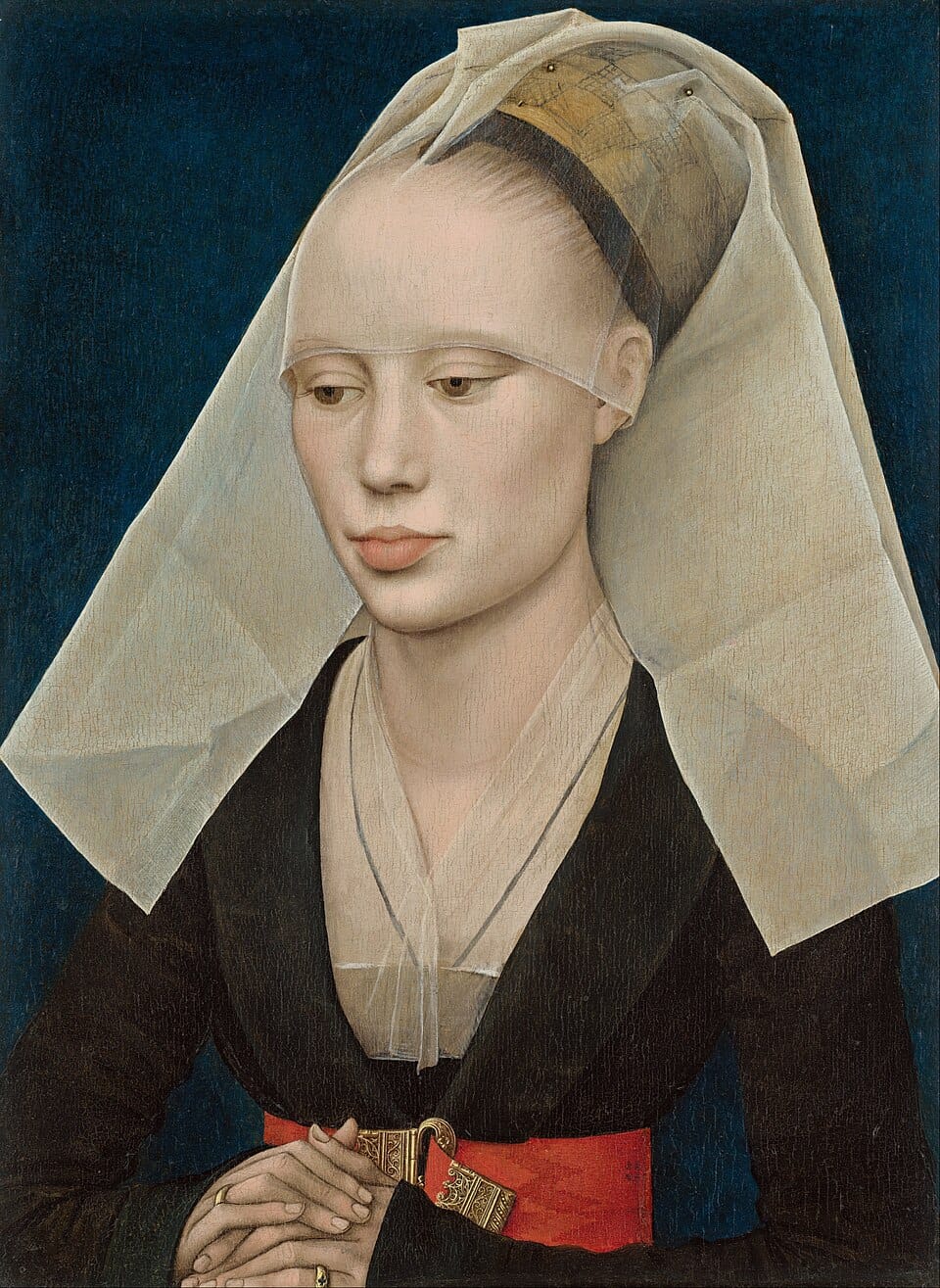
And then there is this masterpiece below, which has the same infinite gaze as Leonardo's Mona Lisa. It's one of my favorite paintings.
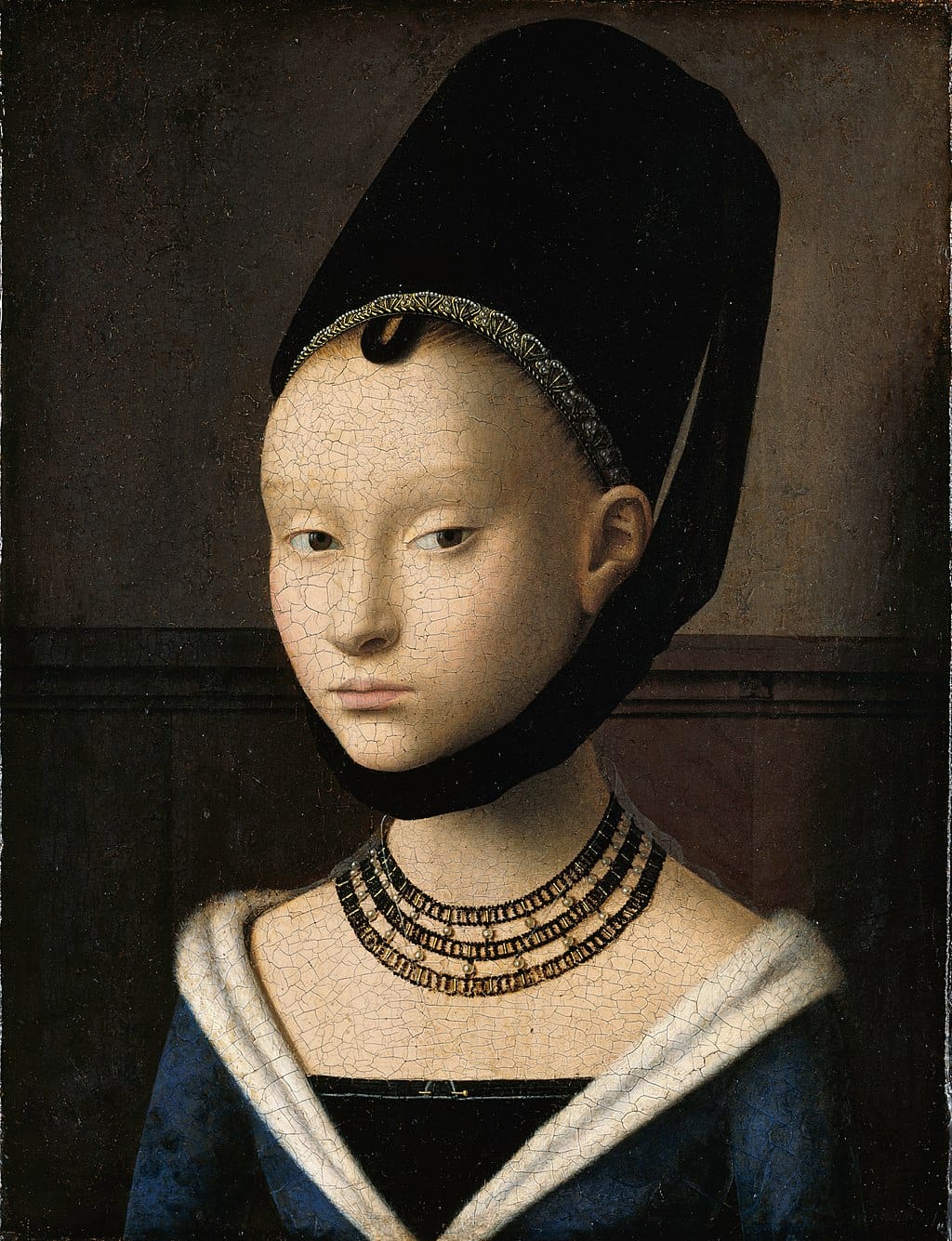
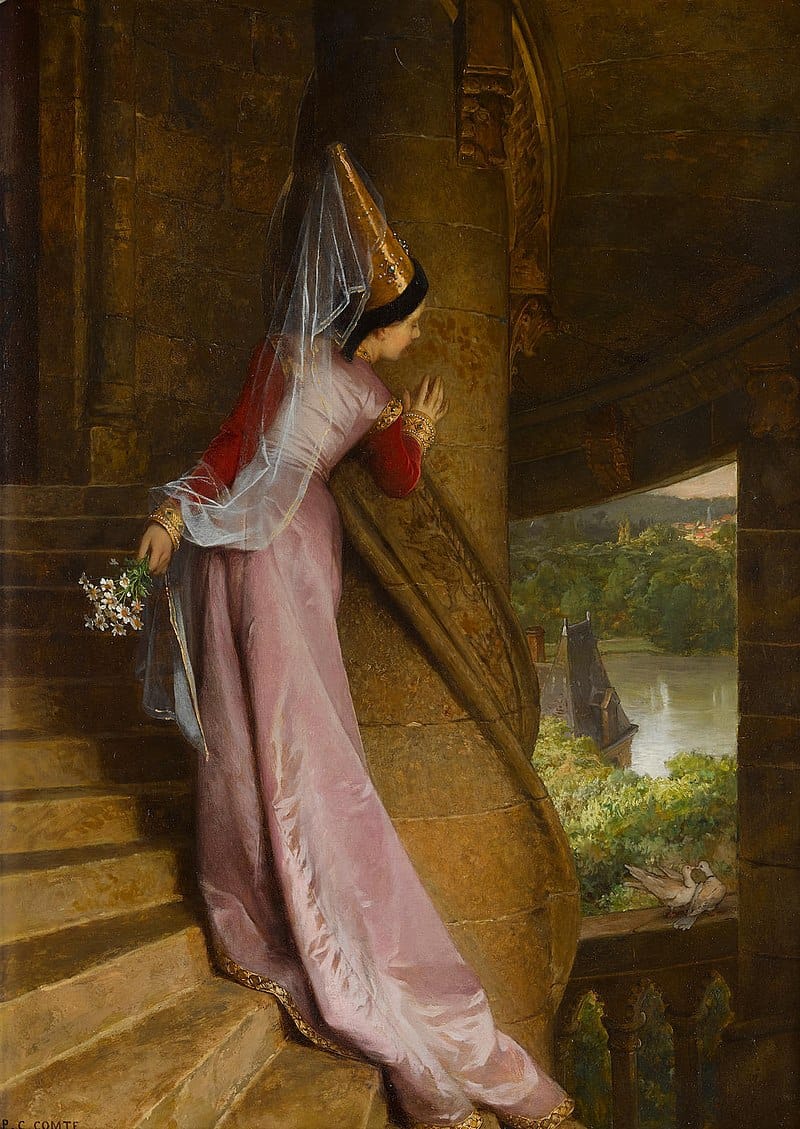
Below, the young woman's hennin is in the shape of a pointed cone, like a church steeple. Draped over it are long strips of gauze or silk. The red ("pink") flower suggests she is about to be married.
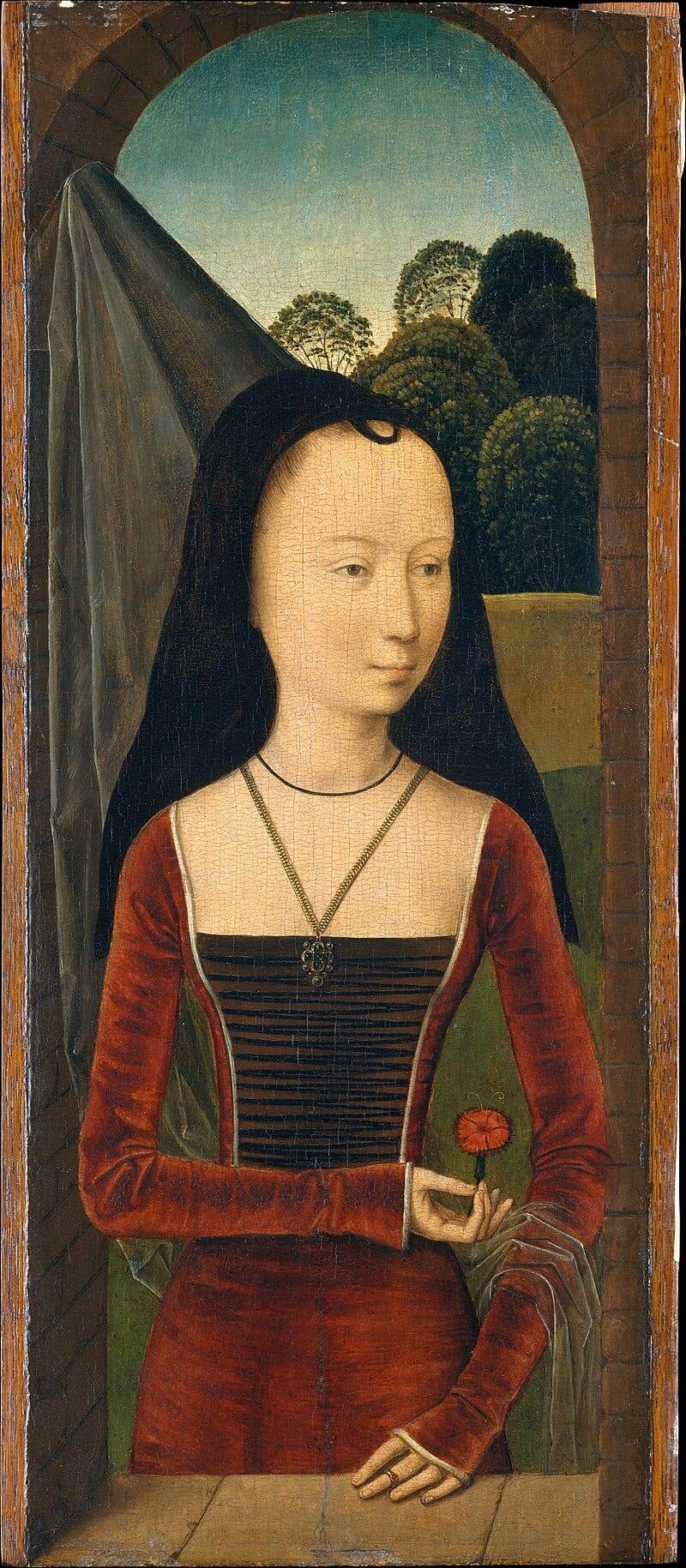
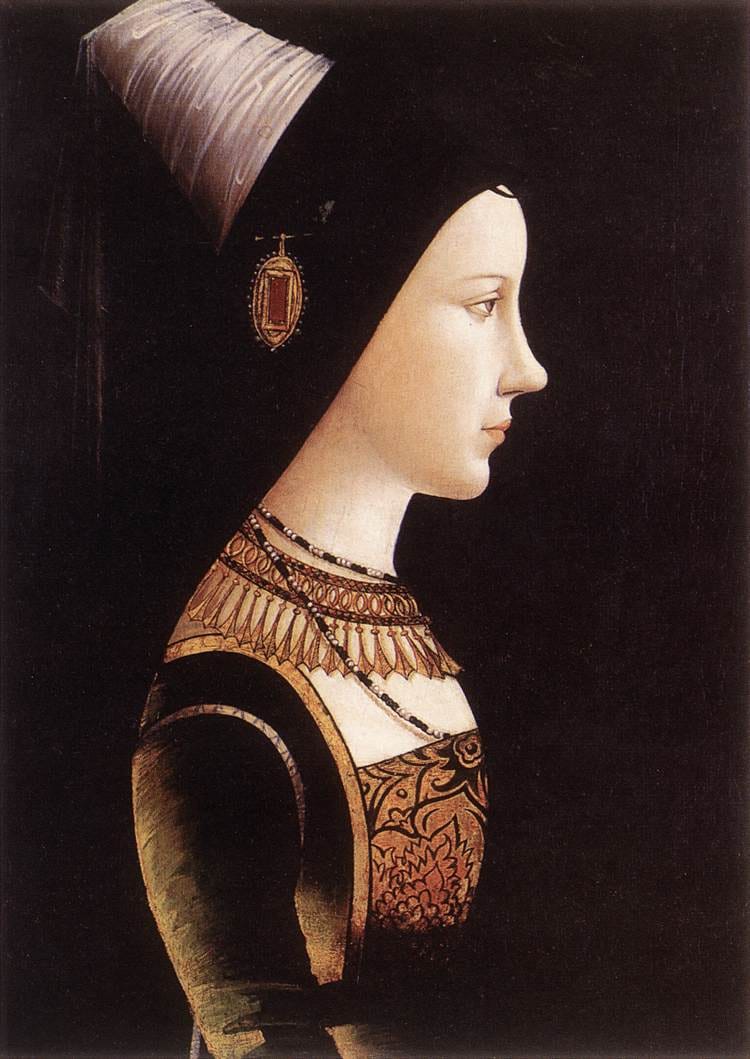
This kind of headwear went out of fashion by the 16th century simply because fashions change, not just because of its impracticality and what was perceived as immodesty. But it did fascinate 19th century fairy tale and pre-Raphaelite painters:
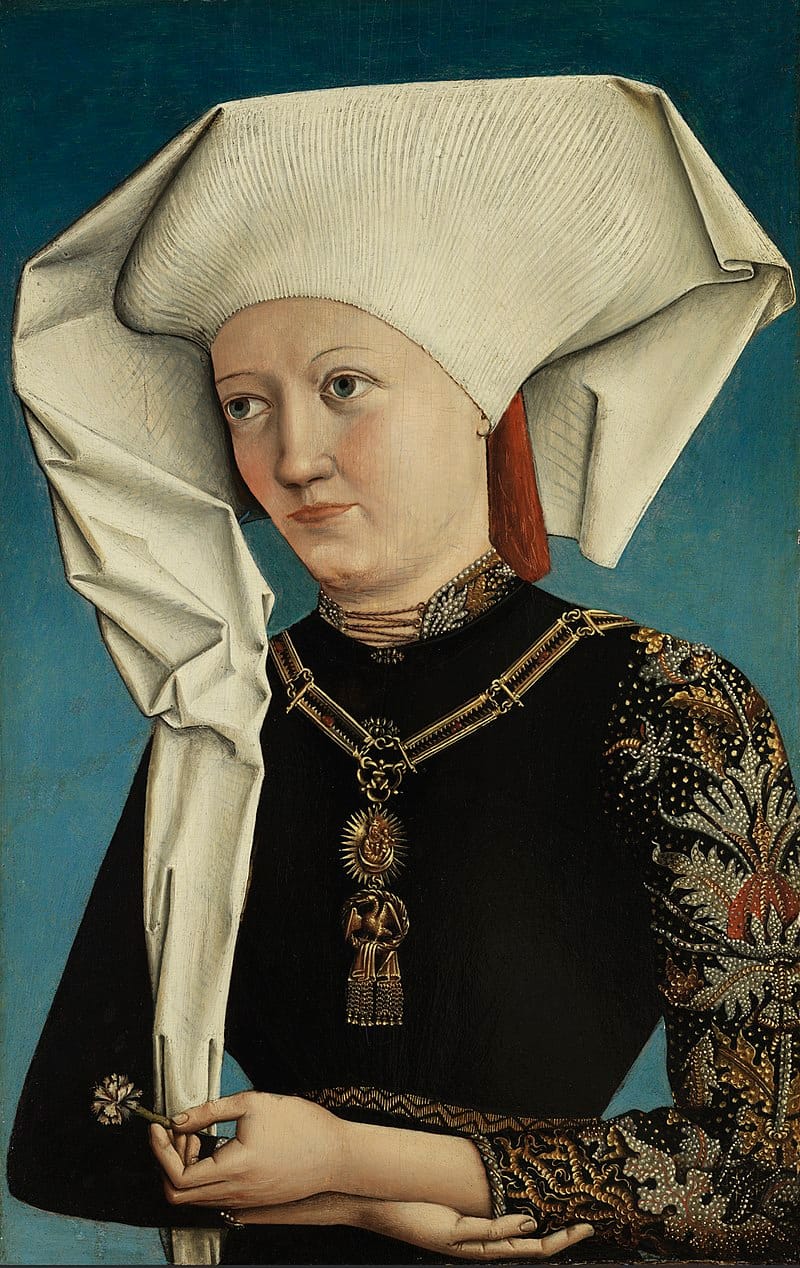
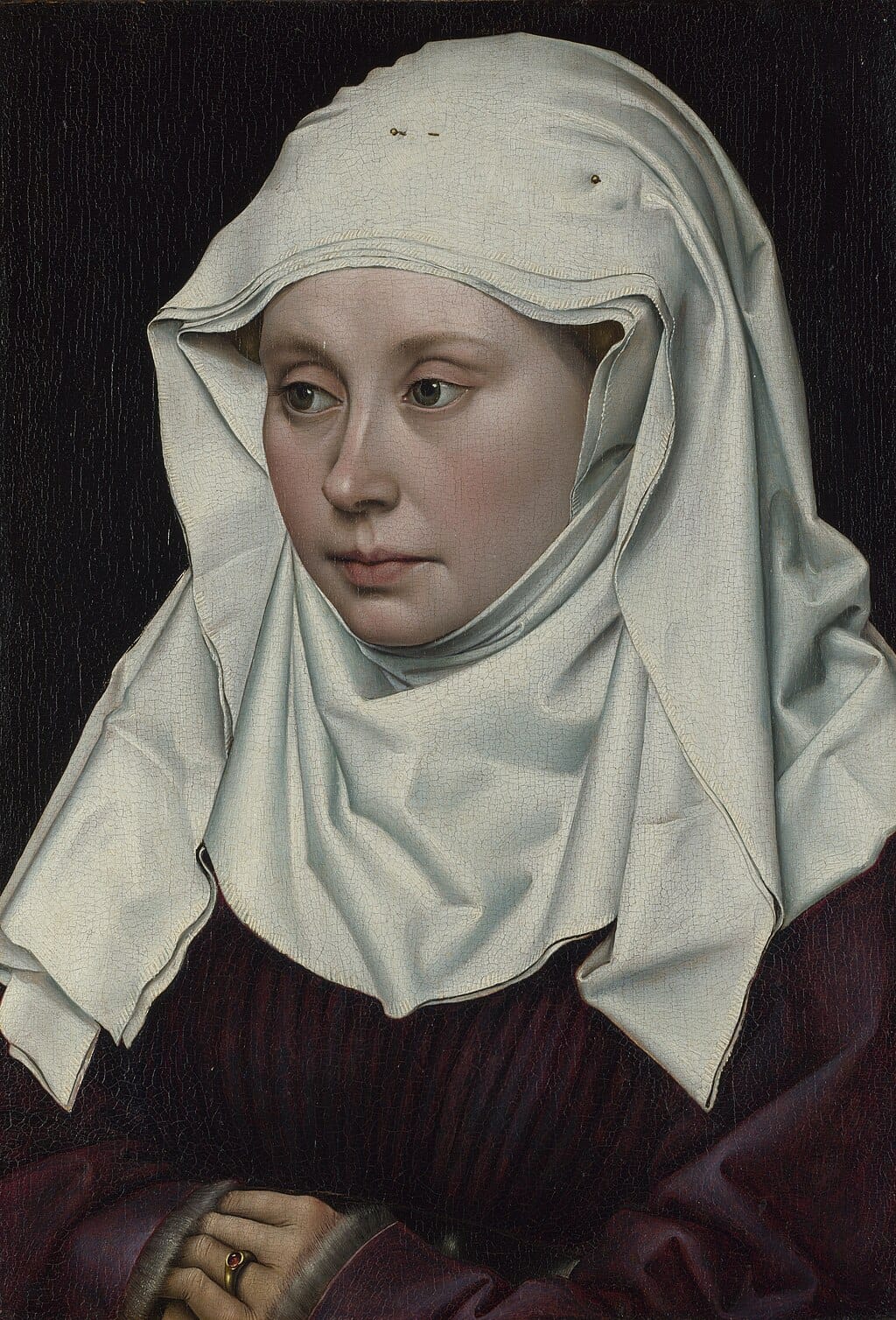
Finally, the wimple, which was a large piece of cloth usually made of linen or silk. The style shown below is the Order of the Swan, a religious fraternity founded in 1440 by Elector Frederick II of Brandenburg to honor the Virgin Mary. The woman in the portrait is Saint Hemma of Gurk who was active in Carinthia in the 11th century. It would seem that extravagant headdresses only persisted among religious communities.
Also see The Ugly Duchess, Jane Austen.