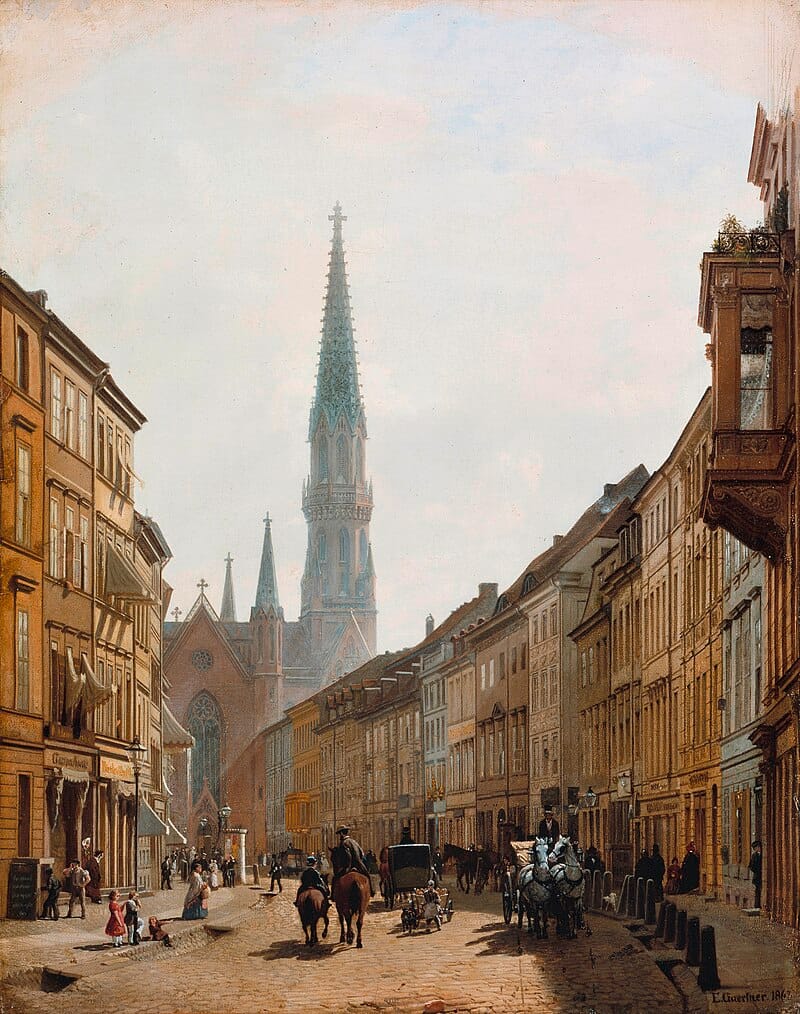
Berlin: the Grey City


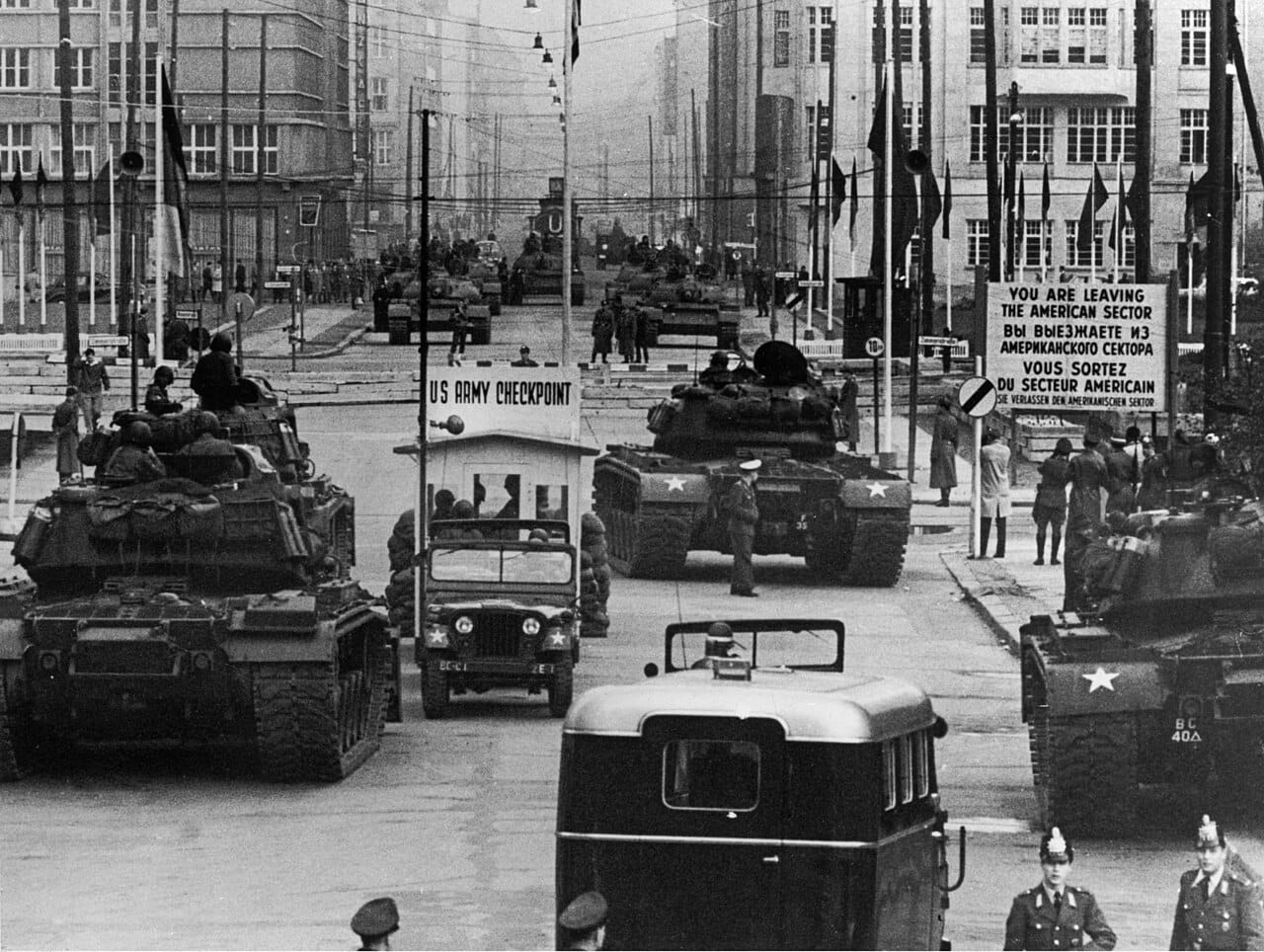
After World War II, some nicknamed Berlin the Grey City (die graue Stadt) because reconstruction was largely brutalist in style, with raw concrete and drab apartment blocs, especially in East Berlin. Much of the legacy of renowned 19th century Berlin architect Karl Friedrich Schinkel was damaged or destroyed by Allied bombing. Christopher Isherwood, who had lived in Berlin before the War, noticed when he went back for a visit in 1952:
The Tauentzienstrasse beyond was like an avenue of shattered monuments. Through wide gaps between formless mounds of rubble, you got views over the great central desert of destruction, and saw the Sieges Saeule rising forlornly from the treeless, snow-covered plain of the Tiergarten, which was dotted with bizarre remnants of statuary: a uniformed general, a naked nymph on a horse. In the background, the skeleton of a railroad station showed up starkly; and against the blue winter sky, a red flag fluttered from the Brandenburger Tor, entrance to the Soviet sector. There was something doubly strange about this landscape. It is strange enough to see a vast city shattered and dead. It is far stranger to see one that is briskly and teemingly inhabited, amidst its ruins. Berlin seemed convinced that it was alive; and, after a few hours there, you began to agree that it certainly was.
- Christopher Isherwood, The Berlin Stories (1954 edition)
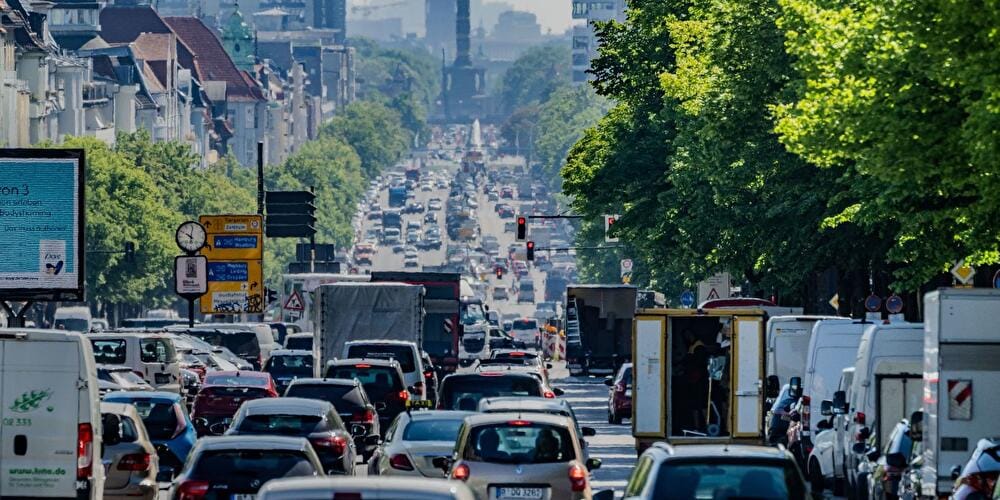
Today, obviously Berlin is thriving. But, ecologically speaking, Berlin continues to have a severe air pollution problem. This is primarily from diesel emissions of Nitrogen oxides (NOx). Some years ago, there were subsidies for electric vehicles and then that got scrapped, but now they are back, and there is more investment in charging stations, where there wasn't much before. Two steps forward, one step back.
Berlin's other challenge is drinking water: heatwaves like the one in June 2026 and a reduction in coal mining (which uses a lot of water) are reducing water flow in the Spree River, although aquatic plants holding on to water is mitigating this somewhat. The city is upgrading and expanding stormwater and wastewater systems anyway and aiming for a "sponge city" effect whenever it rains heavily.
Other Berlins:
Max Reinhardt staged Oscar Wilde's Salomé in 1903 in Berlin. Heinrich von Kleist committed suicide on the shores of Kleiner (Little) Wannsee in 1811, near Potsdam, in what is now the distant outskirts of Berlin. Nearby is Sanssouci Palace, where Voltaire managed to offend Frederick the Great.