The protests of 2026 feel very different from 1968

After the recent U.S. elections, I have the sense that young people are on the verge of creating something new and wonderful but as yet undefined. This sentiment seems to be everywhere in the world, which is a good thing, but the mood feels very different from 1968, as a number of commentators have noted. Back then it was a middle class youth and labor movement and it was cultural and aspirational: war, sexism, racism, consumerism. Proactive but a bit vague until May 1968. Nowadays, the protests seem primarily economic and specific: corruption, inequality, the tech oligarchy, housing and education. Reactive but also more broadly spread across class and age groups, practical and individualistic.
Can we learn anything from 1968? Hasan Piker seems to be one of the few people in the U.S. making those connections. Unfortunately, nostalgia doesn't work. For one thing, those student protesters of the Sixties have turned into their reactionary parents and those decrepit politicians who never retire. For another, many young people today aren't even aware of what happened in the 1960's.
So, this post is about Joan Baez and Olivia Rodrigo, whose celebrity heydays are 60 years apart. I chose two celebrities that I admire. Do they mean anything to you? Obviously, it is affected by what age you are, or what age they are, but the problem is that Rodrigo fans have never heard of Baez, just as older Baez fans have never heard a Rodrigo song. Is there any common ground?


Left: Magnolia Pictures. Right: Raph_PH
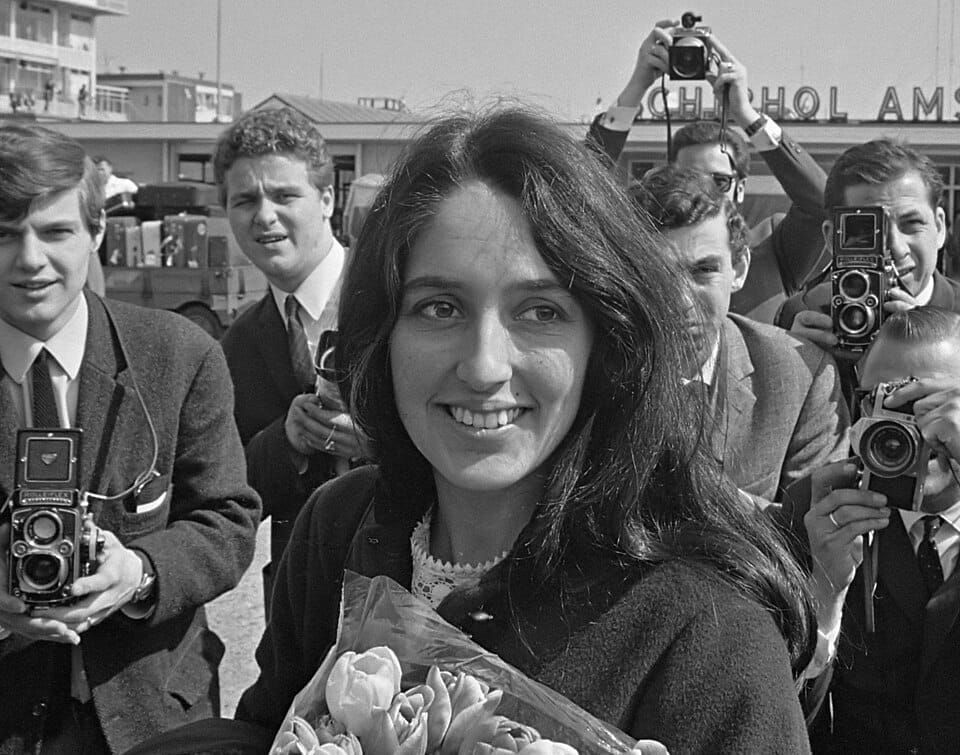
The photo up top shows Joan Baez in her heyday in 1966 when she was 25. The one immediately above shows her in a contemporary photo, looking great; she is 85 and never had cosmetic surgery. The third shows Olivia Rodrigo at Glastonbury last year when she was 22 and I think of her as a wonderful role model like Baez was (and which I wish Taylor Swift would be). Most young people, let's face it, are only going to be interested in the third photo.
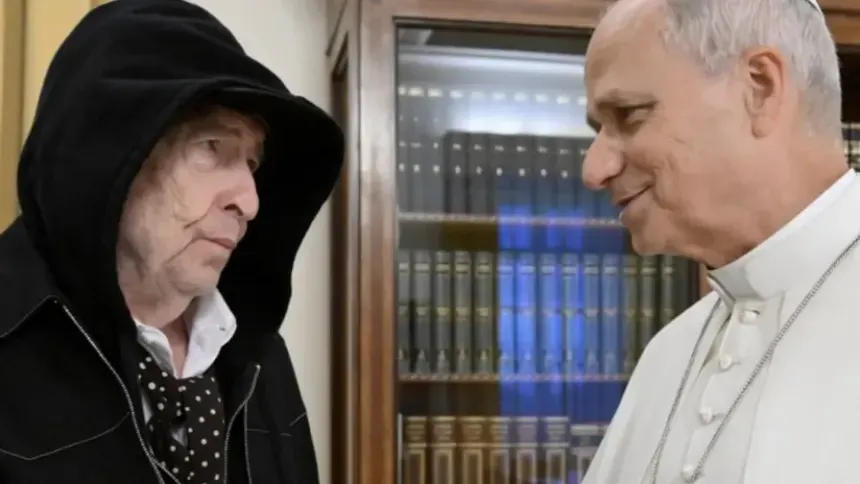
There are many similarities between Baez and Rodrigo and I don't think I need to list them. For one thing, though, Baez still performs. She has said: "Being a legend is a drag if you’re not also current." But is she current? In what sense are nostalgia tours really current? Are audiences there because they want to remember the old days when these musicians resonated with popular culture? Nothing wrong with that, but "legends" start to become - well - old, just like their fans and young people aren't interested. Many musicians have been told to pack it up. Should Baez? I find her recent documentary footage awkward, for example Joan Baez: I Am a Noise (2023), perhaps because I struggle to accept how "legends" try to age gracefully and how they become self-conscious and even a little defiant and how they struggle with mental and health issues. Here's another one who was always old and erratic... (it's not the one on the right).
In other words, the past stays in the past despite what Jay Gatsby had to say about it. But, I like to think we can borrow it a bit sometimes. Can young people today get anything out of it? Is sharing it on social media effective when messaging is so dispersed and "cringe" and overrun by AI slop? Forget 11th grade U.S. History classes: they never reach the 1960's (I'd recommend they teach the timeline backwards). Despite that, we are seeing some young people inspired to do grassroots organizing, school walkouts, confronting the gerontocracy in the Democratic Party, and so on, and music again is playing a critical role. Rodrigo is a great role model: she strongly advocates for women's reproductive rights and LGBTQIA+ rights and speaks out against racism and ICE. As does Hasan Piker.
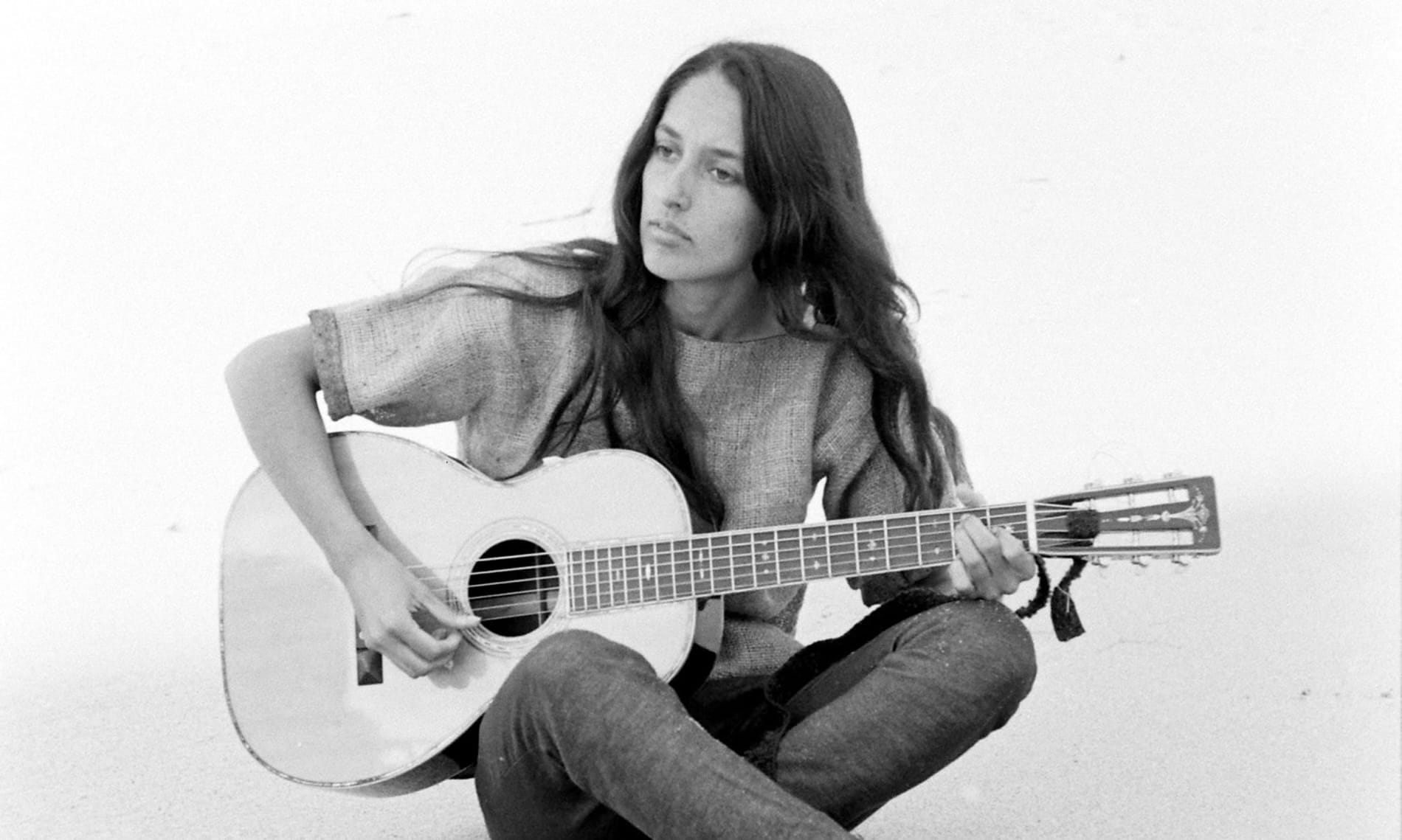
So, ultimately, learning from history is pretty useless. Unfortunately. But I like to think we can go back in time and experience moments that did not involve us or if we weren't even born yet. Films like Across the Universe (the Beatles) and A Complete Unknown (Dylan) just feel fake to me, no matter that they acknowledge it. But, I do find early historical photo and film material of Baez, Dylan (and others) very moving: it seems as if, at these seemingly innocent moments back then, the world opened out into a newly liberated imaginary space... That's why the 1960's feels so different from today, when imaginations have become so cramped. We can't cross that gap really, but there's a way to do it. Here's Baez in 1962. Can you be there? I can.
Many years ago, in the 1990's, I was walking across the UCLA campus on a bright sunny day when I turned a corner and saw - about 50 yards away - a young woman in bell-bottom jeans. It was almost as if I was rocketed back to the 1970's in a gestalt moment. She looked a bit like this, only the jeans were much more flared:
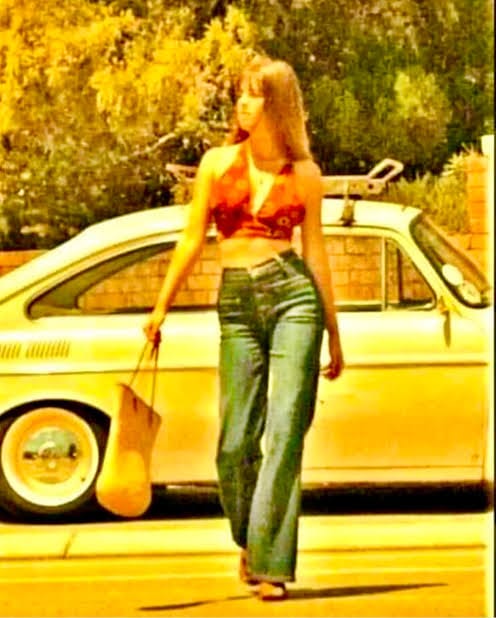
It was a strange experience because, brief as it was, it proves the past is not totally inaccessible, except in our heads. I have found that perfume also creates that gestalt effect. Music too: back then, songs were urging participation in a broader movement and young people responded. I think that cycle ended with Baez's nostalgic Diamonds and Rust (1975), one of the greatest love songs of all time - her haunting voice and those exquisite lyrics. Those who know the song will recognize this reference:
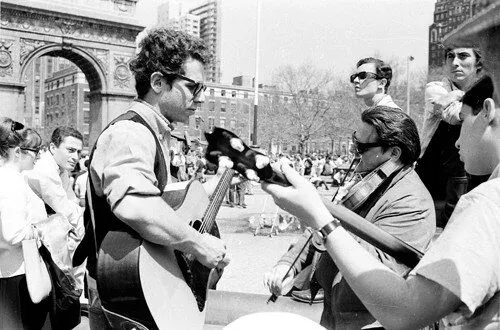
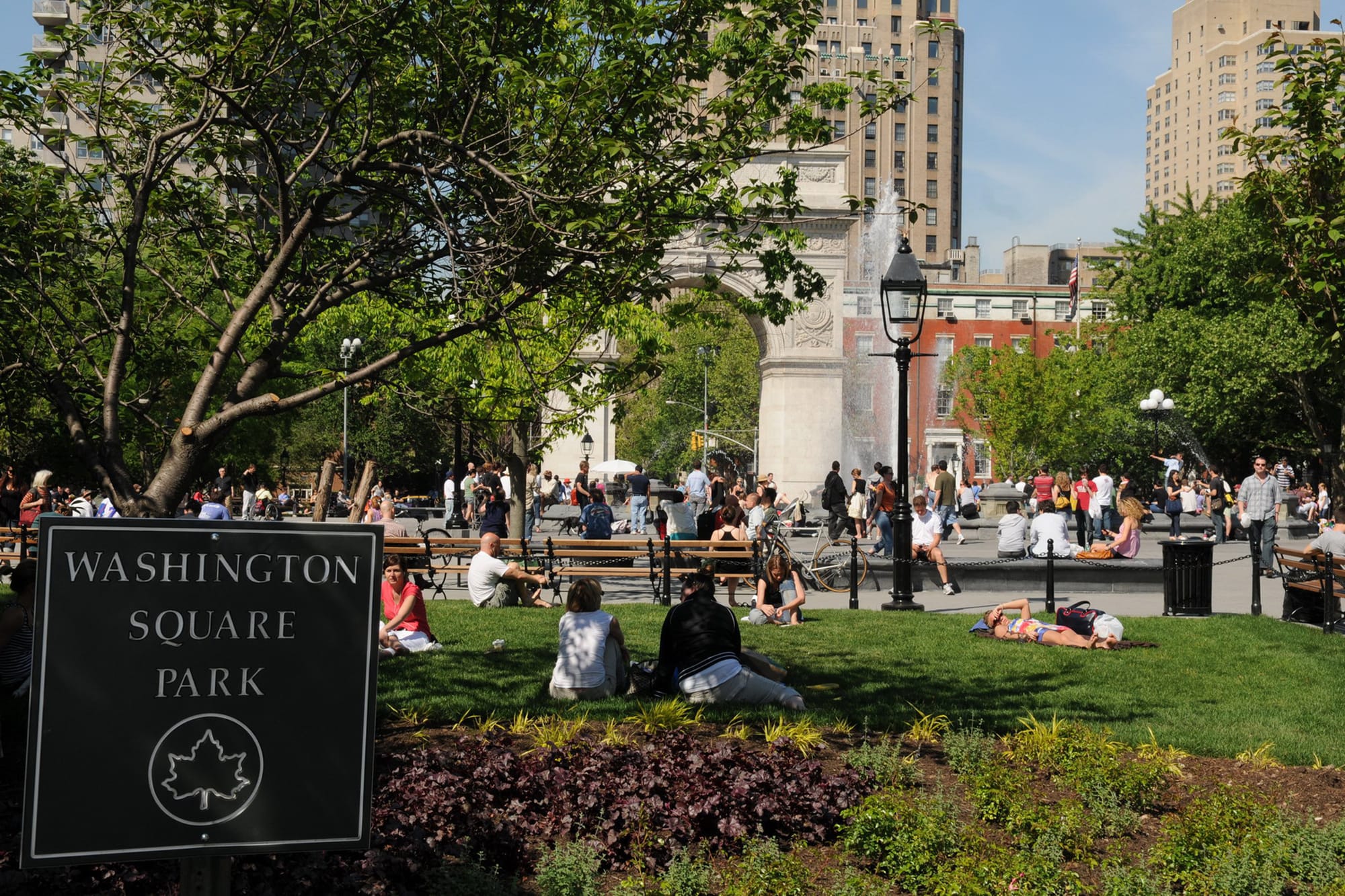
Then. Now. Are there any ghosts still hanging around in Washington Square? Photos: NYC Urbanism, Time Out
But, that's just me. I was in Washington Square a few months ago and the vibe was everyone enjoying their lunch on a lovely day, but I doubt anyone was giving any thought to its once being a center of the folk music revival and beat poetry in the 1960's. Madeleine Thien writes: The present is all we have, yet it is the one thing we will never learn to hold in our hands.
Maybe, but the present is not all that we have. Because looking at these photos or looking at old film, there is some time travel magic in them if we have the imagination to get there from here.
And if that doesn't work for you, you can always see Olivia Rodrigo perform.