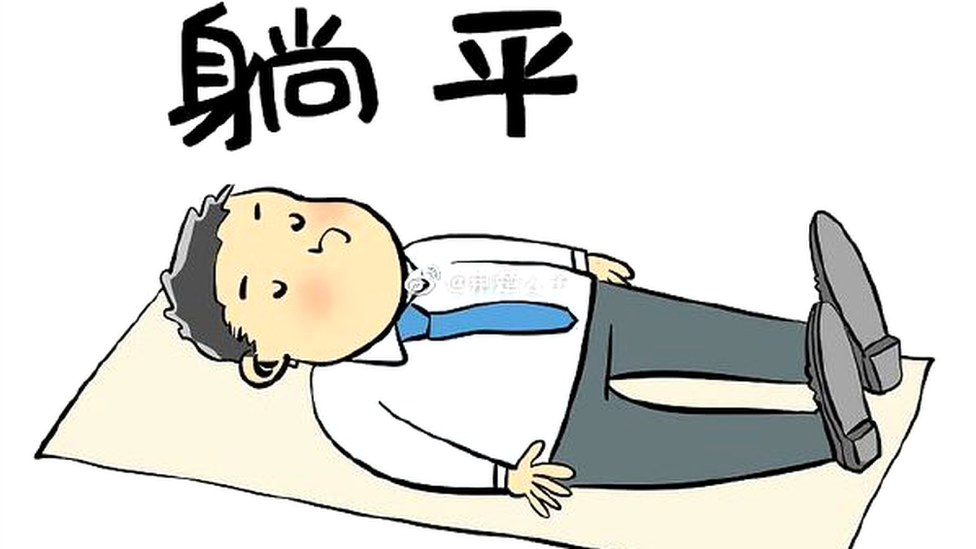
"Lying flat" (Tang Ping) and the "floating life" - is that new really? Or has it been around forever?


I am really impressed with the student protests in Paris, Milan, Tirana and elsewhere, but these are young people who can imagine a future. What about those who can't? I can't assume everyone knows what Lying Flat (Tang ping 躺平) is, even if anyone young reading this post is just rolling their eyes at old people like me for using "their" slang.
Tang ping refers to a phenomenon where young people reject societal expectations that they succeed in education, work, raising a family, and instead choose to do as little as possible. Inertia, apathy, failure to act... call it what you want. The term got its start in China, but Quiet Quitting emerged around the same time in the U.S. and this phenomenon was (and is) everywhere in the world now, as young people are angry about the breakdown of the social contract and they are anything but apathetic.

I sympathize with Gen Y/Z, but is "lying flat" new really? The only thing that's new is the sheer scale of it. A recent OECD analysis in 2024 shows that the share of 15-29-year-olds who "choose to lie flat" is quite high in Western countries: U.S. 14.5%, U.K. 10.6%, France 13.4%, Italy 22.9%, Mexico 19.5%. It aligns with OECD NEET data (Youth Not in Employment, Education, or Training).
Anyway, "lying flat" is a valid form of protest and doesn't deserve anybody's mockery.

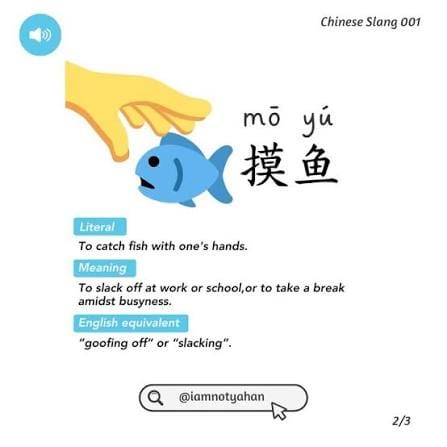
Similar slang has been around even longer and I'll list a few. For example, "blackpilling" ("Why do anything when it's all hopeless" - borrowing from the pill metaphor in The Matrix), "Doomer Wojak," "crash out," "cooked"... In China, there is Bai Lan (摆烂 - "let it rot"), which resembles Western equivalents like "bed rot" and "brain rot"; Light People (轻/轻盈的人 - living a low stress lifestyle); and Moyu (摸鱼 - "touching fish"/slacking off). In South Korea there is "bugung chuo" (不工作/부궁추오 - not working); in Japan hikikomori (引きこもり - withdrawal from social life); in France "tant pis" (shrug). And so on...
Most of these terms are older than Tang Ping, but I favor it over the others because it isn't passive: it's resistance to a government and wealthy class indifferent to improving the lives of young people. French journalist Marine Brossard has said: "Contrary to other 'anti-system' terms, tangping represents an attitude, not a lifestyle." I think that's an important distinction: it means there isn't one way to do this; it means young people can respond in any way that works for them.
The influential anthropologist-philosopher Biao Xiang agrees, but adds that it's not sustainable long term. He describes how people get stuck in the floating life (his concept of xuanfu 悬浮 - "suspension"). He also uses a hummingbird metaphor - those incredibly busy birds that never seem to relax (although they do) - and this resembles Neijuan (内卷 - involution). They both mean that doing more in this busy, competitive society can deliver diminishing returns. It's not healthy, so stop (maybe).

But, it's not new. Think of the Sixties when it was the boomers' turn ("Turn On, Tune In, Drop Out"), and "slacker culture" in the 1990's when it was Gen X's turn. Before that we had the fop, the dandy, the popinjay, the toff... decadent aristocrats who did nothing useful with themselves. I think we can go all the way back to Diogenes of Sinope (circa 412–323 BCE), the Cynic philosopher who lived in a large ceramic jar (above). His philosophy and lifestyle was to do nothing, since the standard way of living, in his opinion, was performative nonsense. He wasn't wrong...
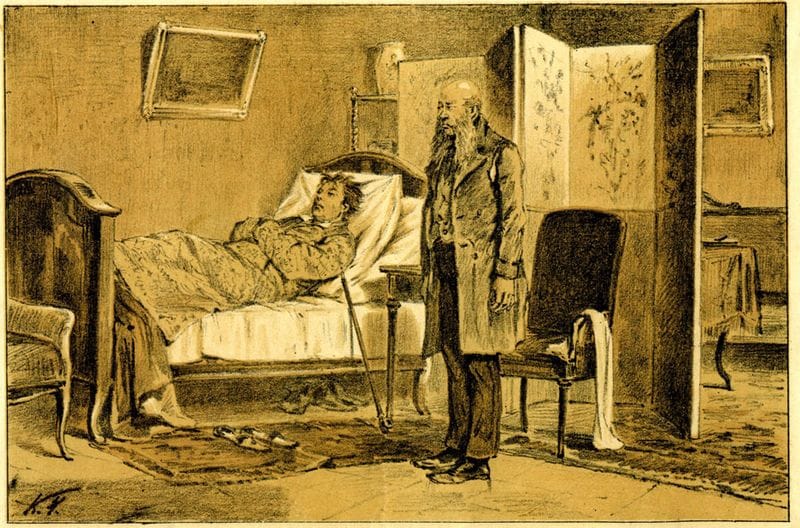
The most perfect physical expression of lying flat in literature is Oblomov, by Ivan Goncharov in 1859. Ilya Ilyich Oblomov is a daydreamer who refuses to get out of bed, a phenomenon the Russians call Oblomovshchina. Of course, the novel is a satire on wealthy Russians in the 19th century who were constitutionally unable to do anything for themselves or anybody else, as society just stagnated. He gives up his job, insults his friends, goes into debt, loses the woman he loves to someone else and, when he does get married, his wife takes care of everything for him. He literally dies in bed. The novel fits into a tradition in Russian literature of the "superfluous man": Pushkin's Eugene Onegin (1825-1832), Lermontov's A Hero of Our Time (1840) and Turgenev’s The Diary of a Superfluous Man (1850).
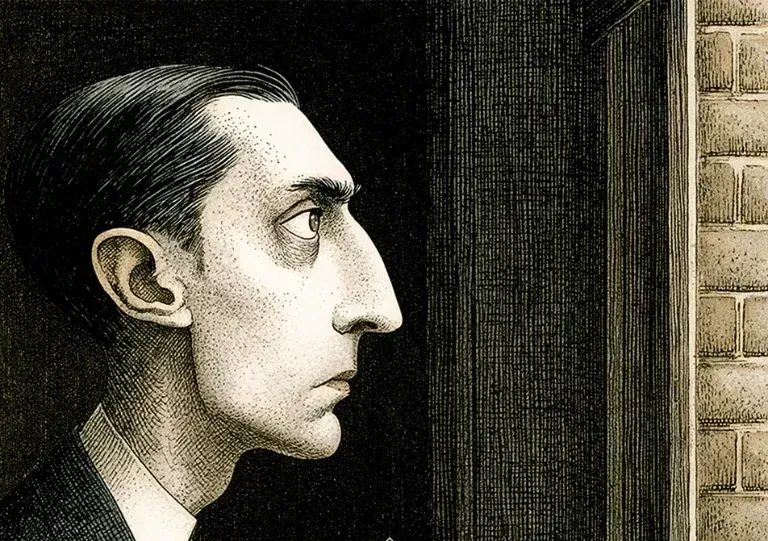
There is no record of Herman Melville being familiar with Russian literature, but it rhymes well with his short story Bartleby, the Scrivener: A Story of Wall Street in 1853. Bartleby refuses to do anything in the office and is later arrested for vagrancy and eventually starves to death in prison, on principle it would seem. His famous line is "I would prefer not to," which is the equivalent of lying flat. No publishers seem to know how to illustrate this story, so I picked a Spanish one that I liked the most (below):
Thoreau's On Walden Pond came out the following year (1854), and there are those - especially in China - who see in Thoreau's simplified life, a real life example of lying flat, although Thoreau believed in slowing down, rather than doing nothing - 躺平不摆烂 ("lying flat but not rotting"). Productive idleness, as it were.
Does this resonate more in China because of the Taoist concept of wu wei, which is frequently mistranslated in the West as "inaction," when it's actually more like "effortless action" and going with the flow - but not passively. I'm not sure On Walden Pond resonates these days with anyone in the U.S. and I have been unable to find any literary or artistic movements like this in the West in the 20th and 21st centuries, although there have been some in China. I do wonder if nowadays the lives of young people resemble the drifting floating life that Russia and the U.S. experienced in the mid-19th century, before Russia's Emancipation of the Serfs, the European revolutions of 1848 and the U.S. Civil War.
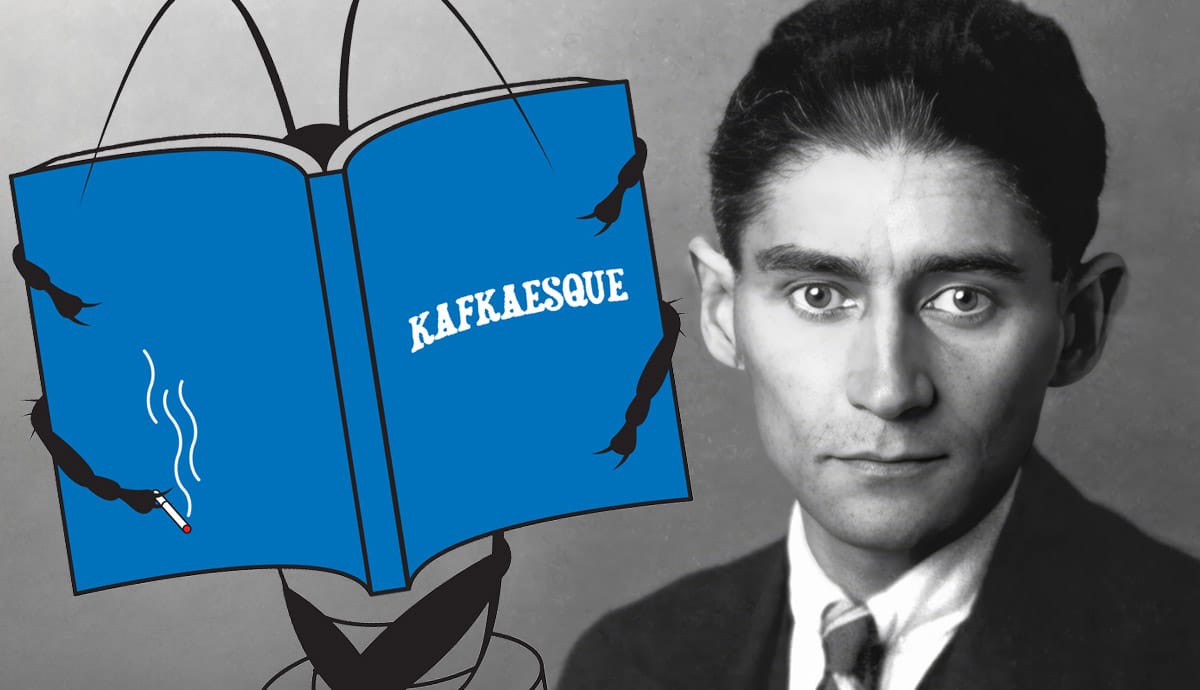
The closest I came with Western literature was Franz Kafka and Metamorphosis (1915), where Gregor Samsa's metamorphosis into a giant insect seems to me to be a horrifyingly physical metaphor for someone whose life has been slowing down and coming to a complete stop. It's certainly one future for Lying Flat, but it's not the only one.
Academics keep zeroing in on excessive cell phone use as if this explains Lying Flat, but this mistakes the symptom for the disease and the disease is anxiety, apathy and alienation in a corrupt and dying capitalist system. Don't blame young people or their phones, or even social media companies; blame the breakdown of the social contract.
This floating life is but a dream; how much longer can we enjoy our happiness?