European painters of the working class, with a focus on their pets

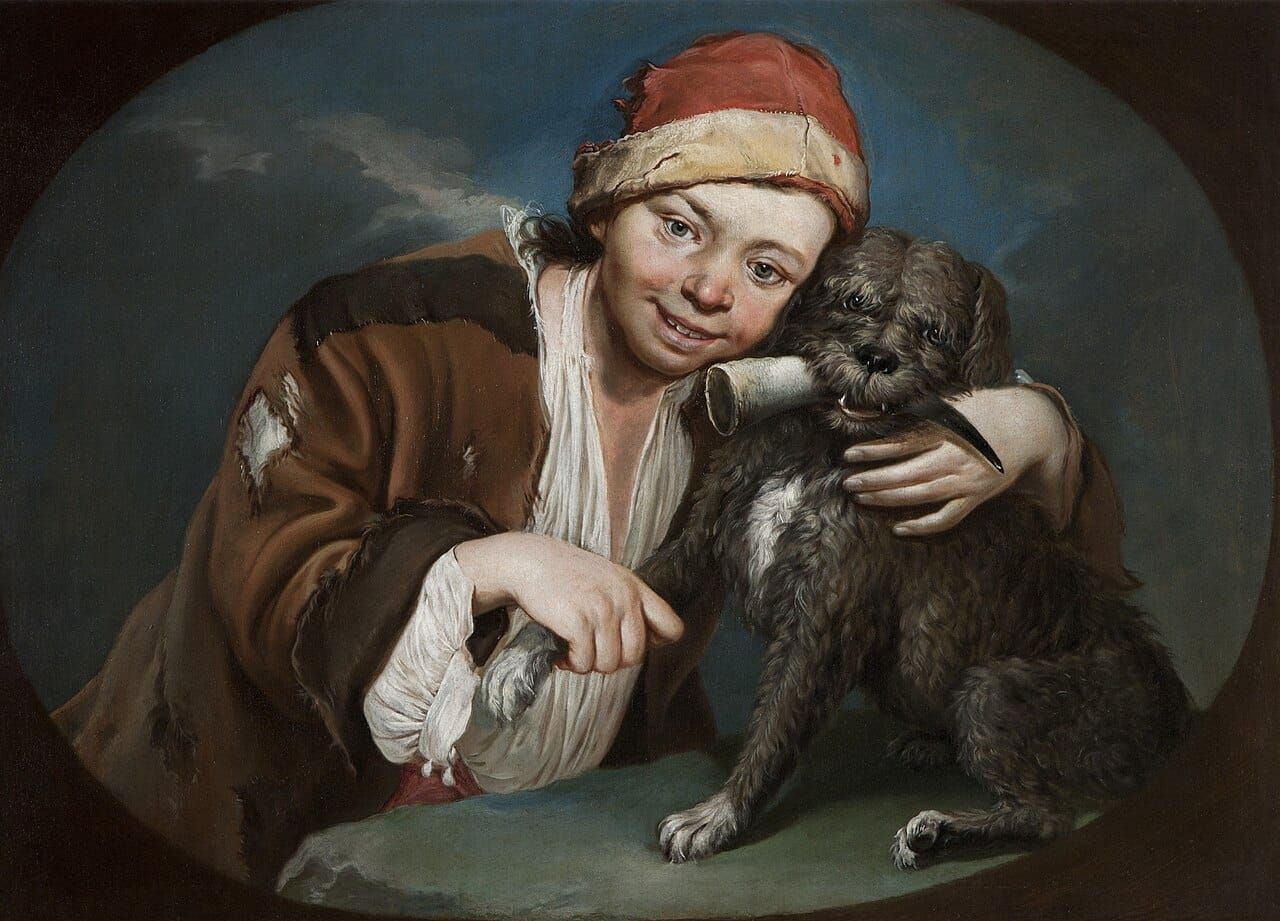
Art galleries around the world these days are filled with paintings of rich people with their cute lapdogs (for the women) and hunting dogs or horses (for the men). Coded class and gender stuff. Pets were a luxury item in any household and more often than not they were status symbols. Add in monkeys and parrots and guinea pigs; it's not so different with the rich today. But really, who cares about rich people showing off in their portraits?
What about the working classes, including the poorest of the poor? Now, that's more interesting and yes, they had pets too. One of the best painters was Giacomo Ceruti, a late Baroque Italian artist who moved around a lot for work - Brescia, Milan, Venice, etc. His paintings of working class people were done with affection and without idealizing or patronizing, by placing his subjects in the same poses he used for his wealthy patrons, like the portrait below of a woman with a dove. My favorite Ceruti paintings show women and girls sewing (not shown here). He was popularly nicknamed "Il Pitocchetto" or "the little beggar" (from "pitocchi," a term used in the 18th century for beggars, vagabonds, and outcasts), and his paintings sold well to a specialized clientele, both secular and religious, who liked this kind of subject matter.

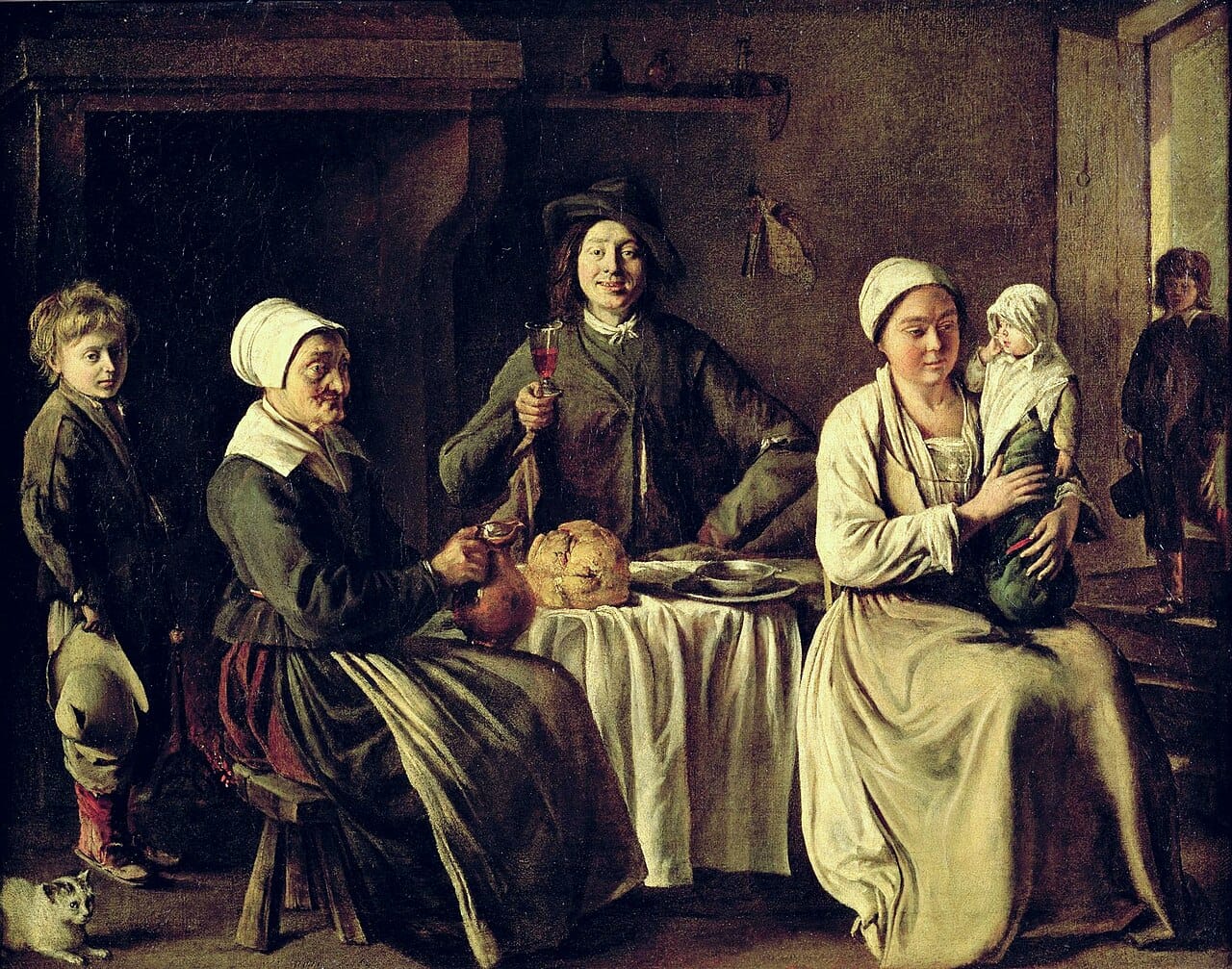
In this post I've focused only on pets and working animals. Notice the cat in the corner of the painting below, which is from a century before Ceruti. The cat is part of the family - after cats graduated from barn duties catching rodents to living inside. That same cat pops up in several paintings by the Le Nain brothers (Antoine, Louis, and Mathieu), who painted domestic scenes like this with dignity. They came from a well-off rural family in Picardie but spent most of their careers in Paris. (By and large, cats do not appear much in paintings of the wealthy until the 19th century; they were considered too unreliable and working class!)
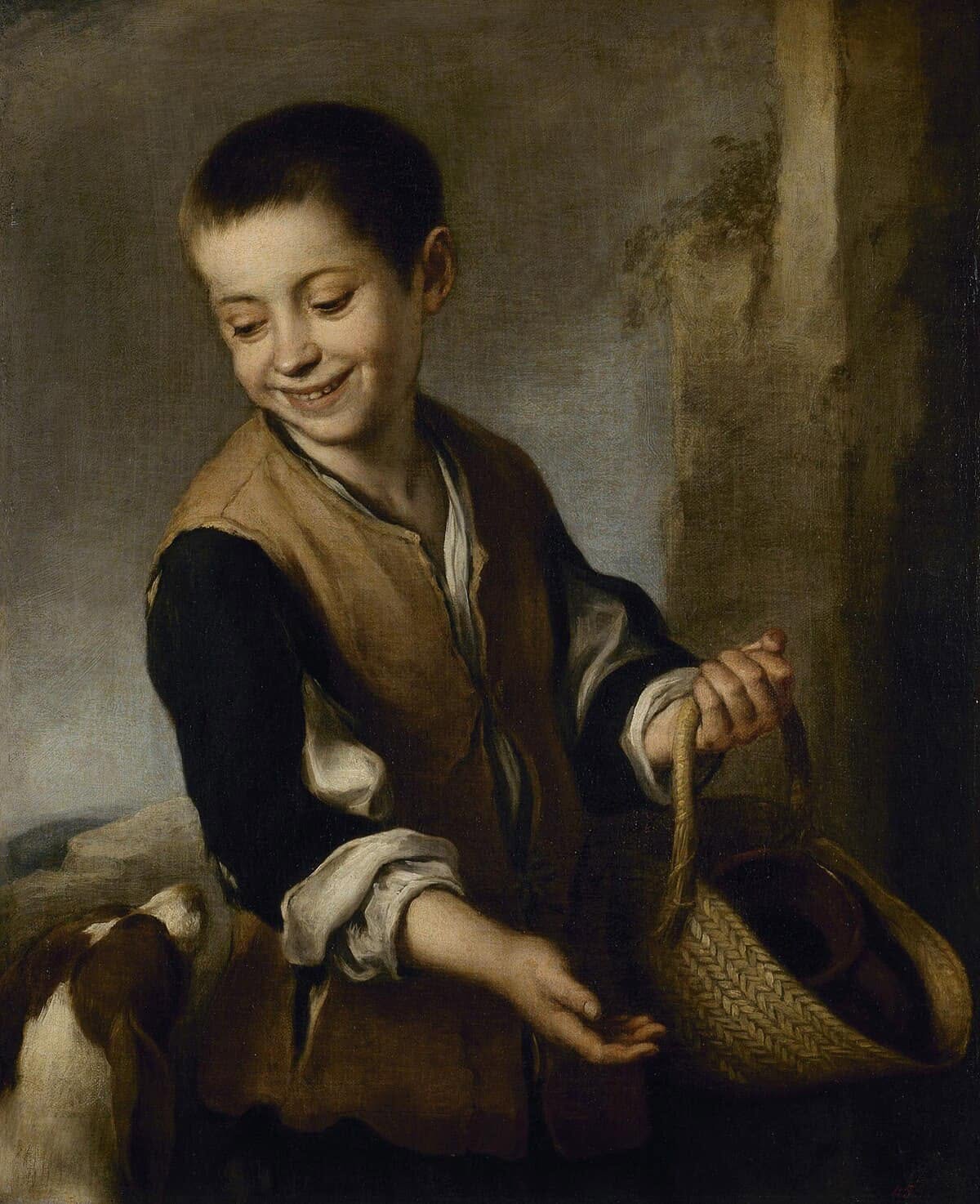
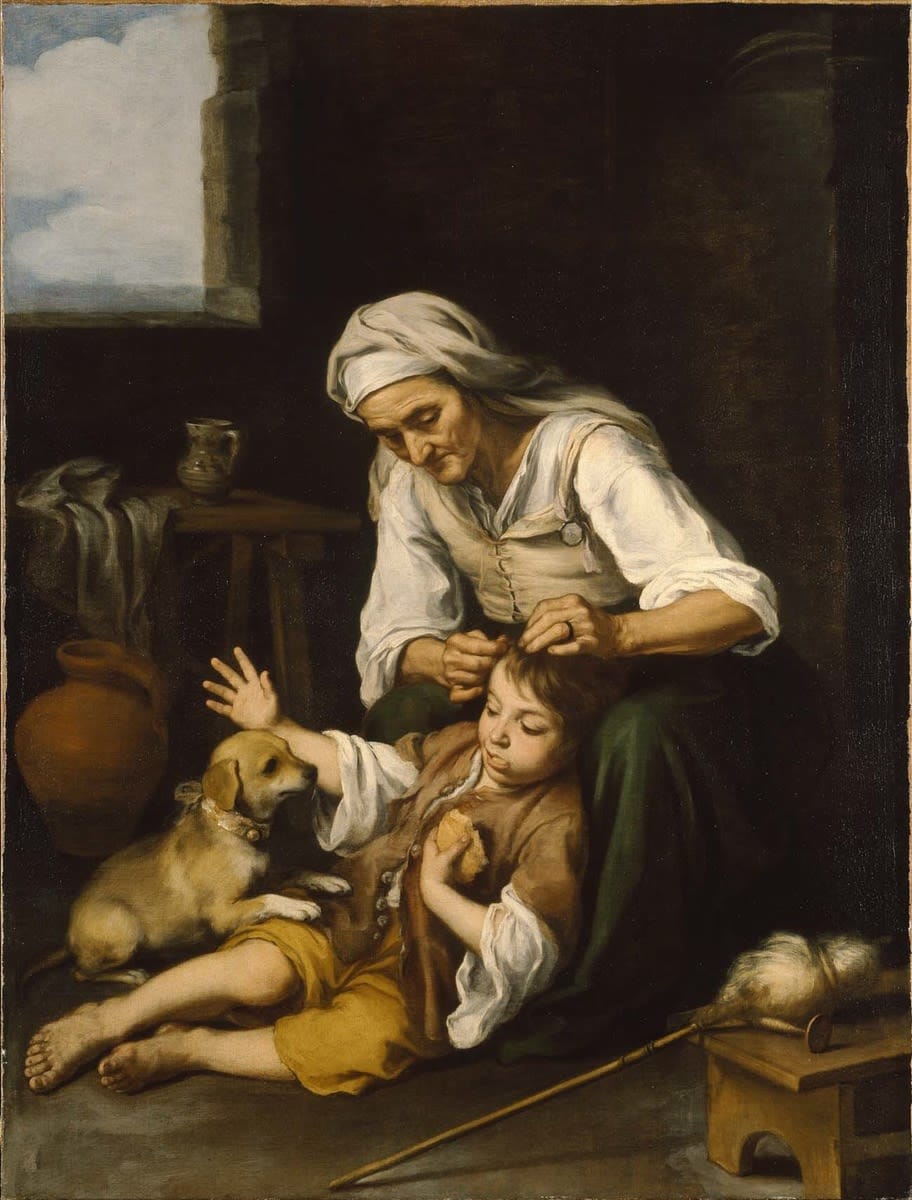
By contrast, it's likely that the dog in the Murillo painting immediately below is a stray, but the boy and the painting are endearing. Bartolomé Esteban Murillo lived in Seville all of his life, and while his more important works were religious, he also produced some superb studies of children and working class life. That includes the lower picture which shows a child and his grandmother picking lice from his hair. These paintings were sentimental enough to be approved of by religious authorities, who graciously thought that even the poor could be redeemed. Many of them ended up outside Spain - bought by visiting Flemish and Dutch merchants as "exotic" fare to sell back home, with most ending up in collections like Wunderkammern (Cabinets of Curiosities).
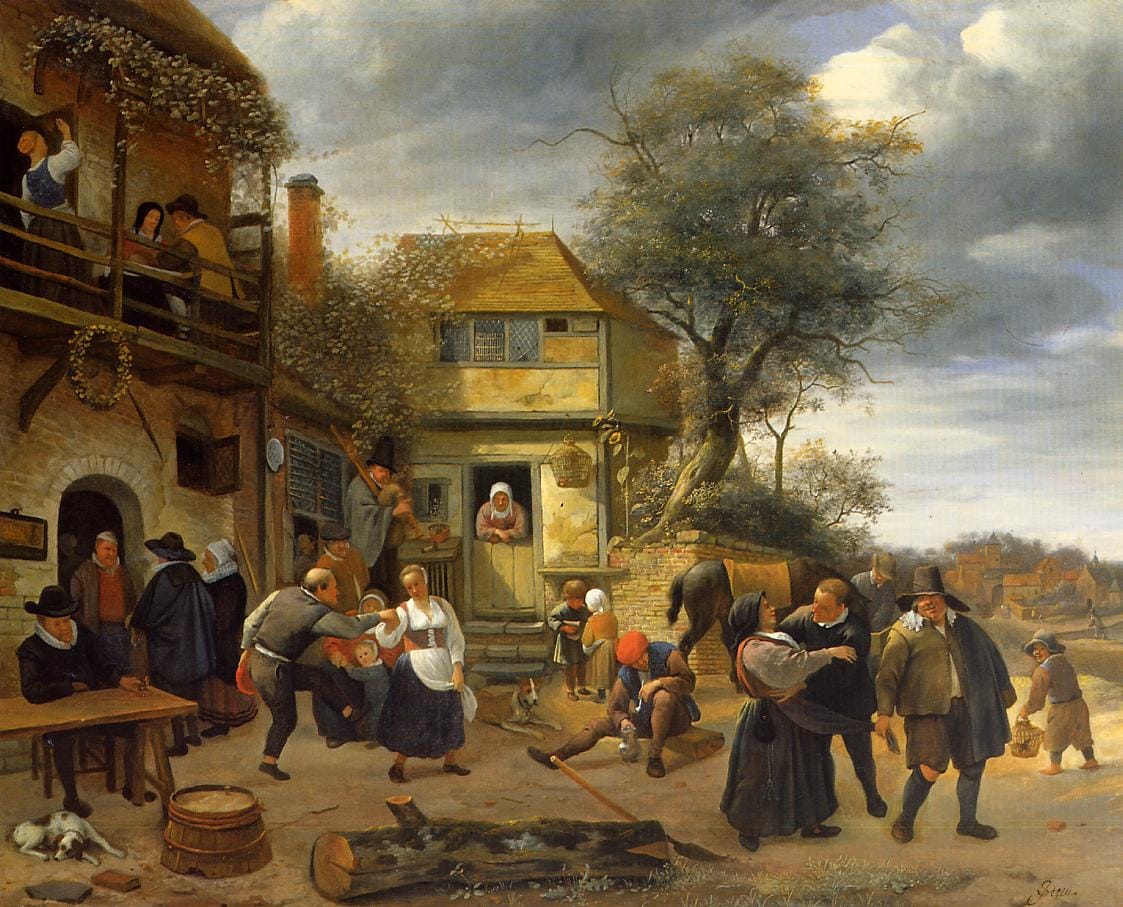
The most prolific painter of this (17th) century - in terms of portraying animals - was the Dutch Golden Age painter Jan Steen. By this time, dogs too had become domesticated - no longer just hunting dogs - and they appear in many of his paintings, like the ones in this tavern scene hanging around with their owners, sleeping or watching the revelry.
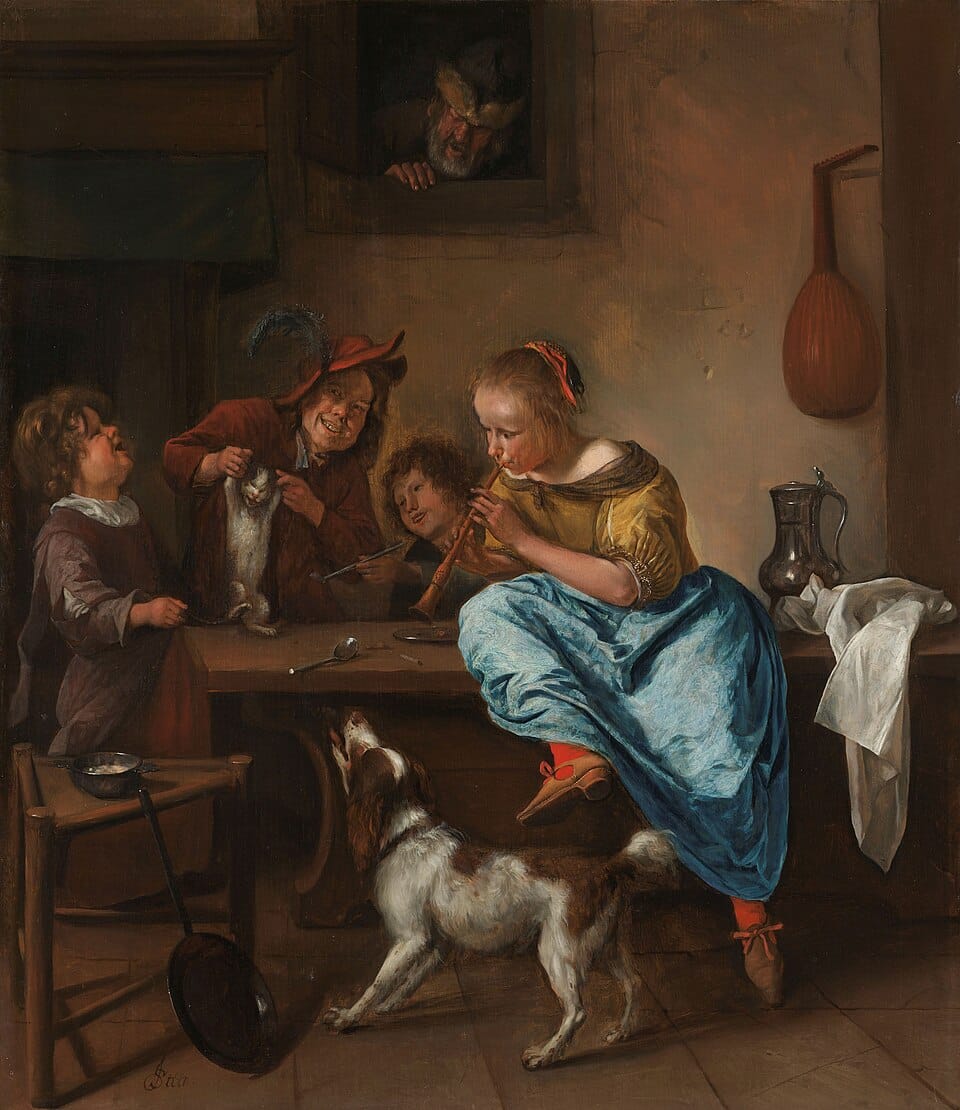
Steen also painted Children Teaching a Cat to Dance (aka The Dancing Lesson) - below - around 1660, and I suppose it's up to the viewer to decide whether you think the cat is being teased in a nasty way (I do) or if it's just children having fun.
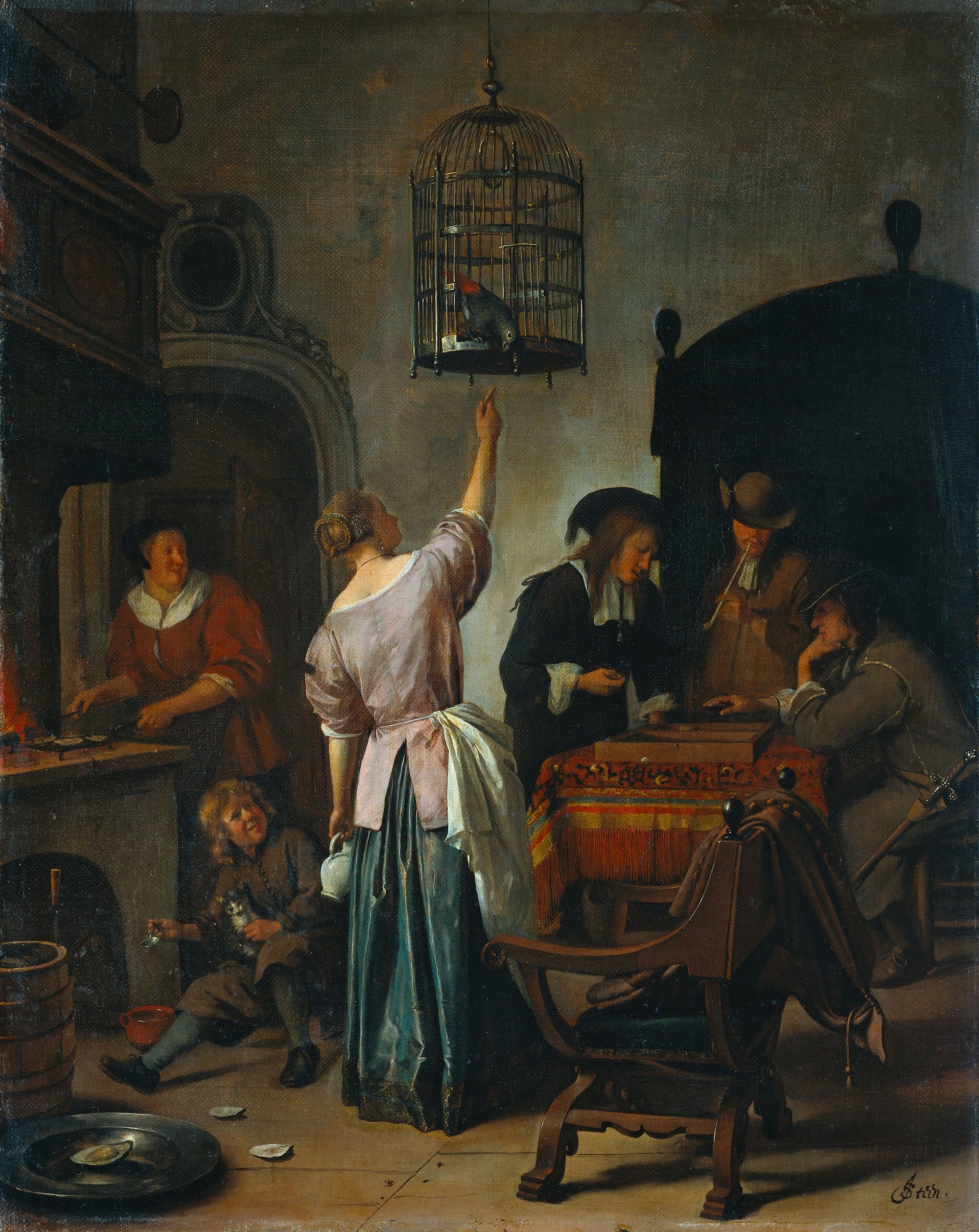
Then there's Steen's The Parrot Cage (below). Working class families generally did not keep parrots, as they were larger, exotic and expensive, but sometimes they kept smaller songbirds or inexpensive parakeets. Notice the cat being fed.
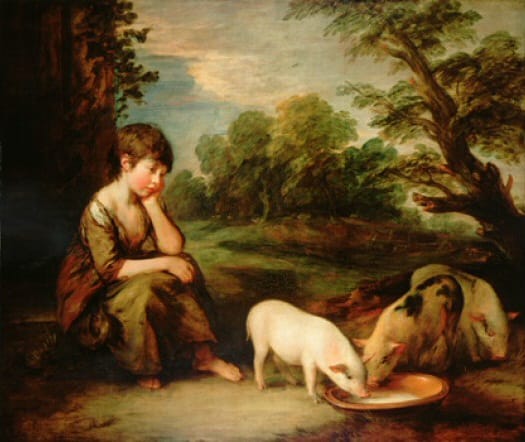
During the more bourgeois 18th Century, most paintings only showed working animals - livestock, hunting dogs and sheep dogs - and below is a sentimental painting by Thomas Gainsborough, idealizing a simple country life that was fast disappearing. His main rival, Sir Joshua Reynolds, said it was Gainsborough's best work, which I think is questionable, but I think he was praising the sentimentality:
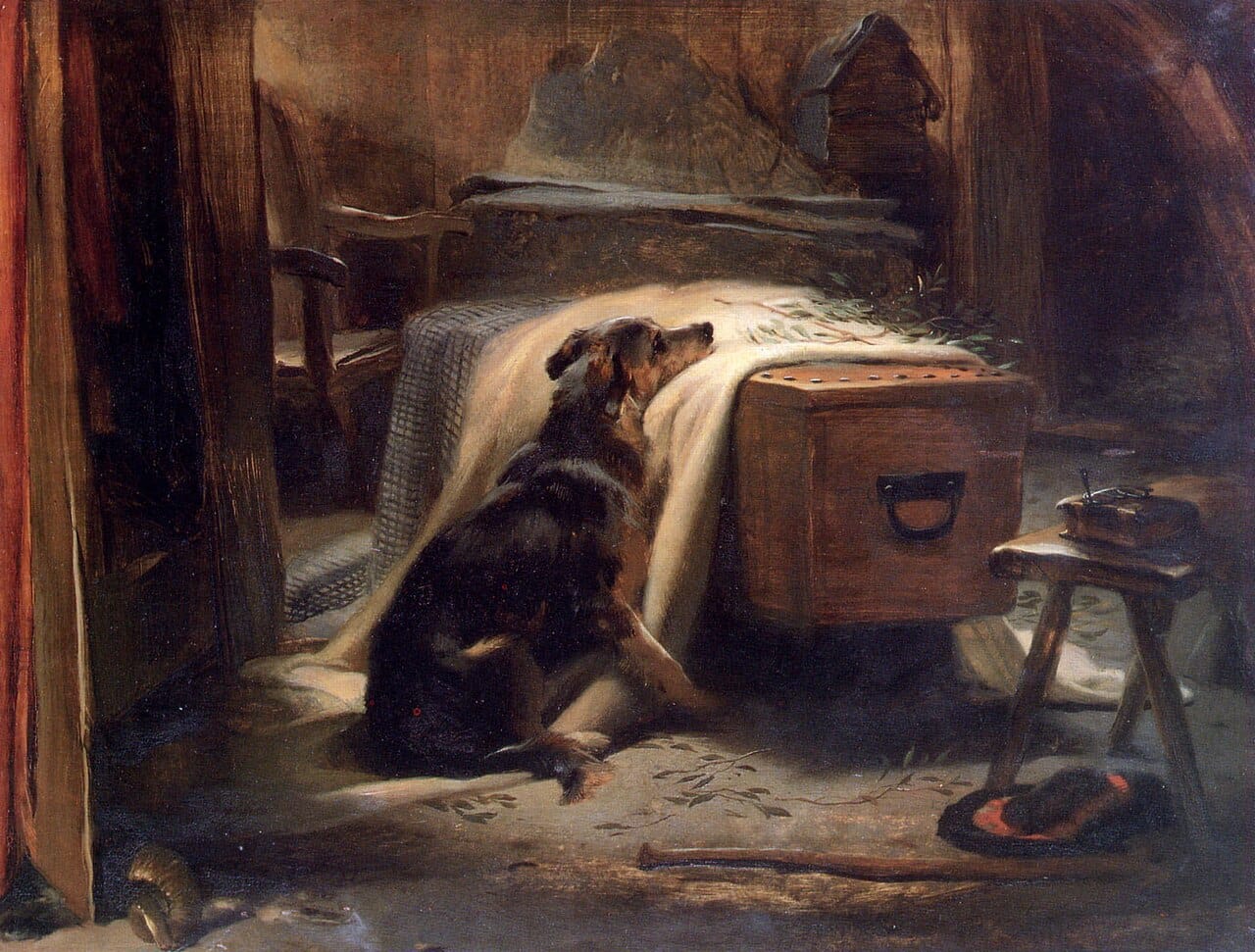
By the middle of the 19th century, taking an interest in the working classes was common. In England, these paintings were still sentimental, even maudlin, like the painting below by Edwin Landseer, where only the dog mourns the death of the shepherd. This style made Landseer extremely popular with the English, and Queen Victoria commissioned numerous pictures from him, including various royal pets and a portrait of herself.
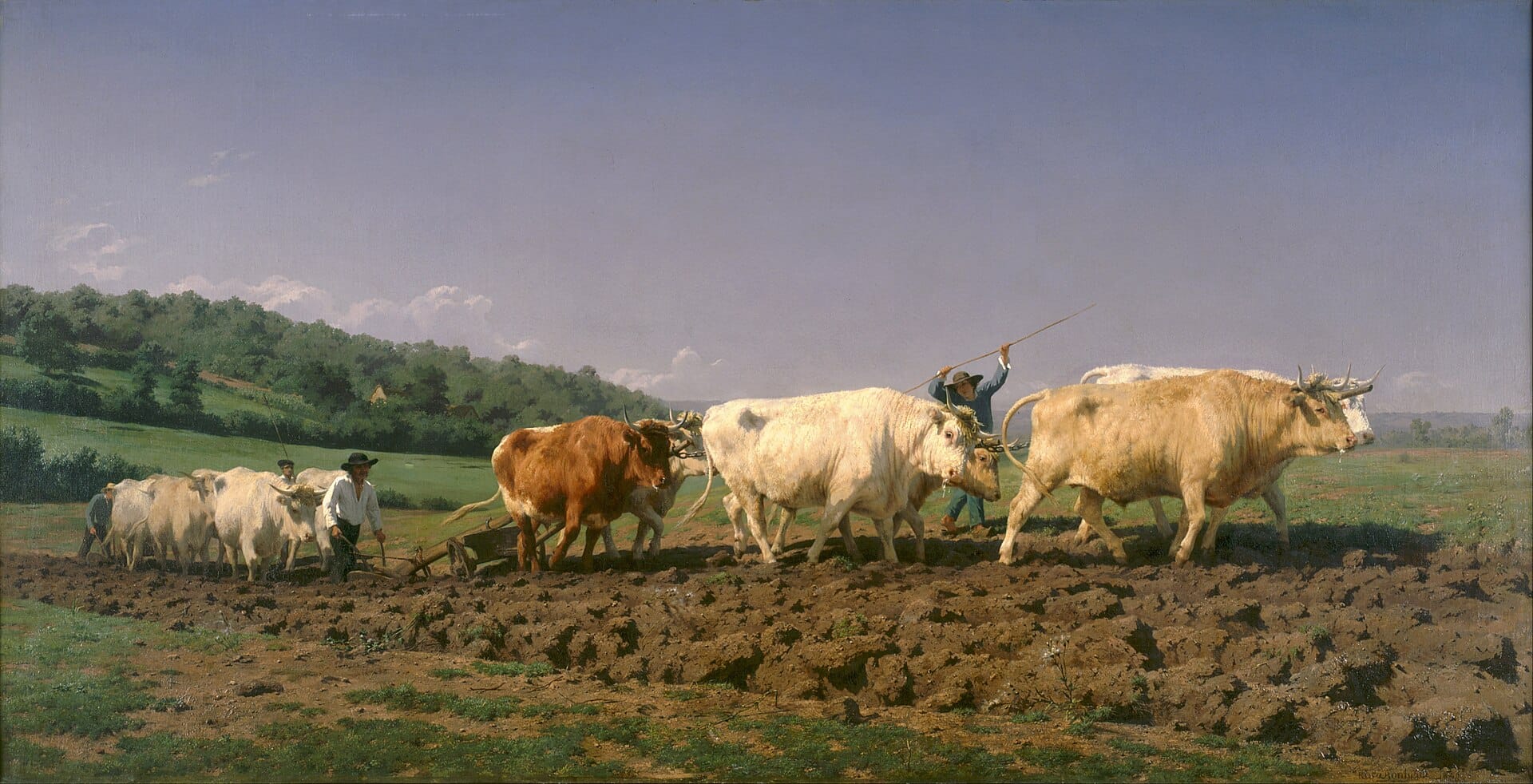
In France, by contrast, most mid-19th century paintings show workers laboring away - farmers, stone breakers, house painters, women ironing, and so on - and they are unsentimental and moody and even harsh - Courbet, Millet, Jules Breton, Rosa Bonheur, Daumier, Corot. It was a time when Realism and Naturalism were dominant and animals appeared often in farming scenes, such as Bonheur's superb painting below.
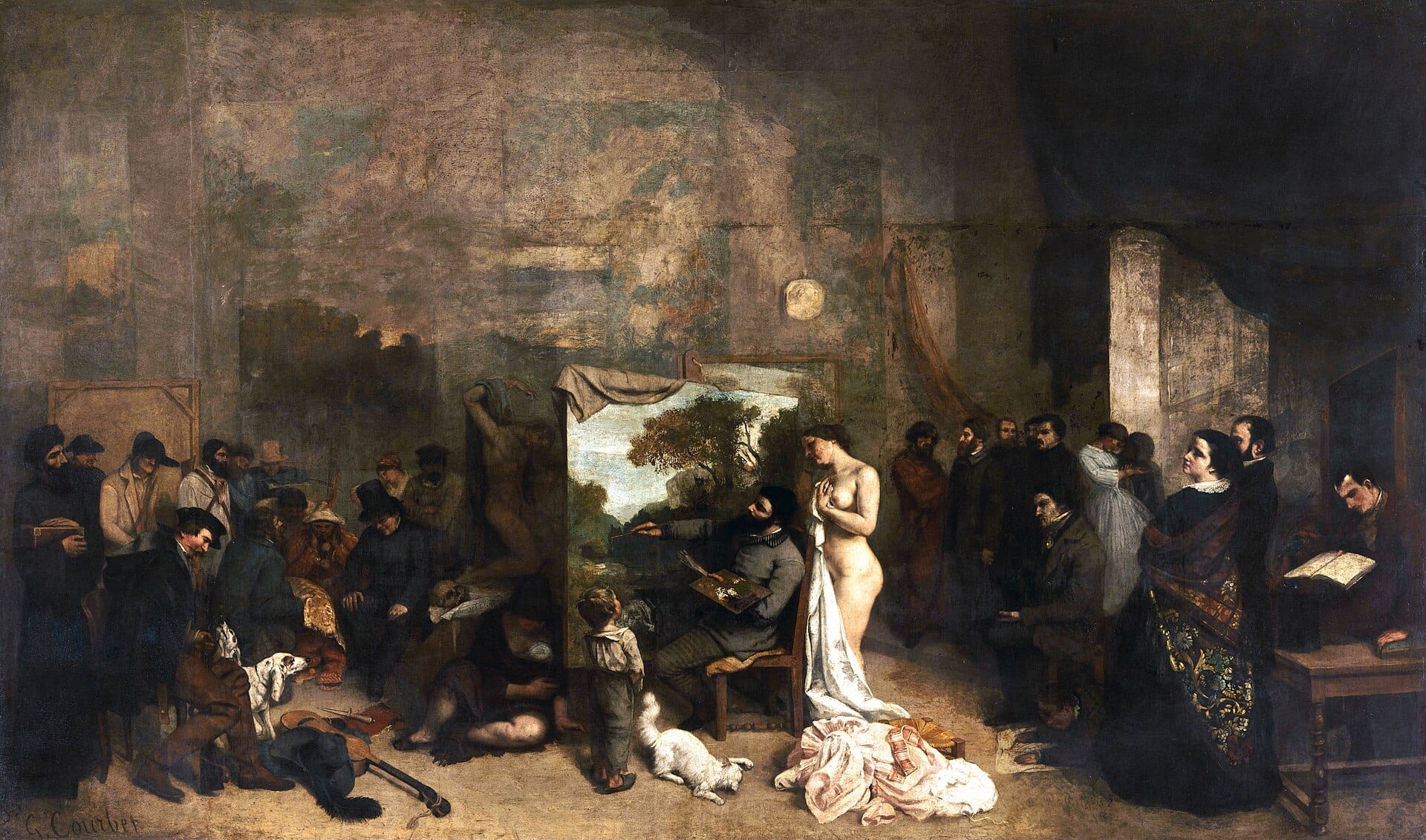
Below is Courbet's The Artist's Studio: A Real Allegory of a Seven Year Phase in my Artistic and Moral Life. The cat and the dog are in there - along with other figures - to represent "real life" at a time when other painters like Ingres were doing the grandiose neoclassical allegory paintings that Courbet hated.
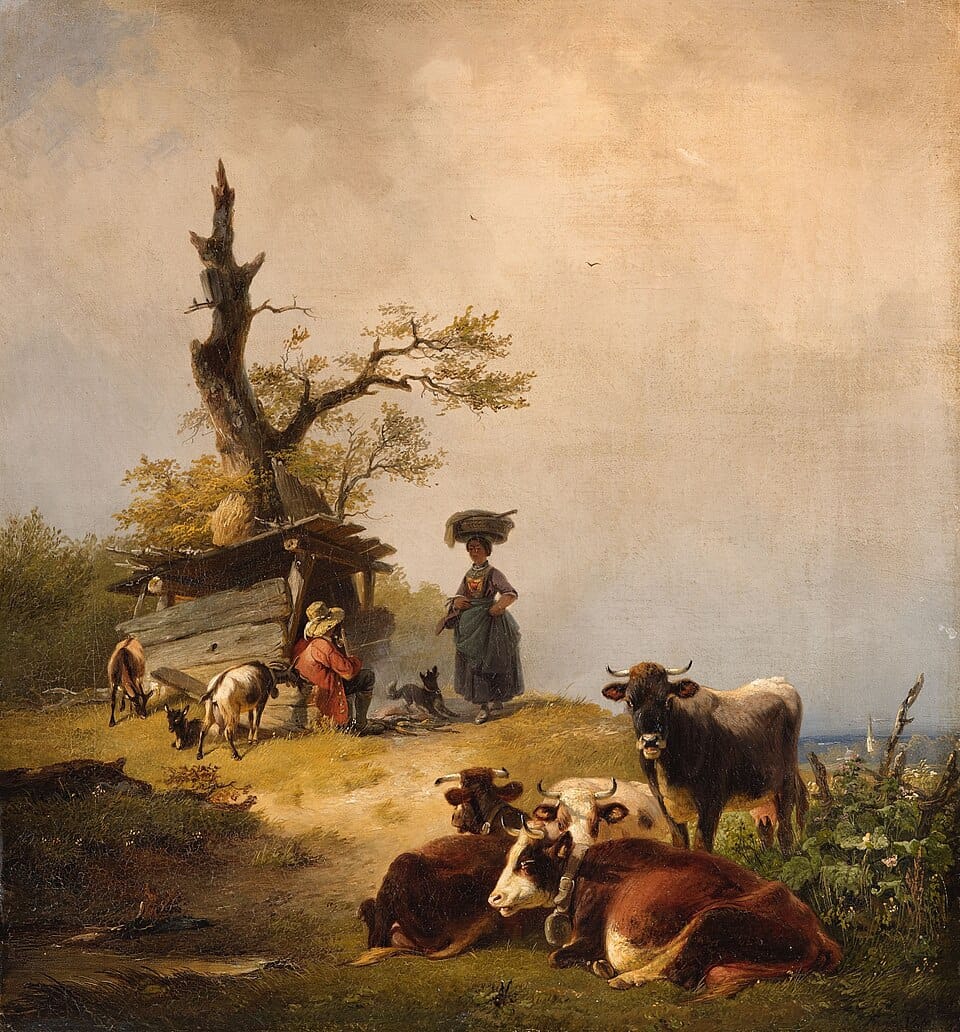
In Germany there was somewhat more of a Biedermeier sentimentality in the animal paintings of Carl Spitzweg, Friedrich Voltz and (less so) with Anton Braith.
In Russia, the artists who captured the harshness of peasant life best were the Peredvizhniki (Wanderers) movement. One of them, Vasily Perov, produced the painting below, Troika (1866), which shows children laboring away in a freezing Moscow street - with their dog. This painting resonated with aristocratic audiences of the time.
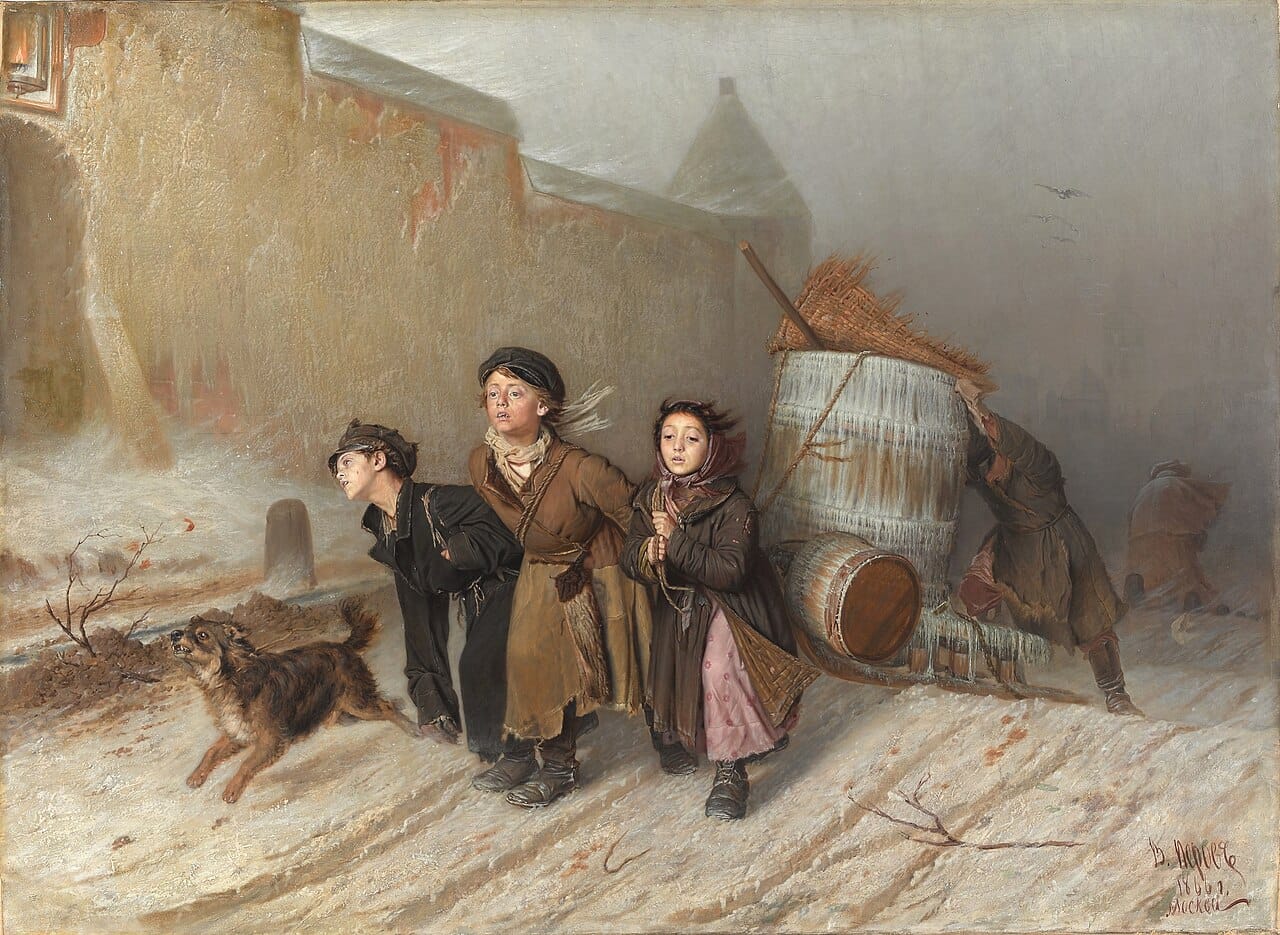
The three exhausted peasant children - two boys and a girl - are dragging a large barrel of water on a sled as if they are draft horses. Perov drew many sketches but failed to capture the face of the boy in the center until one day he found the right boy to model it. Sadly, a few years later the boy died of typhus. His mother came to see the painting and meet Perov, because for her it showed her son still living and healthy. The power of art.
Below is a little known van Gogh drawing from 1886, Woman Walking Her Dog. It is also known as À La Villette because it is set in the then-gritty working class area near what is now Parc de la Villette.
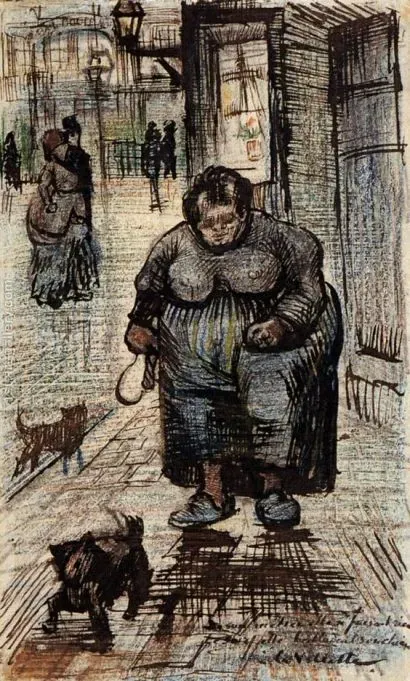
The painting has an inscription: "De son métier, elle ne faisait rien" ("By trade, she did nothing"), and it's not meant to be satirical of her. It riffs off the lyrics of a song À La Villette by his friend Aristide Bruant, who celebrated working class life.
Finally, a painting from Spain around 1905, where the dogs are a natural part of the scene. Gonzalo Bilbao produced a number of paintings like this celebrating the vibrant world of Seville's cigar makers, which became the backstory of Carmen:

The greatness of a nation and its moral progress can be judged by the way its animals are treated. - Mahatma Gandhi (possibly)