Fictions: How to explain why you got pregnant unexpectedly

How do you explain a baby bump when no one else is "expecting" it? History shows that religious or supernatural excuses work the best. It has to have been a spirit, a demon, an angel, or a god that did it. Who can argue with that? We have to go back in time to find those stories though.
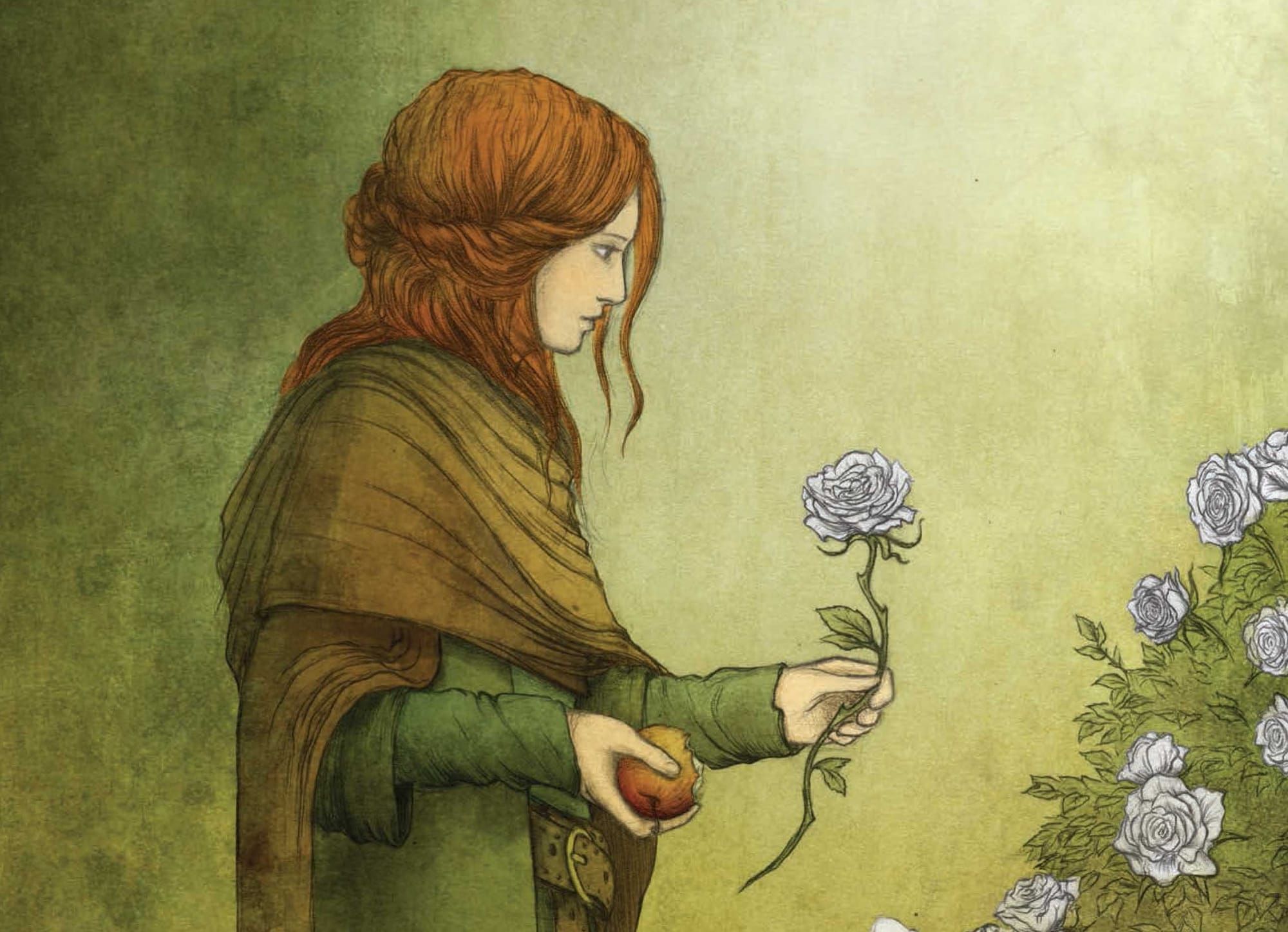
Obviously with the "Virgin" Mary we don't know if it was the Angel Gabriel who got her pregnant, but it certainly wasn't Joseph. Perhaps for this reason there are almost no paintings of a pregnant Virgin Mary - the physicality of female pregnancy and childbirth disturbed the (male) Catholic Church, and such works were banned indirectly by the Council of Trent in 1563. The rare painting below is from before that. Then there were the Greeks: an unexpectedly pregnant woman could hardly go wrong by blaming Zeus as the father, since it seems he raped hundreds of women. As someone summed up those stories on Reddit: "(It's) the amazing story of a young girl who got pregnant to someone other than her fiancé, and then concocted a story that really got out of hand." Right?
Today, there are literally thousands of books and movies, articles and academic papers about unexpected pregnancies and the complex psychologies involved. In the romance genre (mostly written by women), unexpected pregnancy is a popular and controversial trope, where writers are sympathetic to these young women and some of their readers don't agree with them. They think pregnancies and babies in this genre are just yuk, so annoying!
Until this century, young women were punished for unexpected pregnancies. Even if The Scarlet Letter turns out rather well, Hardy's Tess of the d’Urbervilles, Faulkner's The Sound and the Fury and Toni Morrison's Beloved, to name but three, do not turn out well, and they really belong in the horror genre! By contrast, romance readers now find that an unexpected pregnancy is an empowering experience for a young mom-to-be, even if some readers are not on board with this.

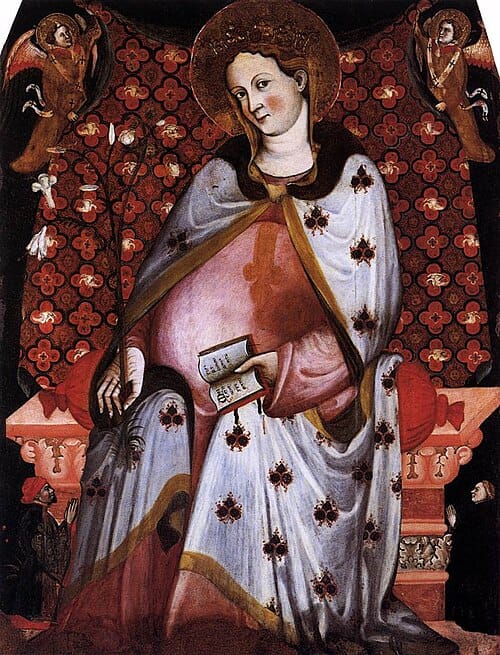
So, where are the success stories from the past? The most popular by far is the wonderful ballad of Tam Lin from the Scottish Borders, which first appeared in 1549. A young woman, usually named Janet, returns home to the estate one day (every enterprising young woman should have an estate) to claim that the faerie knight Tam Lin abducted her and got her pregnant. She had been warned not to go into the woods of the estate but, being young and stubborn, that's exactly what she did. Once there, she had plucked a rose (she knew her symbolism) and Tam Lin appeared and accosted her. But, she learns from Tam Lin that he too has been abducted - by the malevolent Faerie Queen - and Janet finds this bad boy entrancing (you should know that in romance fiction, Enemies to Lovers is the #1 trope). Anyway, Janet is able to rescue him by holding him through all forms of faerie transformation inflicted by the Queen (never let go of your man), and she wins herself a handsome husband and father to her child. There's a lot more to the story, but this is a strong woman who rescues her Tam Lin, and everyone back at the family estate just has to accept her pregnancy. Isn't that so much better than the classic novels that followed?
In the Arthurian legends, unexpected pregnancies lead to the births of Merlin, Arthur and Mordred. According to Geoffrey of Monmouth in History of the Kings of Britain, Merlin’s mother was a virgin nun and his father was a demon incubus, from whom Merlin got his magical powers. Her defense to the court was that the demon (who was nice apparently) left her pregnant without her consent. Was she raped? Was it consensual? It doesn't matter because it was a supernatural conception and that's an explanation that works for everyone. Not so different from Alien 3 really.
Sometimes supernatural explanations don't work, like in the bawdy medieval cuckoldry tale The Snow Child (not to be confused with The Snow Maiden/ Snegurochka). A merchant returns home after an absence of two years to find his wife with a newborn son. She explains that one snowy day she slipped on the ice and swallowed a snowflake while thinking about her husband, which caused her to conceive. Evidently she offers this explanation as a joke, but it is unwise on her part. Her husband pretends to believe her (that she has not been unfaithful), and he helps raise the boy, until he takes the boy on a trip and (in some versions) sells him into slavery. On his return, he explains to his wife that the boy melted in the heat. This once elicited great laughs in audiences.
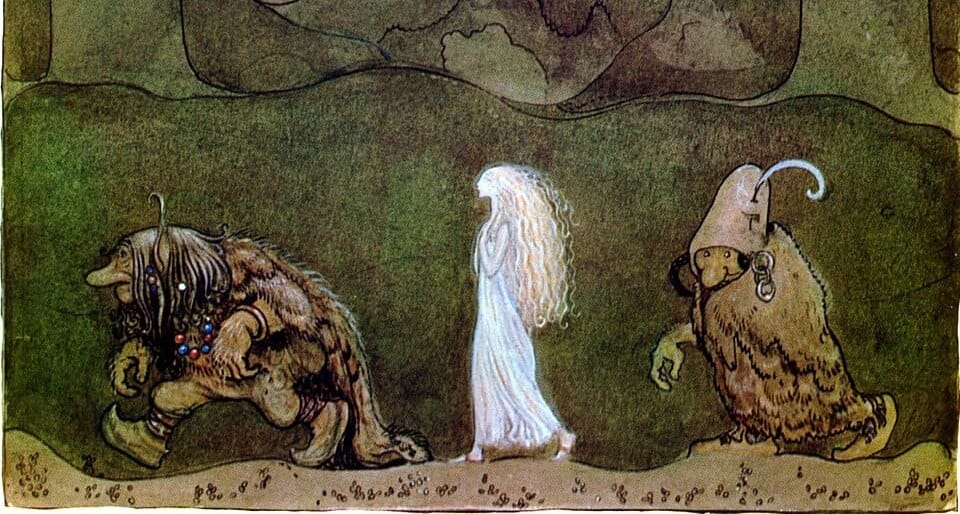
Another variant on this is the changeling, which in Celtic and Germanic fairy lore was a malevolent fairy who stole pregnant women or babies, leaving behind a sickly lookalike replacement. Rather than explaining how an unexpected pregnancy came to be, this storyline helped explain why some women died in childbirth or had stillborns or had sickly children. Because they had been "switched" by supernatural beings, this meant it wasn't the fault of the mother. That fiction could be useful in protecting a woman from men (or women) who couldn't accept life's tragedies and wanted someone to blame. Unfortunately, it didn't protect the children, especially those with developmental differences like autism, and historically abuse and infanticide did occur. The folklore on how peasant families all around the world have coped with their "changelings" is enormous and rather horrifying.
Flipping the script, in the illustration above by Swedish artist John Bauer, the troll parents genuinely love their odd looking human child despite her supernatural origins. The Changelings is the story of a human princess raised by trolls and a troll child raised by human royalty.
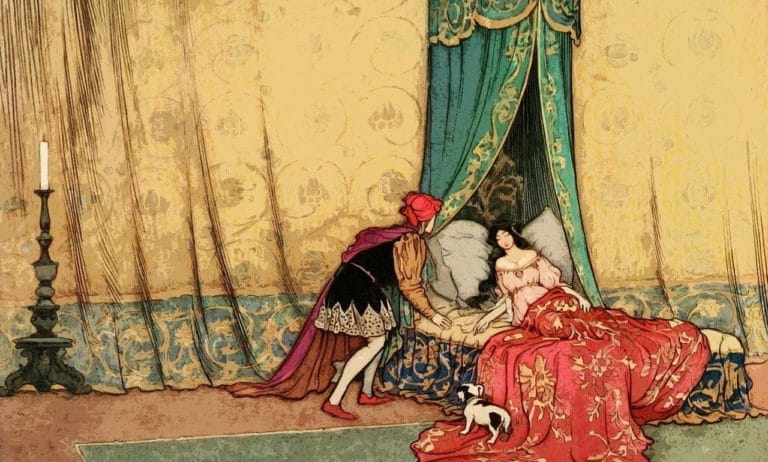
Finally, a brain teaser, because in romance novels today, two of the strongest story arcs are “What if he rapes me?” and “What if I get pregnant?”
The question is this: what is Giambattista Basile’s 1734 tale Sun, Moon and Talia really about? It is set at Cornell University 😄 but it was published in his 1634–1636 collection, the Pentamerone. This story evolved eventually - via Perrault and the Brothers Grimm - into the much sanitized Sleeping Beauty.
In Basile's story, a king finds the princess Talia passed out, possibly dead, he rapes her and leaves her pregnant. She gives birth to twins while she is still asleep (some visiting fairies help out here). When the twins - who are called Sun and Moon - nurse on her finger and suck out the flax splinter causing her to sleep, she wakes up to find herself a mother. She does not have to explain the pregnancy to anyone, because the king explains to her what happened and she accepts it. So, the brain teaser is: is the king's explanation really just a justification for raping an unconscious woman, dressed up in fairy-tale nonsense? By this logic, Talia's unconscious state is a metaphor for women's lack of agency in their own sexual lives. Or, what about modern feminist interpretations offering an alternative: are these fantasies of sex, rape and pregnancy really about female agency and empowerment in a safe space (i.e. romance fictions) that wouldn't be appropriate in real life? Pessimism/optimism.
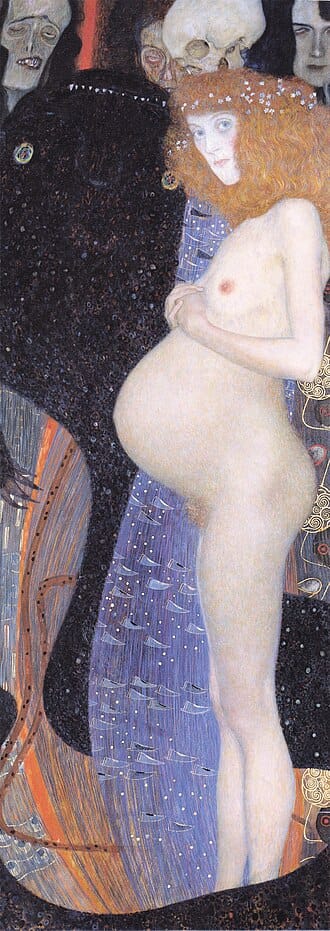
To finish, even though it's only indirectly related to my theme, here is a great pregnancy painting: