In the bookshop: some favorite aphorisms and book titles
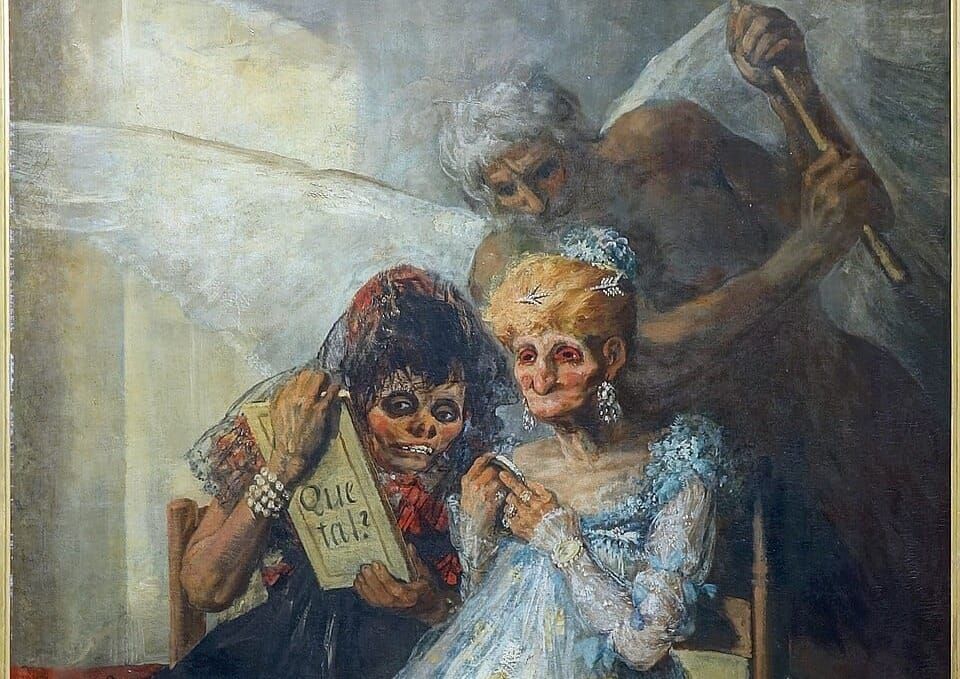
There is pleasure to be derived from a great play on words and great book titles. My favorite aphorism is This too shall pass, which is probably a Persian Sufi saying and it got me through many a dark day working for movie studios. According to Wikipedia, this aphorism may date back to a 12th century fable of a powerful king who asks his assembled wise men to create a ring that will make him happy when he is sad. After deliberation, the sages hand him a simple ring with the words "This too shall pass" etched on it, which has the desired effect. It has been adopted by many people and cultures ever since, including Walter Scott, Abraham Lincoln and George Harrison, to name a few.
For a favorite book title, I chose The Unbearable Lightness of Being by Czech writer Milan Kundera published in 1984. I'm drawn to ideas (and paintings like the Goya above, and books and films) about the ephemeral nature of life and the transience of being and, really, the impossibility of living one's life any other way. I particularly like this cluttered French book cover.

Two other book titles I like: Italo Calvino's If on a winter's night a traveler, a 1979 novel, although I like his other books more, and The Teahouse of the August Moon, an awkward Hollywood comedy from 1956, starring Brando as a villager in Okinawa (!), based on an earlier novel and play. The titles are better than the works themselves.
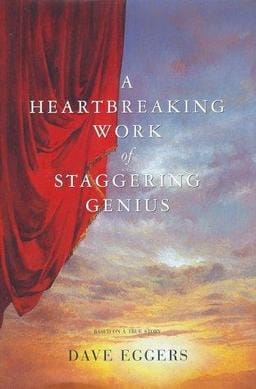
Katrina, a friend from New Zealand, gave me her picks:
A Heartbreaking Work of Staggering Genius. She writes: "A book by Dave Eggers, which I haven’t read, but I love the confidence (or humour?) that let him call his work that. And my favourite aphorism is – Enough is a feast." I looked that one up: it may be Buddhist or African or Greek - everyone claims it...
Another friend, Sara in Canada, also chose an Italo Calvino work as her favorite book title: The Written World and the Unwritten World. She writes: "My aphorism is When I let go of what I am, I become what I might be, attributed to Lao Tsu. I enjoy this one because I found that I have a problem keeping my ego in check; it likes to protect its territory. However, it turns into a kind of you are only as big as your last film which might be less about the fickle nature of fame, and more about the ego's ability to define itself by past victories, unable to adapt to new conditions. A Norma Desmond I am big, it's the pictures that got small. Crikey I love that, especially the hint of humour which makes ideas successful to me, and why I like Umberto Eco so much, his tongue is so firmly in his cheek he's almost dining on it."
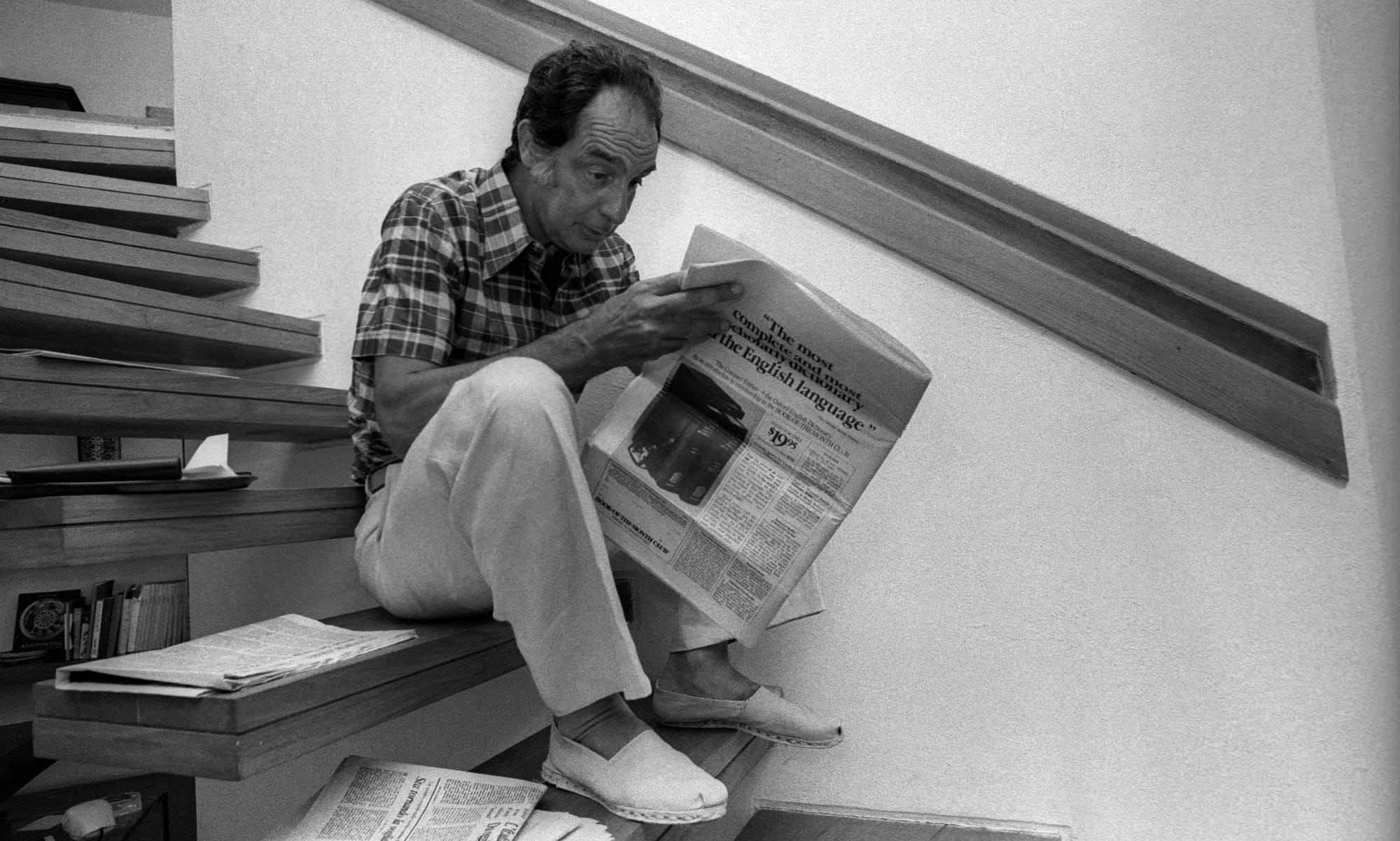
Because he appears twice in this post, here is a photo of Calvino, clearly posed, as he tries to make sense of "reality":
Sara again: "I once wrote the caged bird sings only for fools which was a line in a song, which addresses similar themes - someone might want to keep you caged, for fear you might bolt, change, stop loving them. Or you might keep yourself in a cage of your own creation for fear of being revealed as lacking in some way. The most poignant of prisons are those of our own creation, hence letting go of what I am, or what I perceive I am. Which is a very Taoist idea, as the universe is constantly in flux, chaos, and any rigidity you adopt will hinder your ability to ride the current of chaos you find yourself in. Je pense donc je change, the opposite of plus ca change. If words are spells, you want to cast a worthy one... You hope anyway."
If anyone reading this would like to offer their own suggestions, I'll include them here. Message me at my email address here.