The apples and peaches of immortality

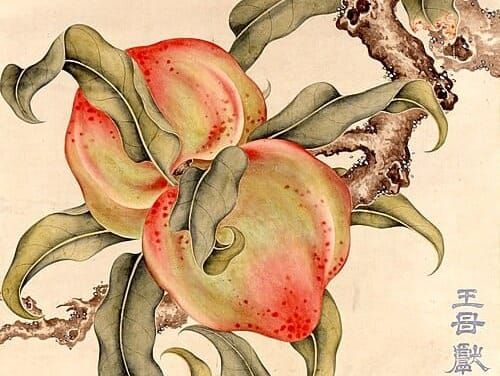
In Judeo-Christian Genesis, an apple symbolizes The Fall, even though the original texts said "fruit." The switch is attributed to medieval translators who wanted to pun on malum/malus (apple/evil). Anyway, by eating that apple, Adam and Eve lost their immortality and they died. And so we get the mythology of the poisoned apple, the forbidden fruit, the shame and, of course, death. I think it's a shame to do this to a fruit; I'm a gardener.
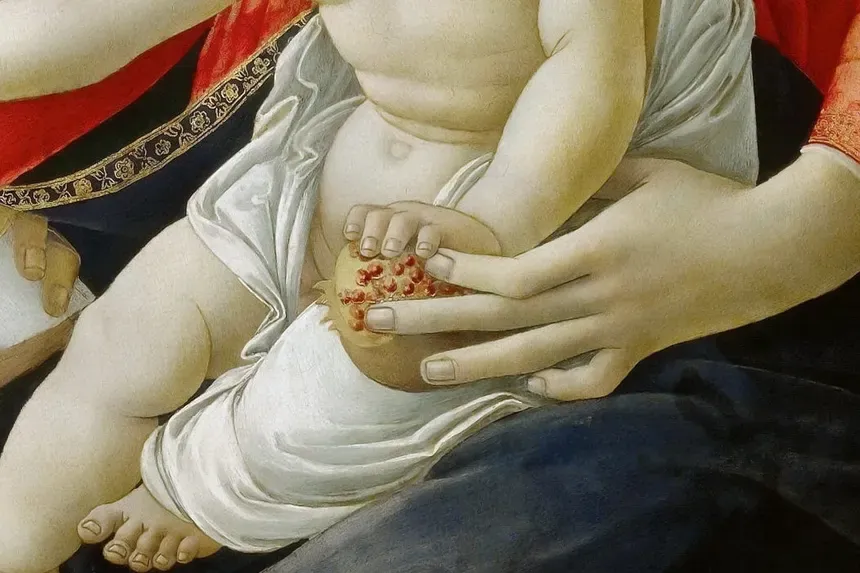
Greek mythology isn't much better: the golden apple of Discord causes the Trojan War, golden apples are a distraction in Atalanta's race, the Hesperides apples are pretty much unavailable, the "tantalizing" fruit is just out of reach for Tantalus, the lotus fruit in the Odyssey symbolizes drug addiction, and the pomegranate that Persephone eats in the underworld will keep her there. The pomegranate, though, does have contradictory meanings: the red juice symbolizes blood and death, but its seeds represent fertility, love, marriage and even eternal life - seen here in a detail from a Botticelli painting:
Norse mythology is more optimistic although there isn't a lot of fruit. The goddess Iðunn guards the magical golden apples that keep the gods young, and the Norse did indeed grow apples. Immortality is - after all - just a symbol for longevity... so pick your fruit.
But, not in European art: while still-life paintings were about abundance and fertility, they also were about memento mori, quite the opposite of longevity.
In Chinese Taoism, the peaches of immortality symbolize longevity for humans and immortality for deities. Peaches are native to Northwest China and the Yangtze River valley, but the immortal varieties are grown only in the garden of the wife of the Jade Emperor, the Queen Mother of the West (Xi Wangmu) on the mythical Mount Kunlun (as opposed to the real Mount Kunlun). They are served only at her "Peach Banquet," which occurs every 6000 years (the peaches take 3000 years just to ripen). Technically, only two humans are said to have eaten them - King Mu of Zhou and Emperor Wu of the Han Dynasty - and the Eight Immortals (shown below). I believe this image is from somewhere in Hangzhou.
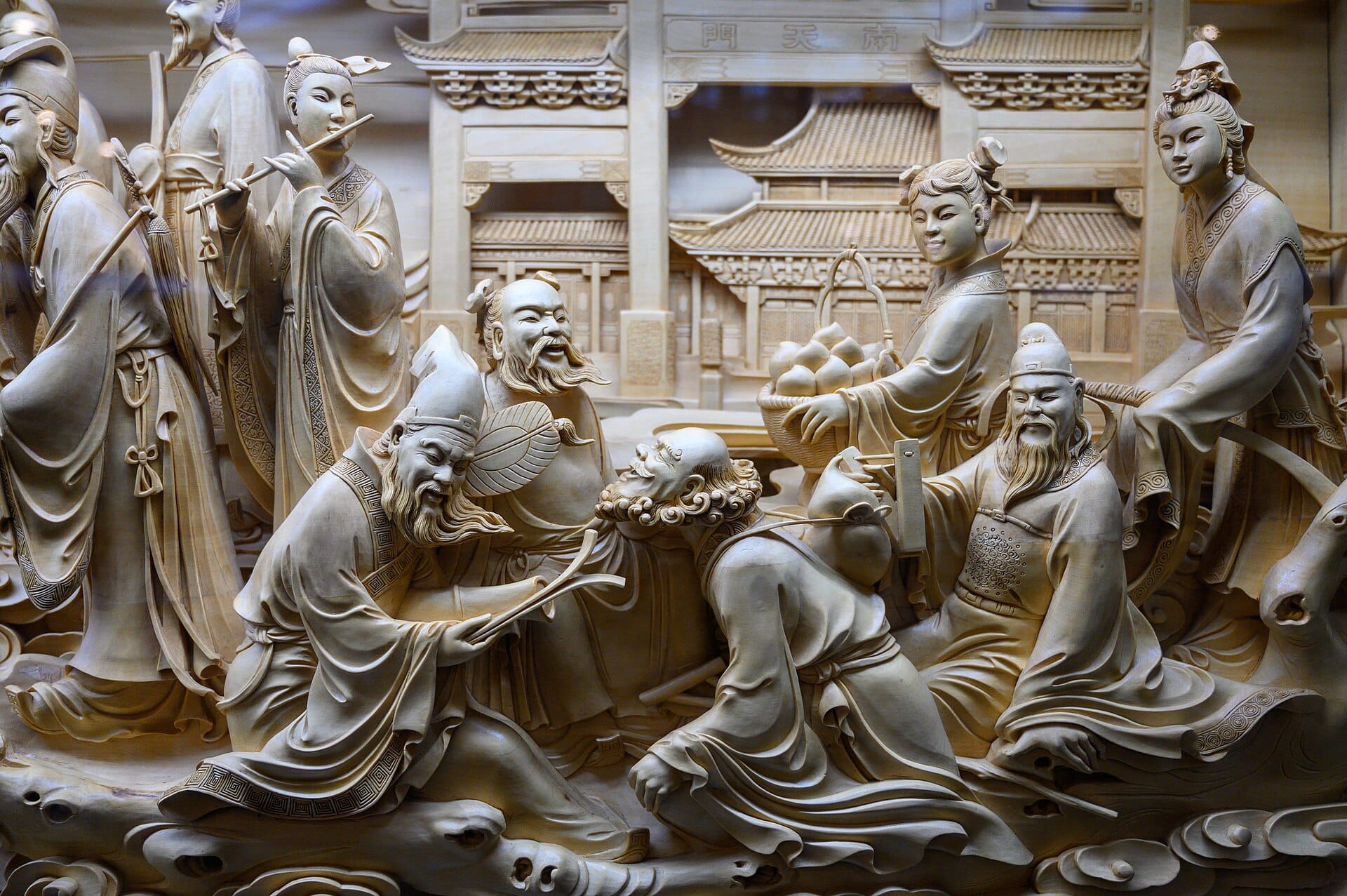
The Peaches of Immortality appear in several classic works of literature, including the 16th century Ming classic Journey to the West, but that's a whole other story.
For the rest of us mortals, longevity may be highly valued in most cultures, but no more so than in Chinese culture, where there are constant visual and oral reminders to younger people to ensure the elderly are safe, for example in the Metro. A popular tradition is giving fresh peaches when celebrating an elder's birthday. There's none of that altruism to be had here in the United States, where the billionaires (Thiel, Bezos, Johnson, Altman, etc.) invest heavily in biotech and anti-aging diets and seemingly don't care about anybody else.
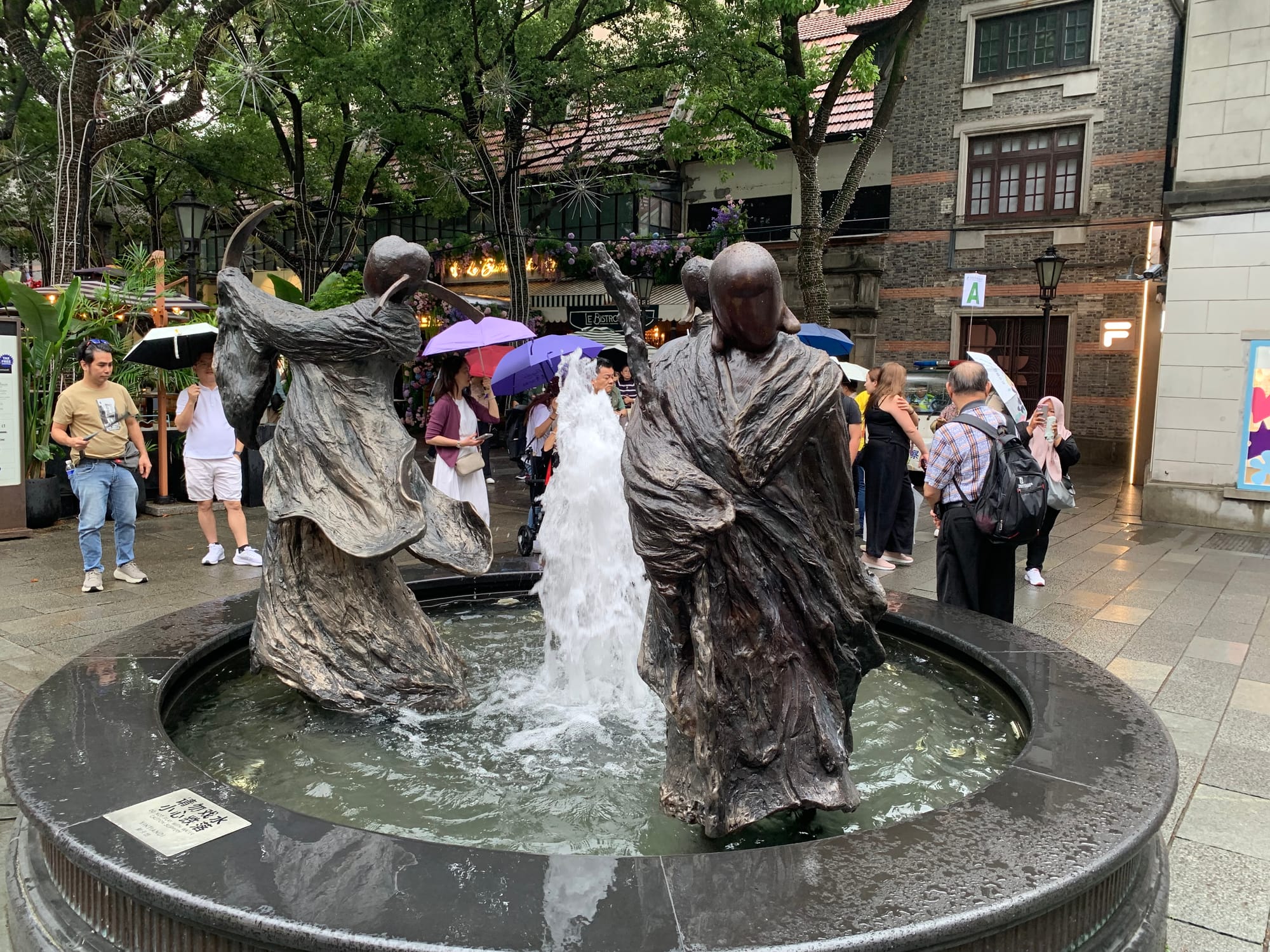
In China, longevity also appears as one of the Three Star Gods, where the concepts are somewhat overlapping and holistic: good luck and blessings (fu), wealth and prosperity (lu), and longevity (shou). Their statues shown below are in Shanghai's Xintiandi shopping district, in the former French Concession, now said to be the most expensive place to live in China. That's the shou figure closest to the camera.
Links:
* Tithonus in the Greek myths was condemned to immortality (here).
* Socrates (the Soul is immortal) and Casanova (who searched for The Elixir of Life) (here).