The grimoire - why do people believe in angels and demons?

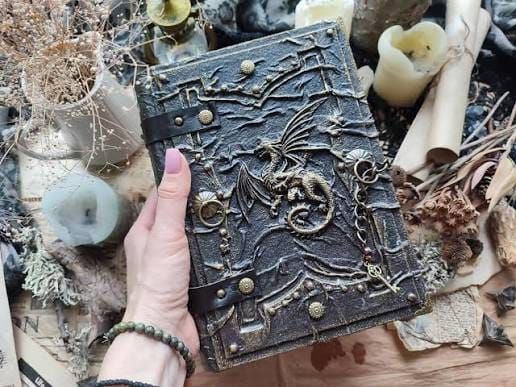
I'm told there are millions of Americans who believe in angels and demons. Many of them are also into witchcraft and the occult, Wicca and Neopaganism. These Americans embrace a genre of (fictional!) writing called a grimoire, which typically has instructions on how to cast spells and summon spirits, which seems like a really useful skill to have in 2026. A popular variant is called a Book of Shadows.
OK, really, who would need a grimoire, besides someone dabbling in fantasy fiction or anime? Apparently, some of the 64-69% of Americans who believe in angels or the 56% who believe in demons? Around 20% who believe in witches? What witches would those be? I live my life by the Uncertainty Principle and the Law of Unintended Consequences, but others prefer to think that everything is planned, not random, or at least it should be, and they seek supernatural explanations, religious rationalizations, and hierarchies of angels and demons to help with those.
Is it significant that J.K. Rowling has no grimoires in her Harry Potter books? Perhaps Voldemort had one but she didn't say. Hogwarts students learn spells through instruction rather than from a grimoire, but isn't Miranda Goshawk's The Standard Book of Spells a grimoire? Apparently not, since it's a standardized school text and grimoires are personal. Then what about this book (below) for younger children?

There are some topics I dive into and find they are vast semi-secret realms of weirdness, layer upon layer, labyrinths of the mind... The grimoire is one of them. The word itself derives from Old French gramaire (= grammar). Over the centuries, thousands of people have devoted their lives to creating them, ranking the various demons and connecting them to sins. This has been a popular activity all around the world too, as if some vital issue of spiritual importance is at stake. Wikipedia has a list: they seem like mirror inversions of aristocratic, military and church hierarchies. Demonology is bureaucracy at its finest!
Historically, the Catholic Church and the Inquisition banned many grimoires, viewing them as heretical or demonic. Yet, it was mostly their own clergy who used grimoires since they were among the few who could read and write, and they frequently liked having flashy liturgical tools like these in their preaching and pastoral work (whipping them out for masses, exorcisms, holy water and the like to impress the superstitious).
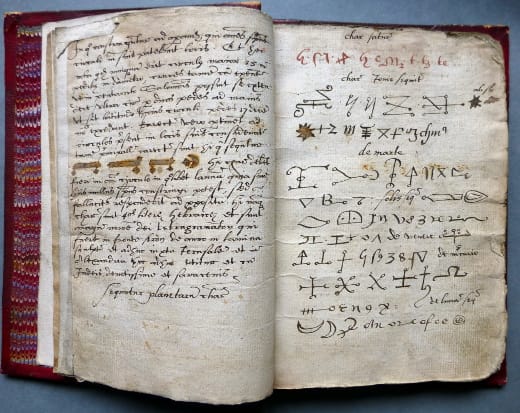
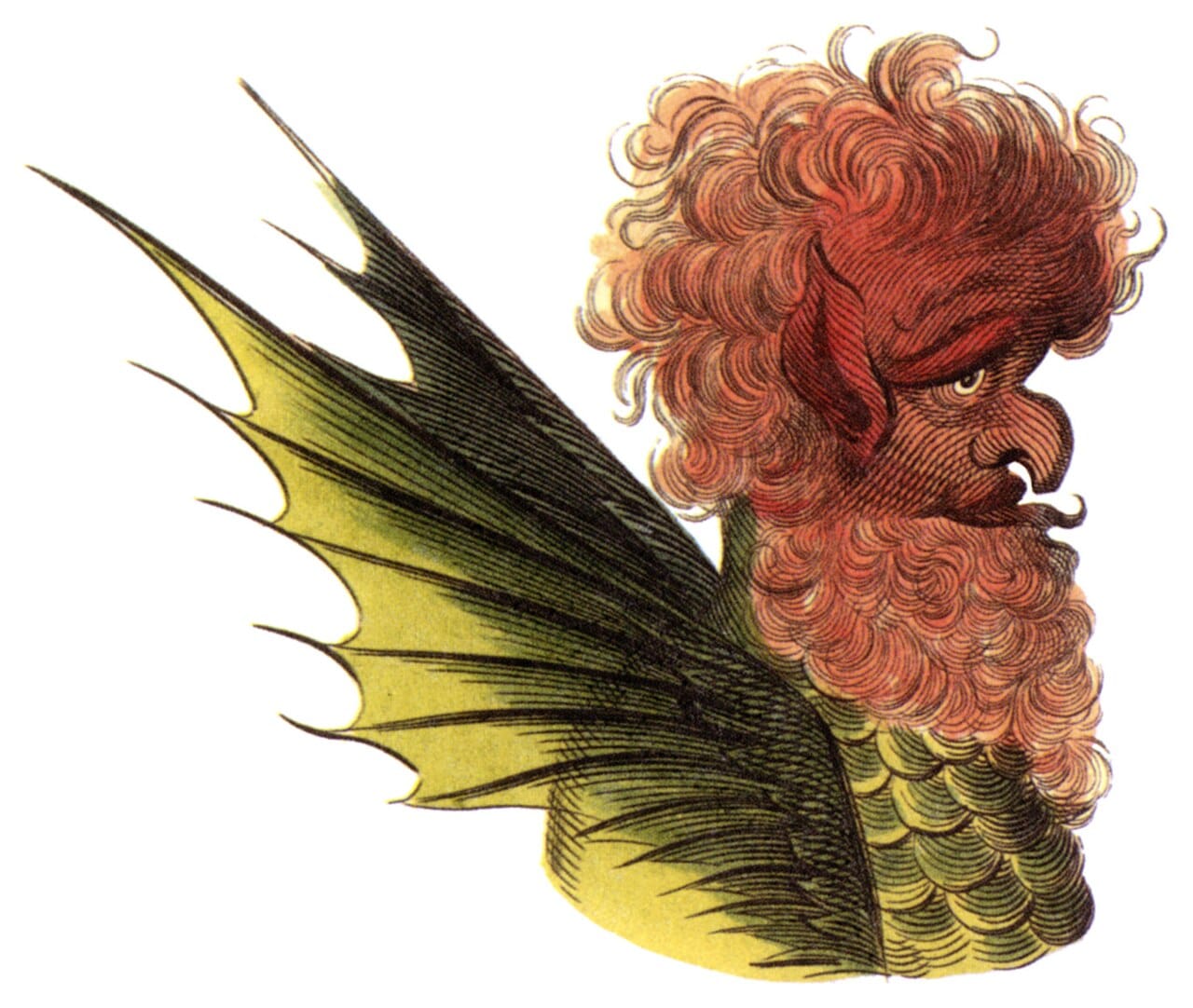
The most famous real-life grimoire, it turns out, is The Key of Solomon (Clavicula Salomonis), which dates back to the Italian Renaissance (14th-16th centuries), and it has nothing to do with King Solomon. It has instructions on how to prepare magical tools, draw protection circles, and invoke spirits or angels. It was followed by an even more celebrated text, The Lesser Key of Solomon (Lemegeton), a 17th century compilation that includes the Ars Goetia. This is the famous bit because it shows how to summon and control the 72 demons that Solomon trapped in a brass vessel. From a literary point of view, these are some of the most boring books on the planet, but they are interesting not so much for the way they draw on Hebrew and Muslim scripture and magic folklore, and that can be interesting, but rather for their colorful, aristocratic cast of characters. This is one of the leading demons, Baël, who reminds me somewhat of the Russian president.

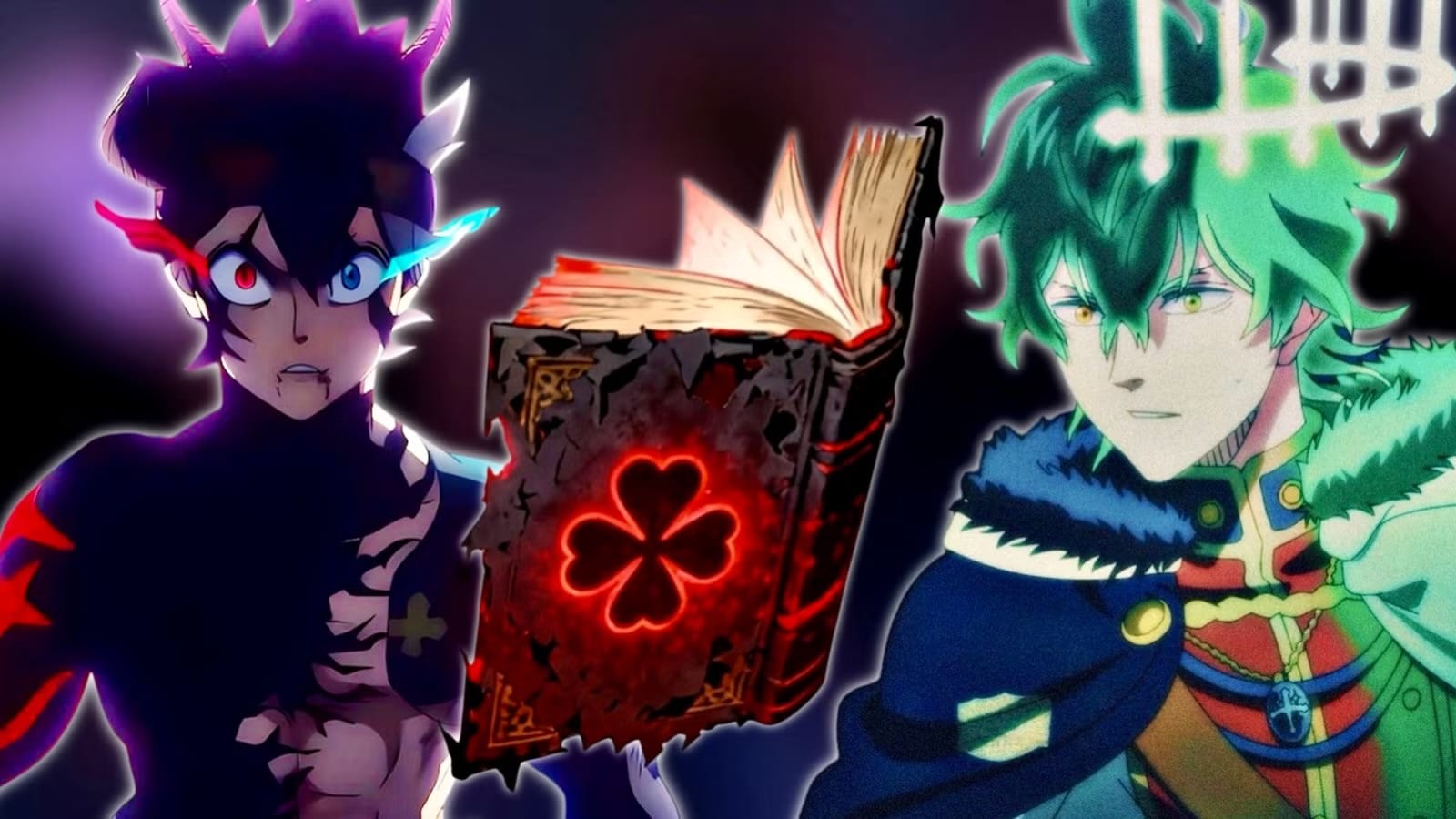
Nowadays, I think the important thing about modern grimoires is the impressive amount of "creative" detail that their writers get into. Rather than chasing power and "spiritual warfare," these writers seem to lose themselves in mystical esoteric speculation, especially over the demons (maybe the angels are a bit boring). Evidently, the occultists and demonologists over the centuries have decided that reality is insufficient and they needed to live partly inside a fantasy, which is where many evangelical Christians appear to be living today. But, it can make for an enjoyable anime - like Black Clover, produced by Studio Pierrot in Tokyo:
Grimoires are mostly personal and not really malevolent. I know there must be a certain glee from using a spell to inflict harm on someone else, like curses or voodoo dolls, but the spells only work if the victim believes in them too and most uses are for "self-improvement," not revenge. It's also why "love charms" never seem to work!
Among the interesting eccentrics who have published their philosophical ideas on angels and demons and participated in séances, trances and elaborate rituals, William Blake is the most notable. But there were others, like Francis Barrett, who pulled together a lot of the information in The Magus, published in 1801. Below is one of the illustrations he did for the book. No one was interested.
But, by the later part of the 19th century, the number of demonologists had grown and groups like the Theosophical Society and the Hermetic Order of the Golden Dawn created their own elaborate rituals and liturgies (and other groups formed to challenge what they saw as hoaxes and fraudsters, like The Society for Psychical Research). The belief in necromancy was particularly attractive to intellectuals and the wealthy in that it promised a way for people to communicate with lost loved ones. This included Poe, Rasputin, L. Frank Baum, W.B Yeats, Jean Delville, Sir Arthur Conan Doyle and H.P. Lovecraft (who wrote his own grimoire, The Necronomicon), to name a few. In 1900-1910, two leading figures in the Golden Dawn, Aleister Crowley and S.L. MacGregor Mathers, fought each other with black magic in what one commenter calls "a legendary astral war." There's lots of hyperbole and it's all rather hilarious.