The maze: is it better to get lost or get out?

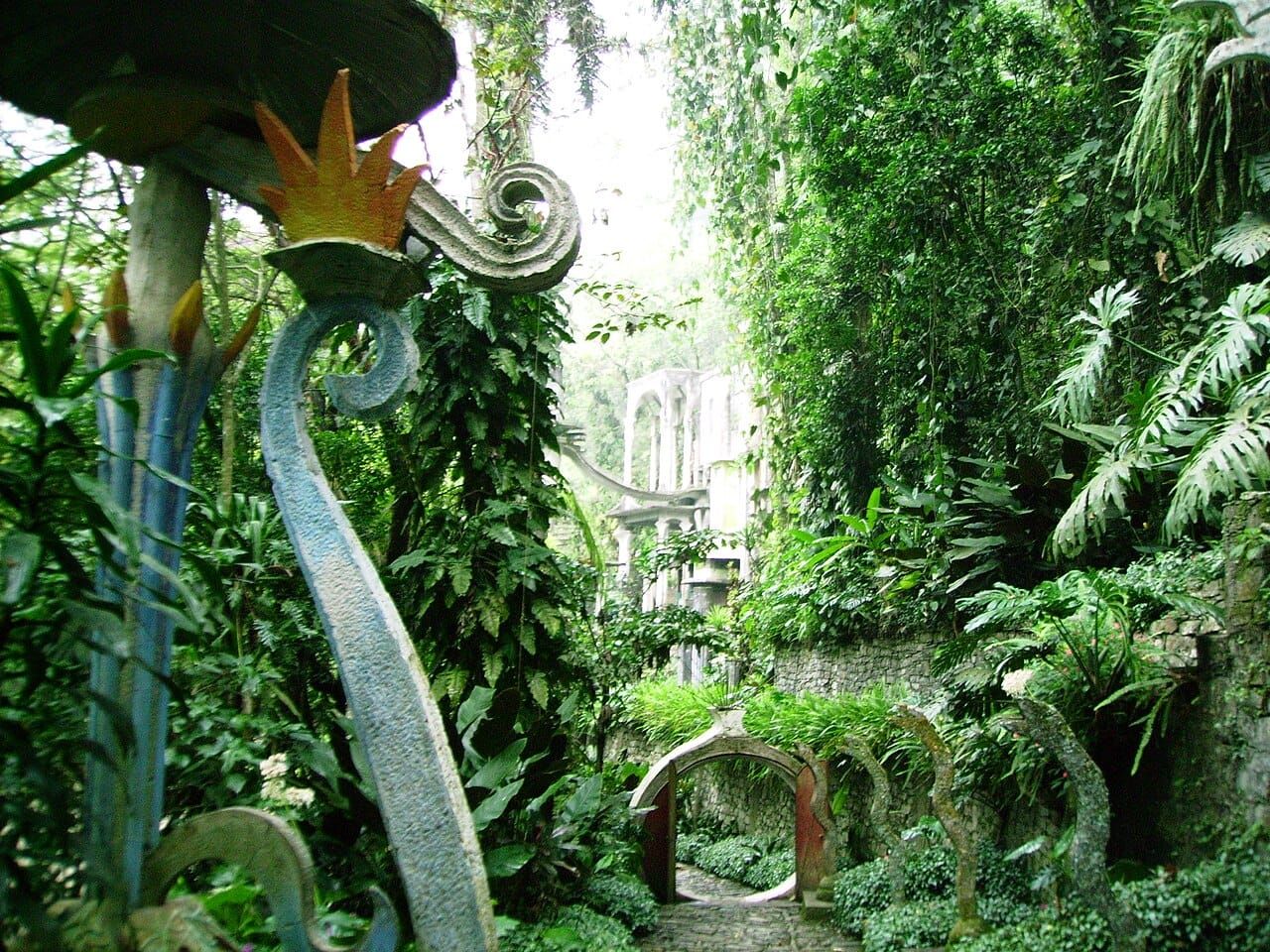
The best labyrinth in the world - in my opinion - has to be a messy overgrown subtropical rain forest garden where the goal is to get lost among the mysterious paths and dead ends, and not find the exit. It's even better if it has ruins and surrealistic sculptures to discover and it's been raining. This is not for everyone; most people like traditional mazes where they have to find the exit and there is a sense of pressure to exit as quickly as possible. What would you choose? Is it a way to differentiate character?
The 5 mazes below struck me as the most interesting because they have history to go along with them.
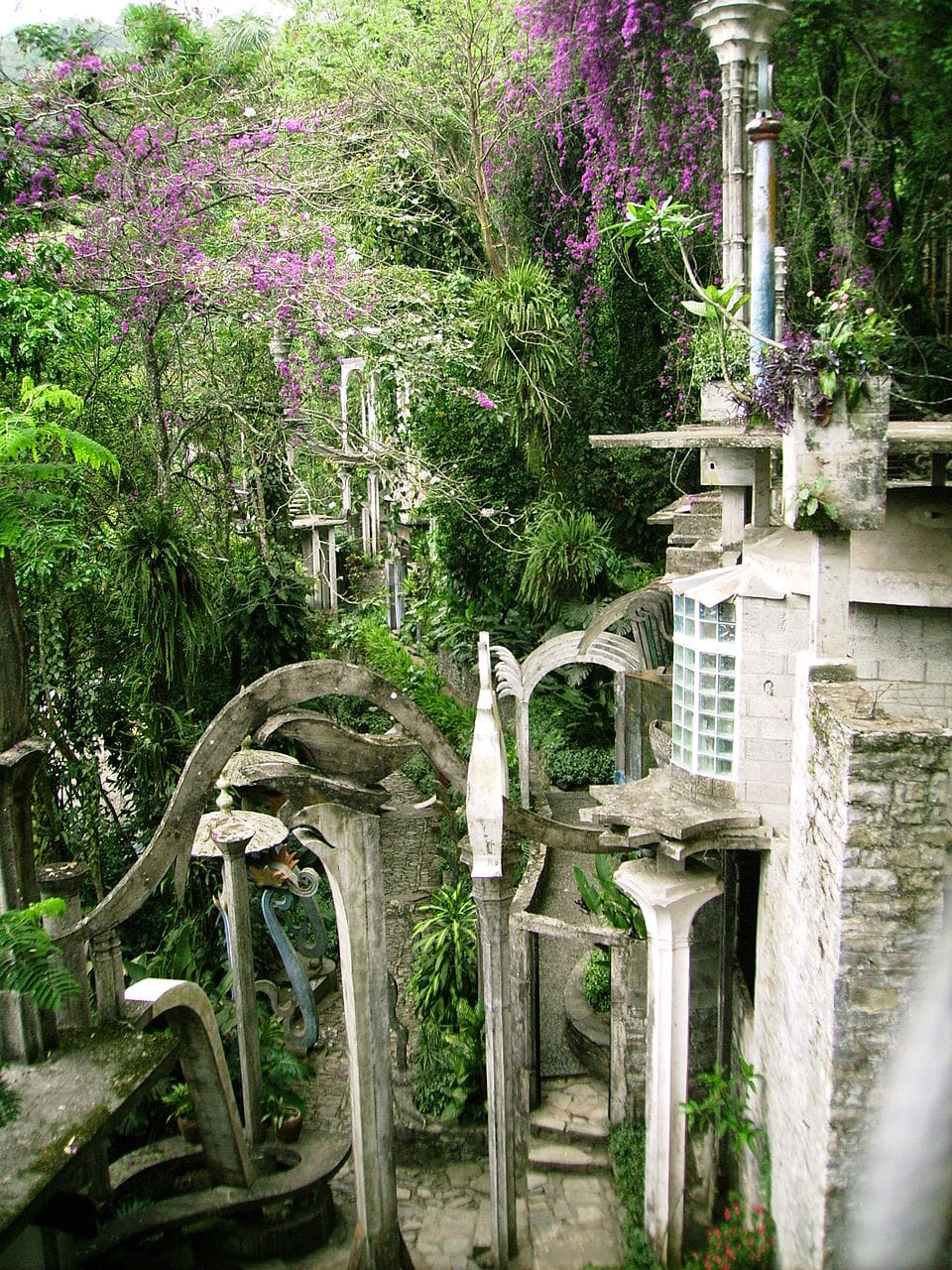
The best looking maze (for me) is Las Pozas ("the pools") in Xilitla, Mexico (shown above and below). It's a many-hours drive from Mexico City, but it's worth staying in the area and making a day of it, wandering aimlessly. It's largely the inspiration of British poet and artist Edward James (who died in 1984). He spent millions (after selling his Dalí paintings) mainly in the 60's and 70's to build the 36 structures. Like Parc Güell in Barcelona or the Gardens of Bomarzo in Lazio, it looks old fashioned and even run down, but the charm comes from knowing it's the inspiration of a man who wanted to dream big. Maybe you enjoyed Myst back in the day? It's like that. It feels like the forest wants to reclaim it but, nowadays, a non-profit has been set up to preserve it by encouraging tourism. More here.
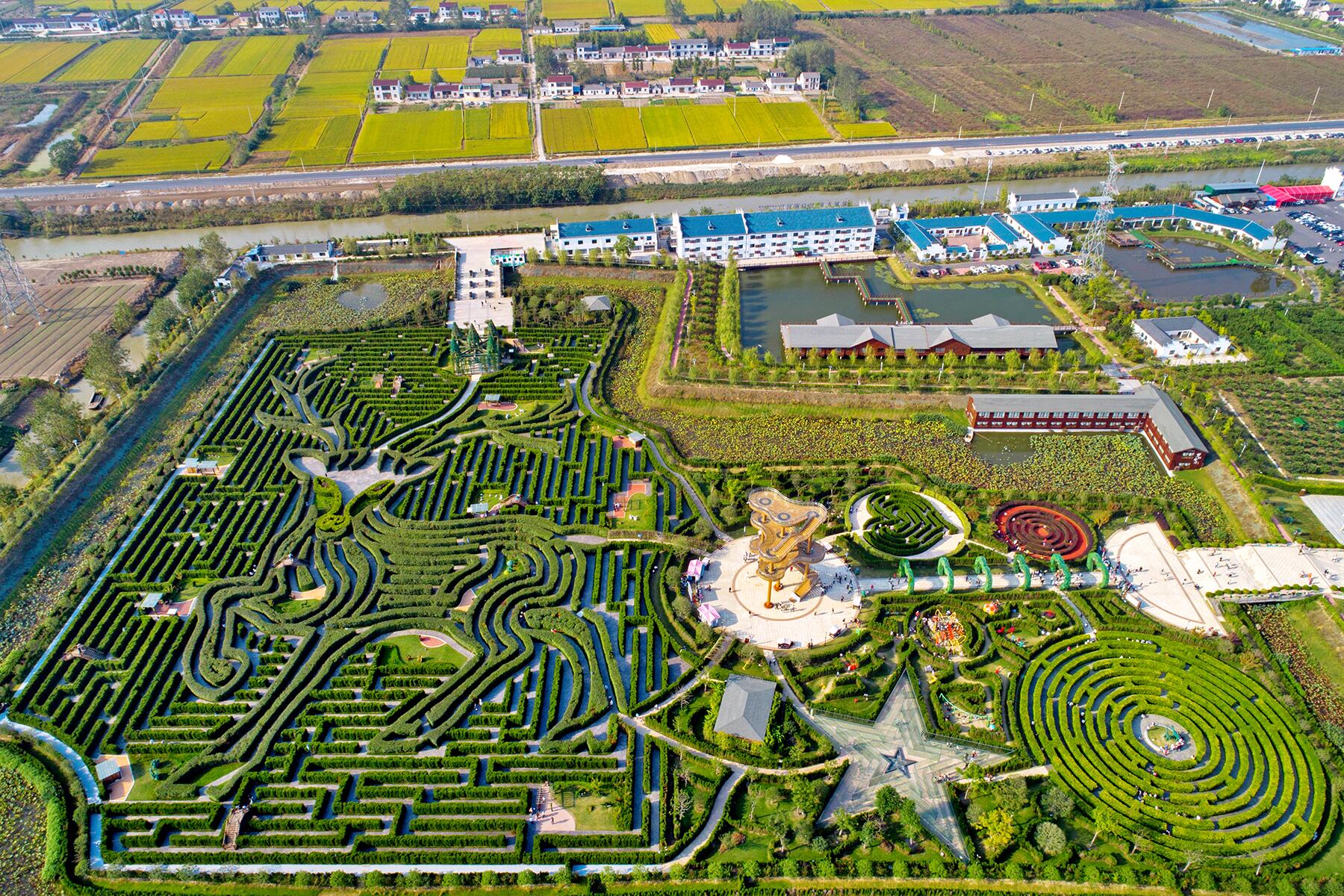
If, however, a vast traditional maze is your preference, consider visiting the world's largest, Yancheng Dafeng Dream Maze, Jiangsu, China, which is so large, it's actually difficult! It opened in 2018 and the main labyrinth is shaped like a giant elk, a symbolic animal for this region. Why? It's a story of ecological restoration: the world's largest wild elk population is in a nature reserve in Jiangsu, although it's not their historical native range. There are several other mazes, go-kart tracks, archery, trampolines, and so on. The historical bit is that it is said to be inspired by a local leader Zhang Shicheng back in the 14th century, who led a rebellion against the Yuan dynasty, using labyrinths to trap his enemies.
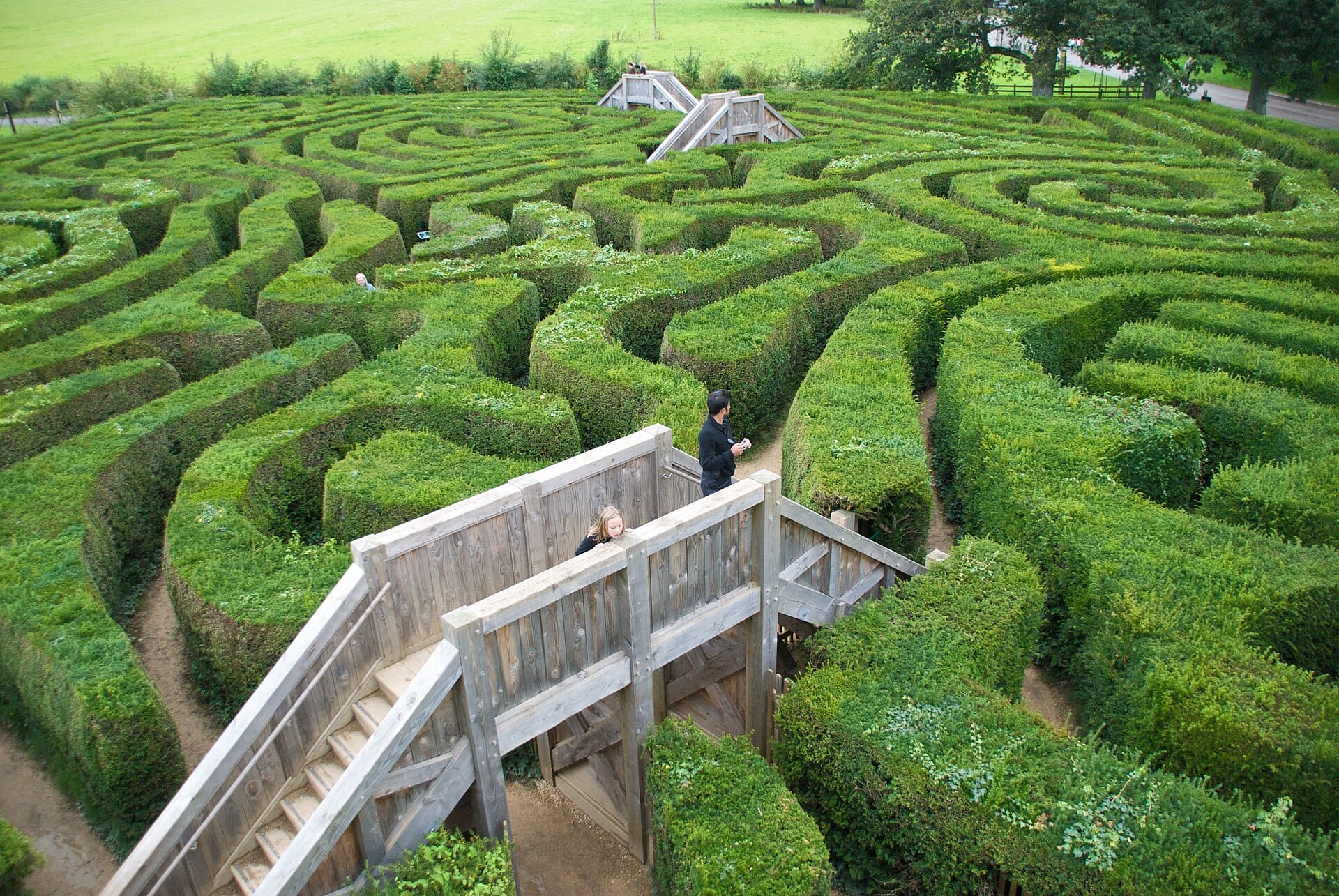
At a certain point though, size and complexity are counter-productive. An example of what I think is a perfectly sized maze is Longleat Hedge Maze (below), in Wiltshire, which opened in 1978. It was the idea of Alexander Thynn, the 7th Marquess of Bath, one of those eccentric British aristocrats who actually believed in using his money to help other people enjoy life (he died in 2020). His son, Ceawlin Thynn, the 8th Marquess of Bath, is married to Emma Thynn, a successful businesswoman and the first Black Marchioness in British history. It's like an episode out of Bridgerton (I always hoped I'd be able to type the word "marchioness" one day).
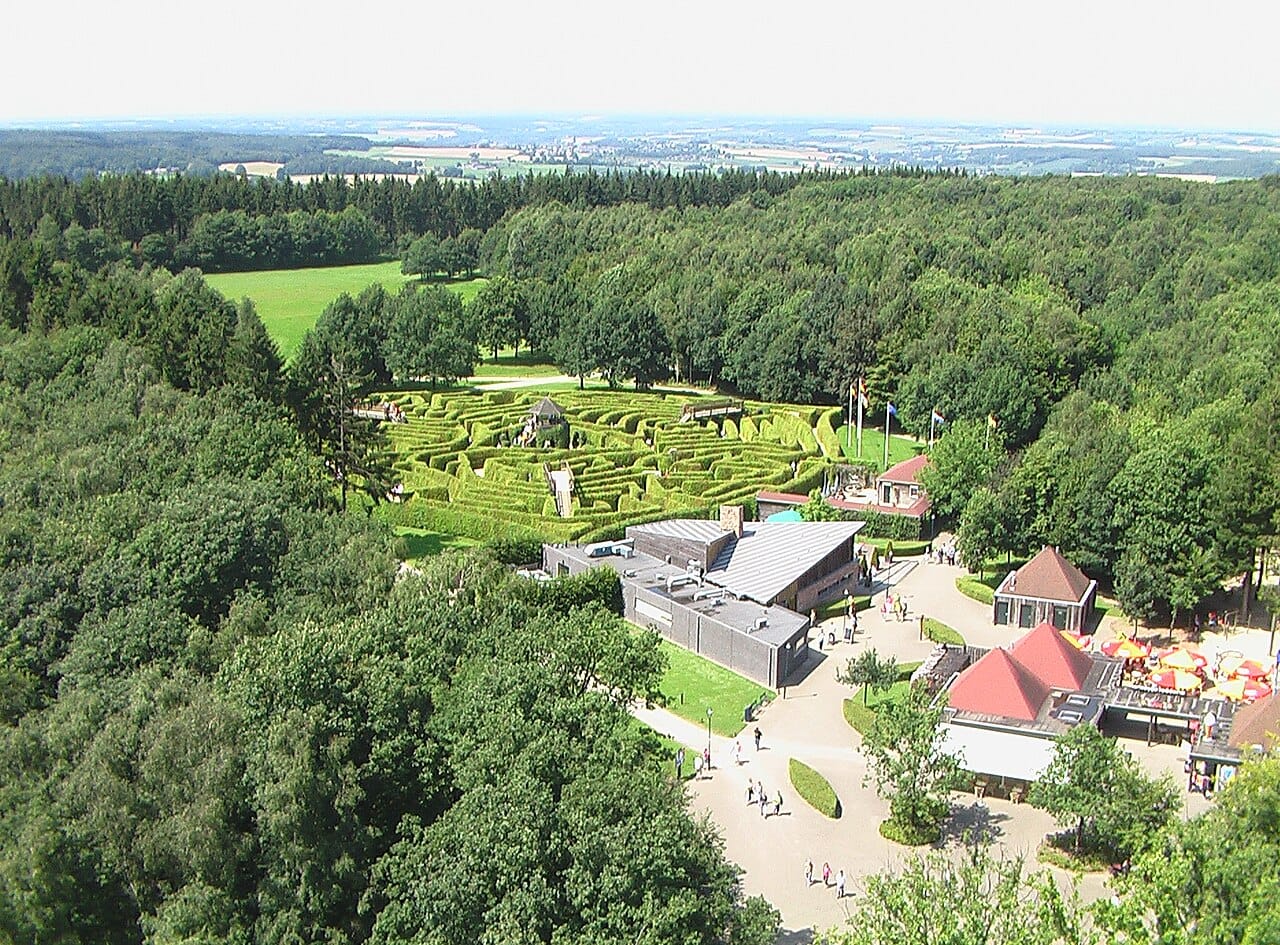
The Labyrinth Drielandenpunt Vaalserberg (or Three Country Labyrinth) is Europe's largest outdoor shrub maze. It is tucked away in SE Netherlands, right at the border with Germany and Belgium, all of which you can see from the lookout tower, where the photo below was taken. This area was once practically it's own tiny country called Neutral Moresnet, that existed from 1816 to 1920. It was narrow and only 2 miles long. Back then it was administered jointly (i.e. a "condominium") by Belgium and Prussia because, along with the Netherlands, none of them could agree on who owned the zinc mine there. This is where we get the real estate term "condo" from.
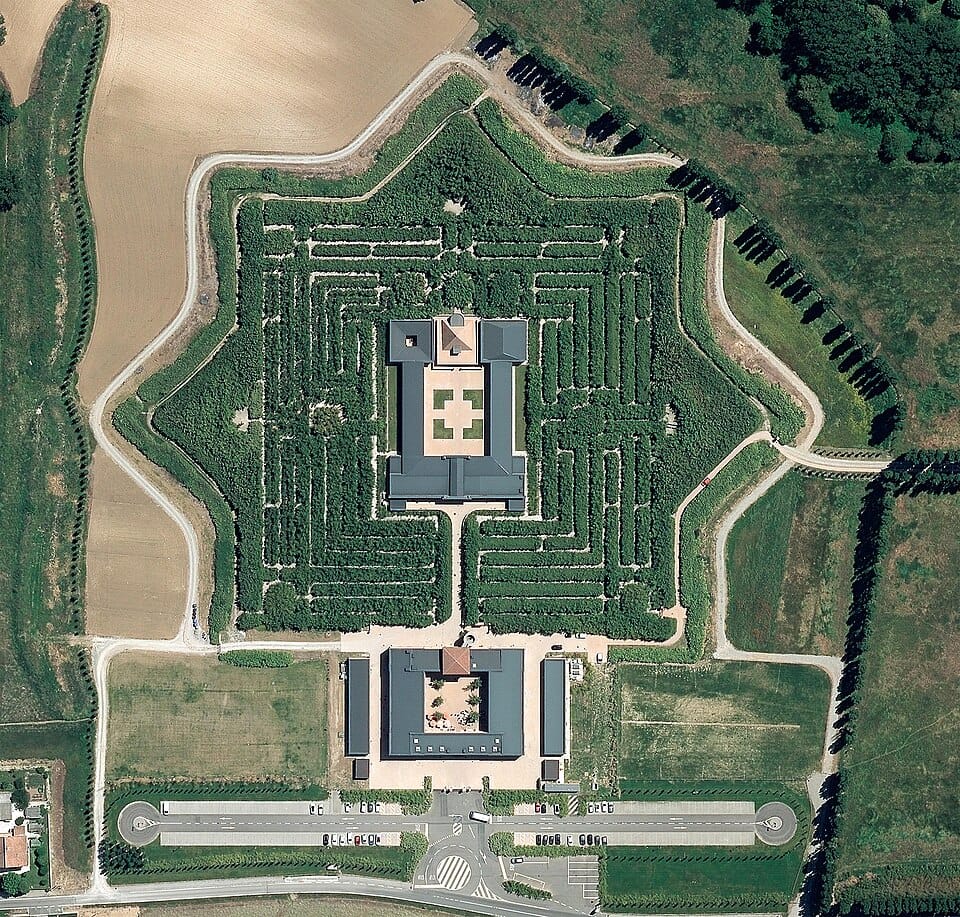
Finally, Labirinto della Masone (Mason Labyrinth), below, is in Fontanellato near Parma. It is interesting historically because its designer, Italian publisher Franco Maria Ricci, was inspired by the writings of his friend Jorge Luis Borges. Those writings are replete with labyrinths, for example The Garden of Forking Paths, a metaphor for life of course. This all-bamboo maze was the world's biggest maze till 2018 when Yancheng Dafeng opened.
Some other (mostly) older mazes that interested me but I excluded: Barcelona's Parc del Laberint d'Horta (Labyrinth Park of Horta), Il Giardino dei Tarocchi (Tarot Garden) in Tuscany, the maze at the Villa Pisani at Stra near Padua, the (newer) Peace Maze at Castlewellan Forest Park in Northern Ireland, the Ashcombe Maze near Melbourne Australia, and South Africa's Redberry Farm maze.