Why Martin Luther's death was so controversial...
I think it's fair to say that when most of us die, no one outside family actually cares very much, because we know that life steamrolls on. I include political figures here, because does anybody really miss Dick Cheney or Pope Francis? Conservatives tried really hard to make Charlie Kirk a martyr, but any interest in him has frittered away except as an ironic meme. We might say that celebrity deaths are always an excellent opportunity for political or religious social media propaganda.
Take the case of Martin Luther who died in 1546. His death was controversial because Catholic propagandists immediately got to work on smearing him, in pamphlets circulated widely across Europe. They claimed that Luther drank himself to death or (and this was a later claim) committed suicide by hanging himself. Naturally, such an evil man would be dragged away to Hell by devils, right? The goal was to discredit the Reformation by claiming Luther's "sinful" death was a divine judgment, because it was widely believed at the time that how we leave this life reflects the state of our soul (which is why Deathbed repentance was a thing).
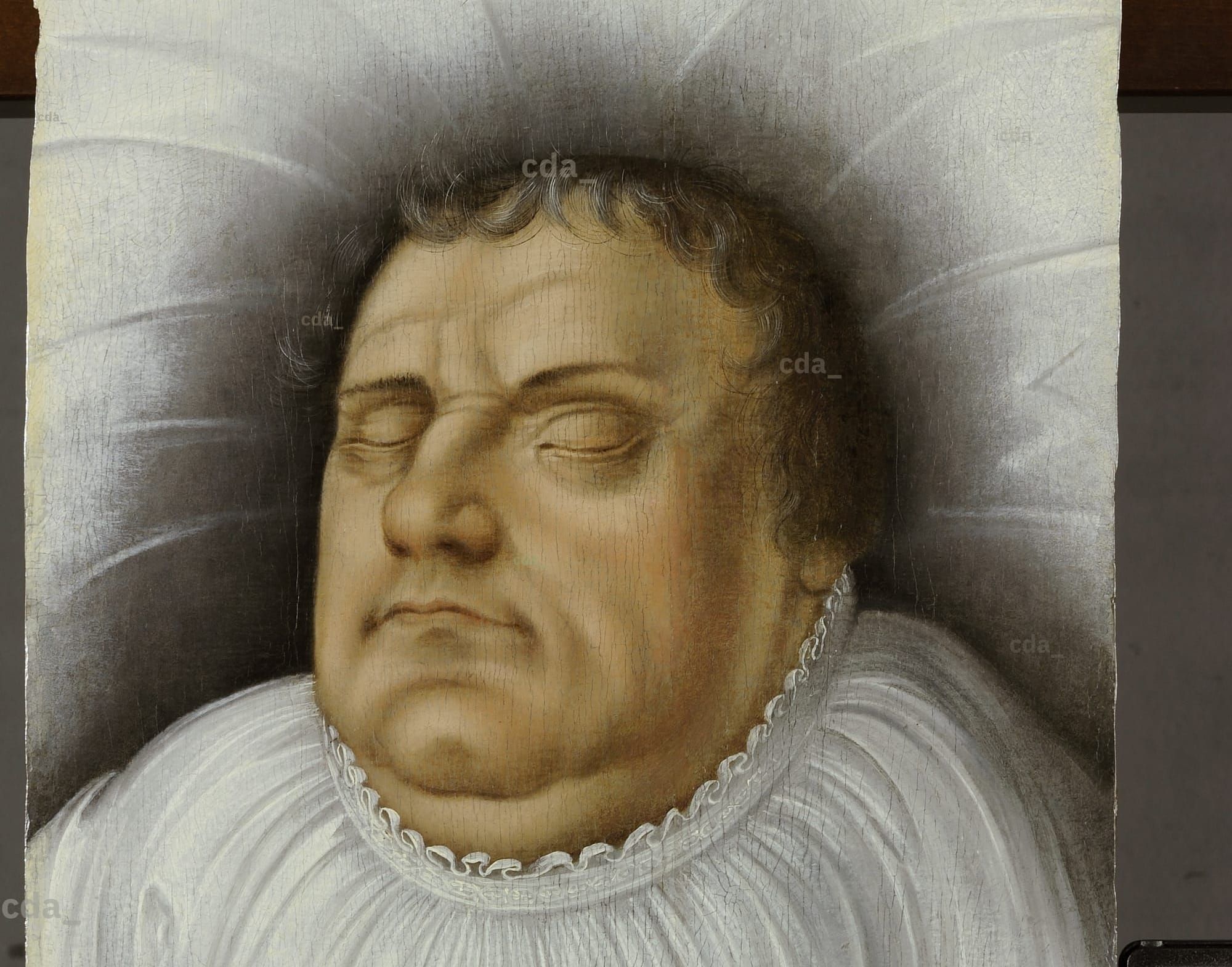
Interestingly, although Luther was based in Wittenberg, he died in the town where he was born - Eisleben - after preaching his last sermon. The cause of death is widely attributed to coronary thrombosis and then a stroke; he was 62. So far as we know, no foul play was involved. The painting up top is based on a deathbed sketch of Luther.
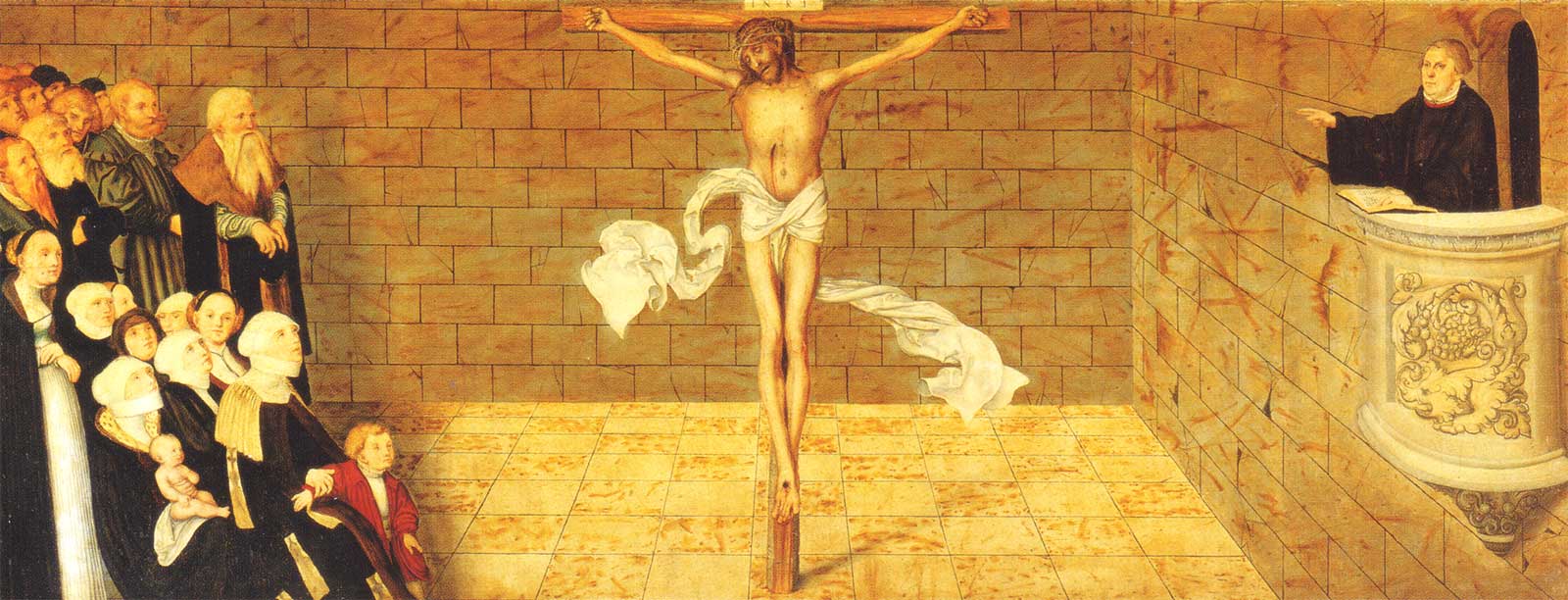
In Luther's favor, his friend Lucas Cranach, commemorated his sermons with this altarpiece section (above) from between 1547 and 1548, which is in the Stadtkirche in Wittenberg. That's Luther's family (and Cranach) on the left and Luther on the right. Others methodically documented Luther's last days and hours to head off the attacks they knew would come.
Now, on to the haters.
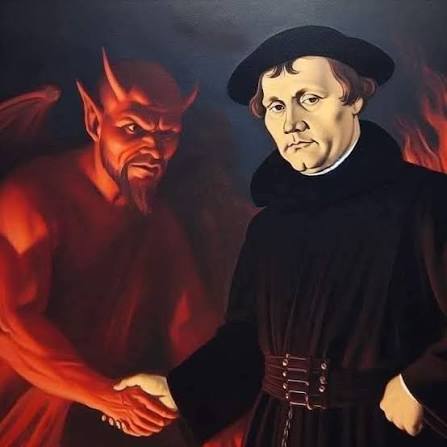
The Luther-drank-himself-to-death idea was widely circulated after Luther's death, but we know of no specific source for this. Presumably Catholic pamphleteers aimed to capitalize on stereotypes of Germans as heavy beer drinkers lacking self-control, but it's weak sauce. A few years later, in 1549, German Catholic writer Johann Cochlaeus stepped things up a bit when he damned Luther as a tool of the devil, a heretic who was condemned to Hell, but without any evidence. The suicide by hanging idea came years later, in 1591, when an Italian priest claimed he had obtained a letter from a former servant of Luther. That fiction was expanded upon in 1606 when a Catholic writer Henricus Sedulius claimed that he had a witness to prove it, one Ambrosio Kudtfeld, but no record of Kudtfeld exists. These fictions are hilarious, but rancid, and anti-Lutheran propaganda continues to this day. Really - why bother? The man died hundreds of years ago. For example, a popular obsession on Facebook, Reddit and other social media is Sister Clotilde Micheli's vision of Luther in Hell, which is where they thought he belonged. Here's an updated version:
But, and there is always a but, there is another (more modern) reason why Luther's death was controversial: his last sermon, the one in Eisleben, is known now to have been one of many sermons in which he attacked Jews, whom he wanted to expel from Germany unless they became Christians. This genuinely is awful stuff (which I won't quote) and nowadays is the subject of many articles, but Luther was also colorfully nasty with "Turks" (Muslims), the Pope, the Catholics and pretty much anyone else he was irritated at. Eventually he hated everybody.
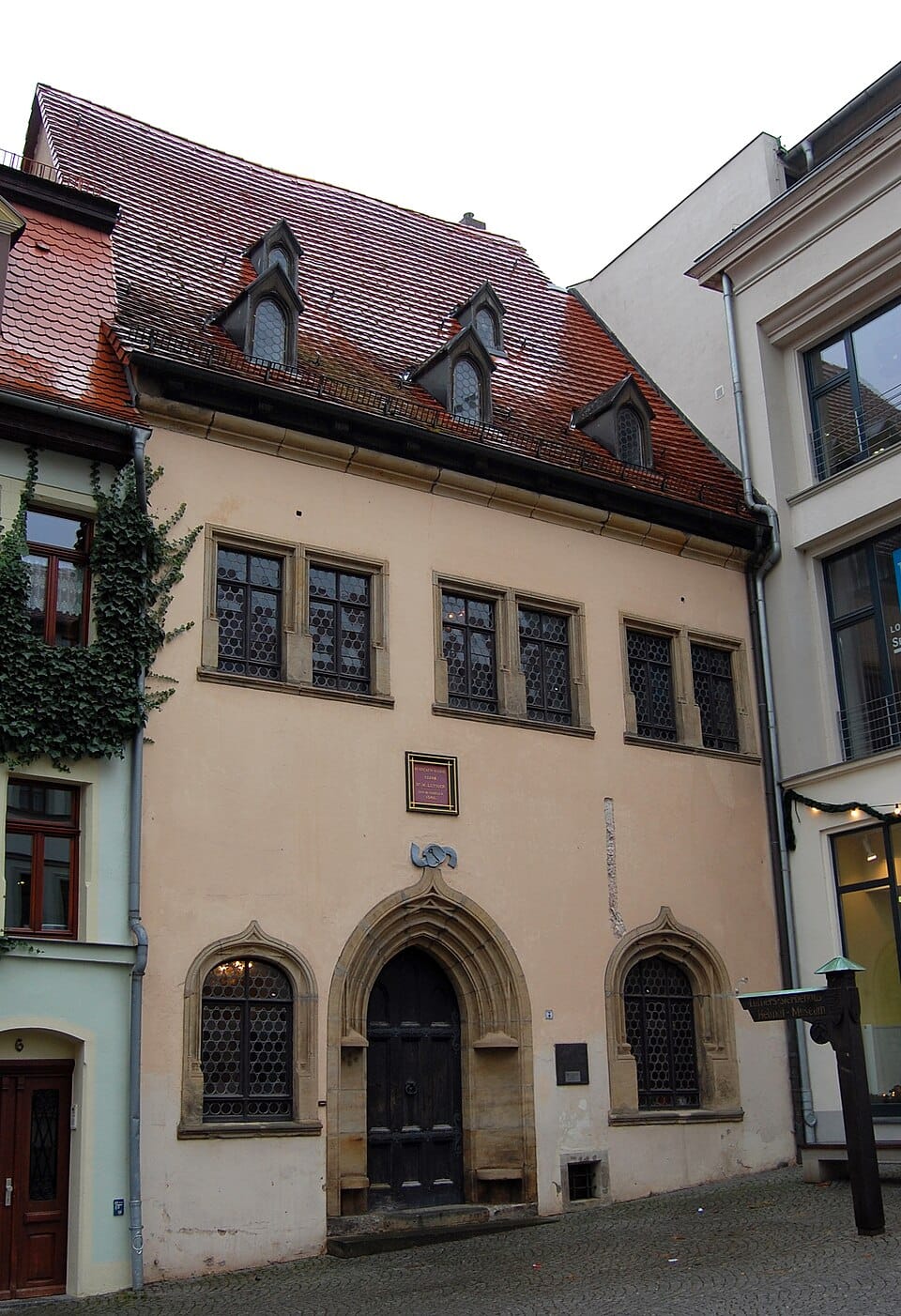
The building above is known as the house in Eisleben where Luther died and it's now a museum and tourist attraction. But, we also know that he actually died elsewhere (at Markt 56), which was torn down in 1570 and is now the site of Hotel Graf von Mansfeld.
Mitten wir im Leben sind mit dem Tod umfangen