Zombies come from Africa? Nowadays they are mostly White.

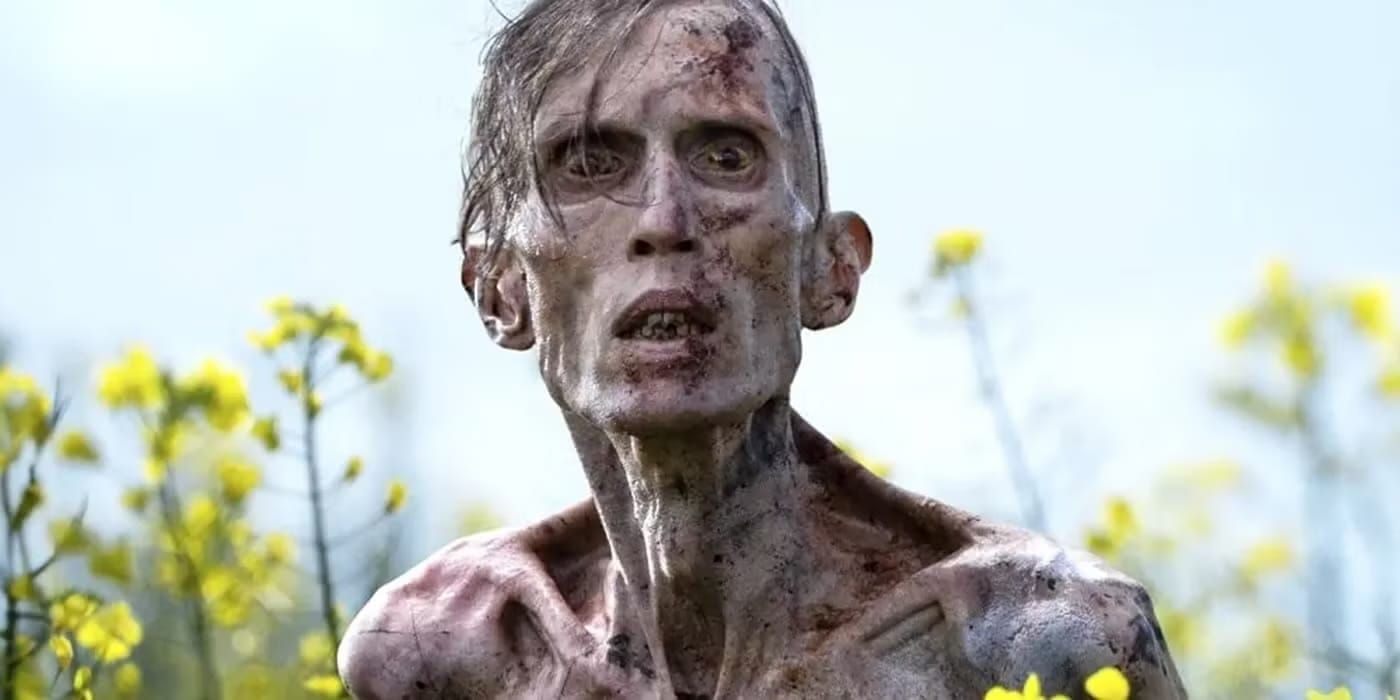
Zombies, compared with vampires and other monsters, are a recent cultural phenomenon. They only entered Western mass culture (along with Voodoo) in the 1920's with the United States' disgraceful occupation of Haiti, from 1915-1934. When the first reports started coming in of "zombies," the big break came with W.B. Seabrook's non-fiction reporting in The Magic Island (1929) and the Hollywood film that followed, White Zombie (1932), starring Bela Lugosi.
Seabrook describes how zombies came in useful as slaves working on Haiti's sugar plantations, because each one was:
a soulless human corpse, still dead, but taken from the grave and endowed by sorcery with a mechanical semblance of life—it is a dead body which is made to walk and act and move as if it were alive.
Excellent capitalist idea, no? It's also hopelessly racist: is it any surprise that slaves working on plantations were like zombies by the end of the day, exhausted after working under a hot sun and in a job that was unendingly boring and under the White overseer's whip? So, let's forget that it's the ancestor of Night of the Living Dead, The Walking Dead and World War Z. Zombies were originally farmworkers and yet they are with us now: the AI robots working on the farms of the U.S. and elsewhere a hundred years later! Here's one of them:

But, as is often the way with Western thinking, the excess and gore and outright fiction are far less interesting than the historical connection of zombies to slavery, and the Afro-Caribbean religious traditions that helped slaves survive in the Americas. It led in the 19th century to new hybrid forms of religious worship involving spirits and ghosts and, yes, zombies, although the zombies are less important today. All these religious traditions were (and are) to ensure the dead person did not become a dangerous wandering spirit lost between worlds, which is really what a zombie was in the age of slavery. It was a tradition with its origins in almost every country in Africa and it made perfect sense to African slaves lost far away from home in Europe's horrific colonies.
Today, that's all changed. There are joyous religious celebrations all across Africa, such as Egungun (Yoruba in Nigeria), Ukubuyisa (Zulu/Xhosa in South Africa) to name but two, and in Haiti, Jamaica, Cuba, Martinique, Venezuela, Brazil, and so on, with food, music, dance, life not death, joy not pain, power not powerlessness, belonging to a community and not exile...
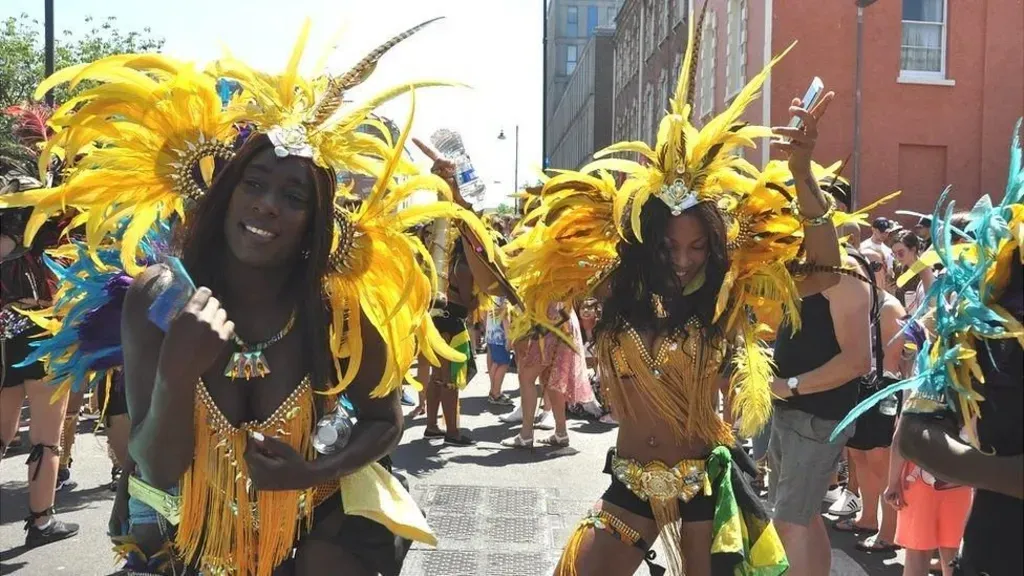
Among the diaspora too there are carnivals and processions in many cities in the U.S., Canada, the U.K., France, Spain and the Netherlands. Afro-Caribbean religious values persist there as an undercurrent in what are otherwise secular festivities. What some call mas (masquerade) or camouflage is because performers, many of them masked, are evoking ancestral spirits - in a tradition going back to Africa - while using elements of Catholicism as something of a shield, because racism toward African culture persists.
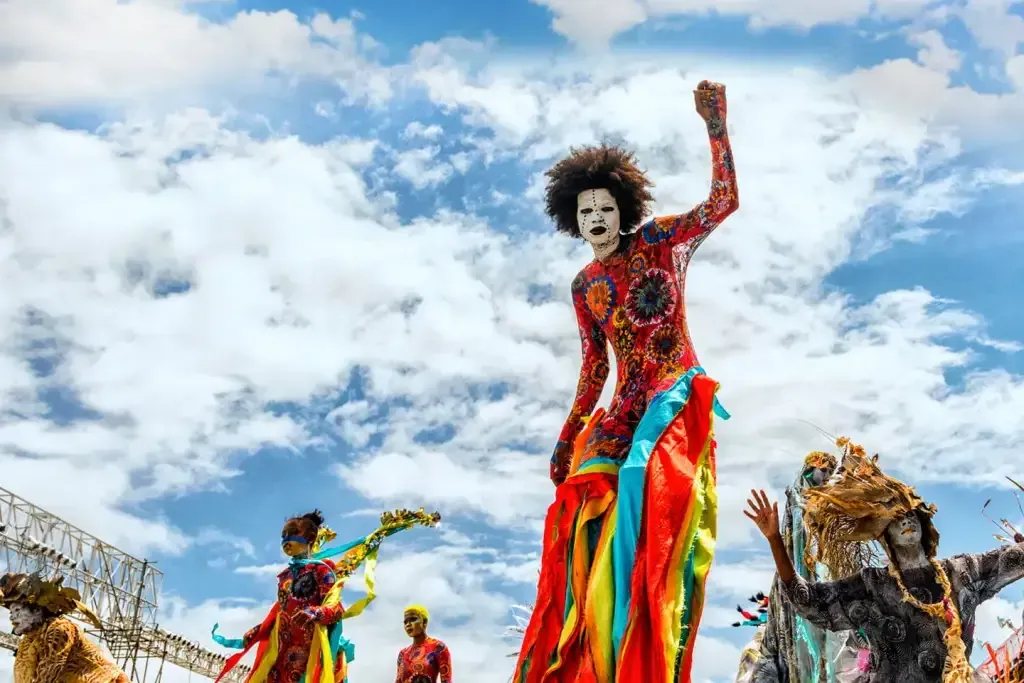
And there are no zombies in these ceremonies although there are jumbees - like the stilt-walker below. That's a whole separate (more positive) tradition. In other words, carnival performers, including jumbees, are symbolically representing the spirits or ghosts of the dead walking among us, and they do scare the kids, but they are not zombies, and they certainly have nothing to do with Western fictions of zombies as flesh-eating monsters.
In Afro-Caribbean religious rituals, as opposed to carnival, there is still the concept of possession. It has always been a lived metaphor for the loss of family and friends under colonial oppression and it's still real today, held in memory. I think there are three levels to this:
(1) the metaphorical/symbolic that I mentioned above;
(2) the literal embodiment via ceremonial rituals that involve (temporary) possession and which usually are not seen in the West (because of fear of harassment);
(3) the broader process of actually believing that the possession of another's body is more than a metaphor.
It's that third group that takes us into the strange world where if you believe something is true, then it is. All religion is like that. Death is never the end; it just continues in another realm. Christians have to believe that Christ's sacrifice can "save" them too, which just seems weird to non-Christians, almost hallucinatory in nature. Certainly so with Communion, and most noticeably when evangelical Protestants or Catholics go into ecstatic raptures, as if they are possessed by the Holy Spirit. It's exactly like what happens in Voodoo (Haiti, New Orleans), Santería (Cuba), Candomblé (Brazil) and elsewhere.
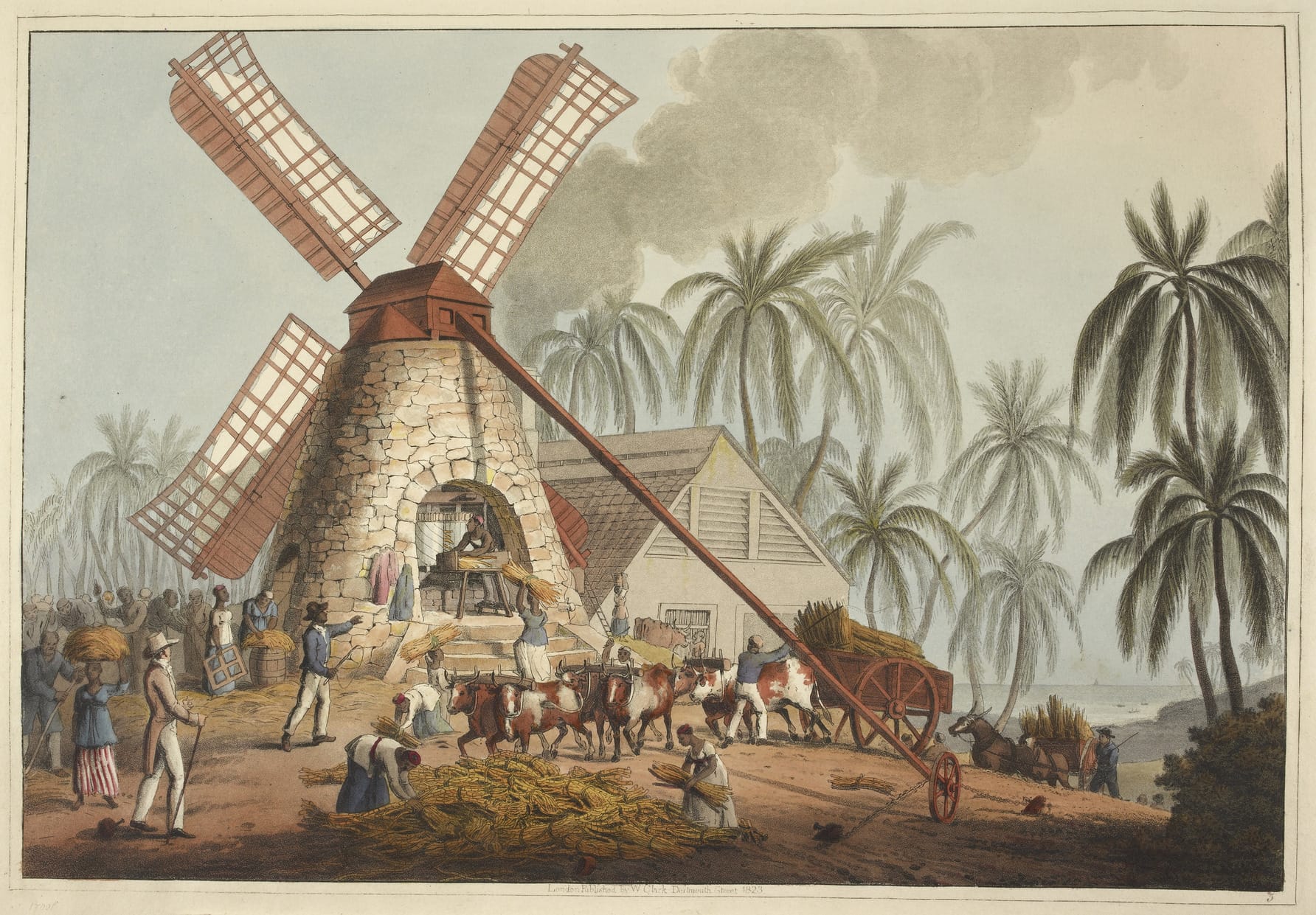
Slavery in the American colonies (the Caribbean, the U.S., Brazil) was viciously brutal and death was often the only escape. This too was hallucinatory. As Mike Mariani wrote in The Atlantic in 2015:
Haitian slaves believed that dying would release them back to lan guinée, literally Guinea, or Africa in general, a kind of afterlife where they could be free. Though suicide was common among slaves, those who took their own lives wouldn’t be allowed to return to lan guinée. Instead, they’d be condemned to skulk the Hispaniola plantations for eternity, undead slaves at once denied their own bodies and yet trapped inside them—soulless zombies.
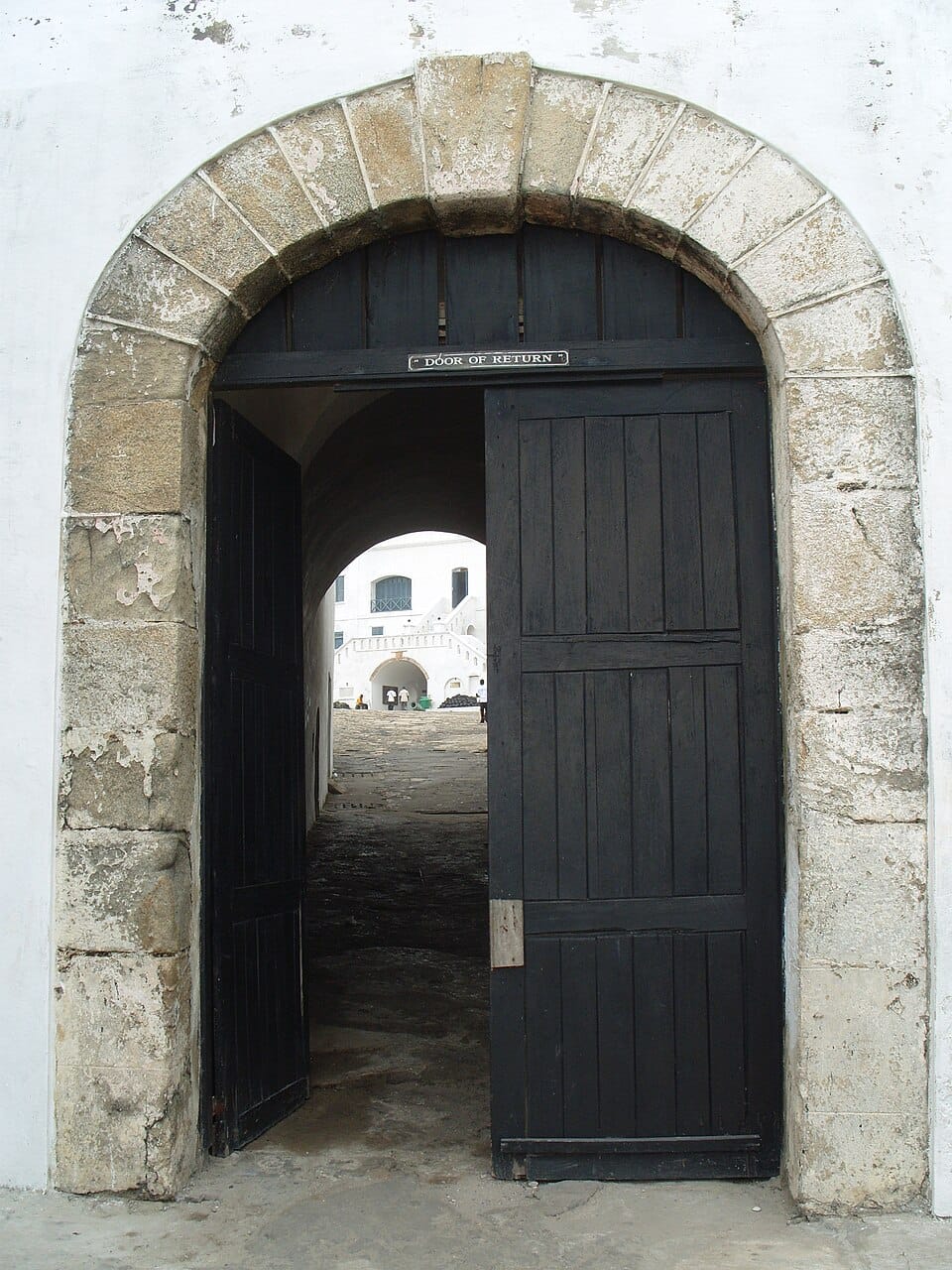
The important thing here is that history - because it only exists in the present - can be renamed and reshaped and remade. Above is one of the "Doors of Return" (which were previously known as "Doors of No Return"), this one being at Cape Coast Castle in Ghana. It was through doors like this that 12.5 million African slaves were shipped away to the Americas. Now it's a potent symbol of return, of how history can be remade, just as Afro-Caribbean religions and festivals have done. In other words, zombies are no longer needed, except in movies and television where, as often as not, they are White people.