Memory and desire: is it better to forget the past or to always remember it?

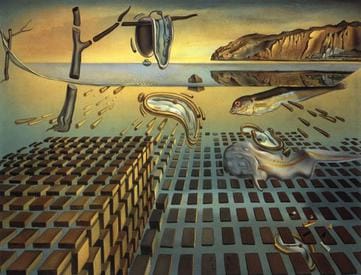
The older I get, the more I find embarrassing memories from my past popping up uninvited. Apparently I never will be able to forget some things, especially how I treated women when I was in my Twenties. The Persistence of Memory, as Dalí might say. Was I so bad? No more than anyone else at the time, but it bothers me.
I was thinking about this the other day: which is better? To forget or to always remember? I'm not sure. The ancient Greeks dramatized this through the twin characters of Lethe and Mnemosyne, forgetfulness and memory respectively, which is pretty binary, but it's not really a hard choice between the two, is it? Even if we either slide into dementia, or we don't, and who's to say there isn't some dementia in all of us once we cross 80 or 90, on balance I favor keeping my memory, thank you. And some things never can be forgotten. Certainly the trauma of wars, holocausts, genocides, abuse and torture never really fade and even when they do, new ones replace them. For me, it's the small things I remember, and want to forget, like when I treated someone badly.
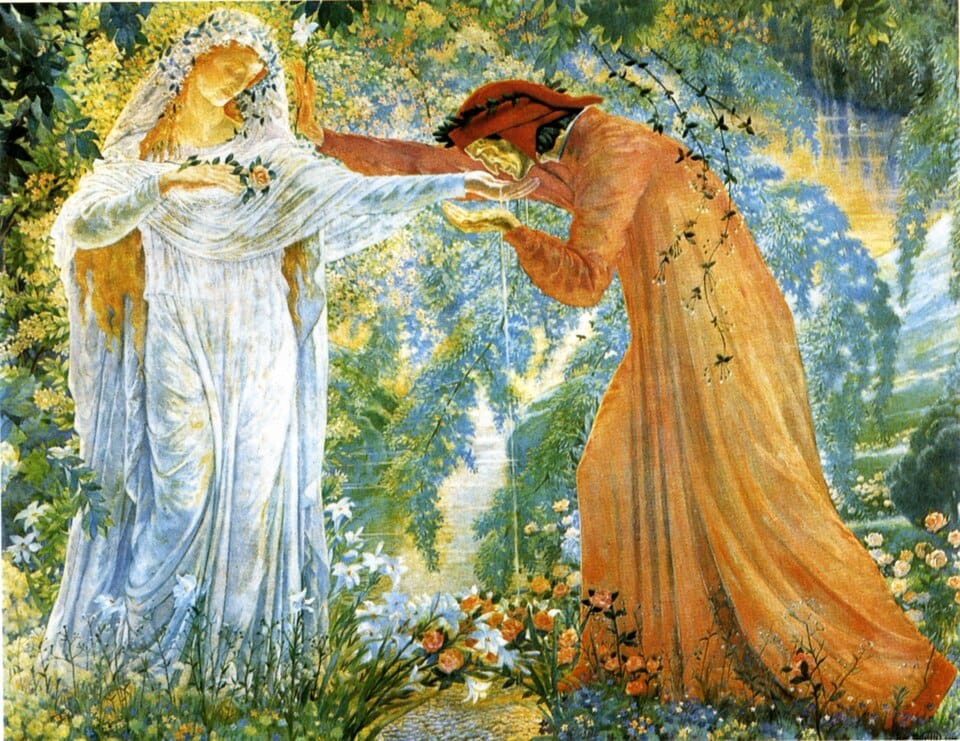
Except it's different in art and literature, which is why I like them. Even a few drops from the river will do the trick, apparently. Here's Dante (always with that ridiculous hat) drinking the waters of forgetfulness:
There's a lot of mystical beliefs and not a lot of consistency in the ancient Greek myths, but Lethe and Mnemosyne were rivers or streams or pools in the Underworld that one encountered after death. Most souls who drank from the River Lethe forgot their past lives and their souls were "reborn" back on Earth in another body. Reincarnation. Since this didn't appeal to everyone, a later idea was that a privileged few (heroes and those favored by the gods) were allowed to cross the Styx and drink from the River Mnemosyne or Pool of Memory and they were able to regain their memories and remain forever in the Fields of Elysium. Clearly a nice set-aside for the rich and famous.
In the Divine Comedy, Dante places Lethe at the top of Mount Purgatory, supposedly to wash away all memories of sin, but why at the top? The Greeks had placed it underground, better aware perhaps that guilt always lurks beneath and, if Dante wanted to forget his old life in Florence, he couldn't. The best metaphor for Lethe is in Milton's Paradise Lost - the "oblivious pool." What a wonderful expression. In Milton's pool are the fallen angels who have been cast out of heaven. For them it's not the occasional forgetfulness so much as oblivion, and that's an appealing idea in any age, which is why others have used it: Shakespeare, Keats, Baudelaire, Edgar Allan Poe, to name a few.
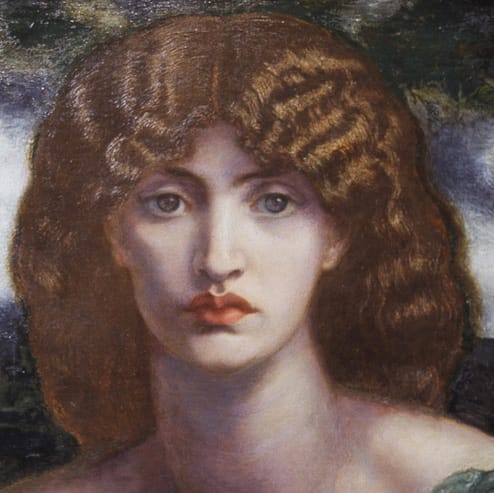
Then there is Mnemosyne and the ability to remember, as in this (cropped) painting above by Dante Gabriel Rossetti of his then-lover Jane Morris.
Memory likes to play hide-and-seek, to crawl away. It tends to hold forth, to dress up, often needlessly. Memory contradicts itself; pedant that it is, it will have its way. From Peeling the Onion, 2006
Gunter Grass
Indeed. But, the inability to forget is not quite the same thing as memory though, is it? This sent me off to ask why certain people with autism remember almost everything they see - for a time anyway - and I discovered a Wikipedia entry that attempts to wrestle with this - and with the concept of amnesia (here). Reminds me too of Mr. Memory in Alfred Hitchcock's The Thirty-Nine Steps (1935).
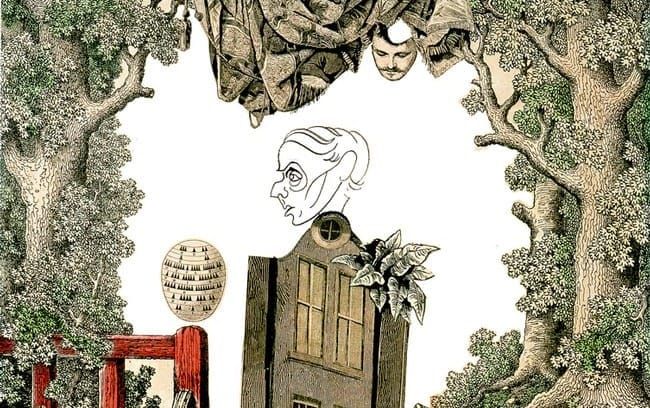
My view is that the inability to forget is more like a curse - the curse of always remembering - represented most notably in Jorge Luis Borges' short story Funes the Memorious from 1942, about a young man who cannot forget anything. It kills him. I was reminded of the Jewish Austrian writer Stefan Zweig and his wife dying by suicide in Brazil earlier the same year Borges' story came out, overwhelmed by fleeing from the horrors of the Nazis. Borges would have been aware of their deaths, but he started the story a few years earlier and it's bigger than the Zweigs. An entire generation then was scarred by the War - losing loved ones, witnessing atrocities, going into exile, and so on, and even today no immigrant or refugee anywhere in the world can forget what they have been through, and in this age of willful blindness, it seems that others simply cannot relate to it anyway. The image up top is of artist Max Ernst, German-born emigré at the same time as Zweig.
I expect this is why Lethe is the more popular character in art and literature, because the desire to forget is stronger than the desire to remember. When people say "Never forget," it's really a paradox in that things will never get back to "normal" unless and until the past fades away.