Mexico City: the City of Sinking Palaces

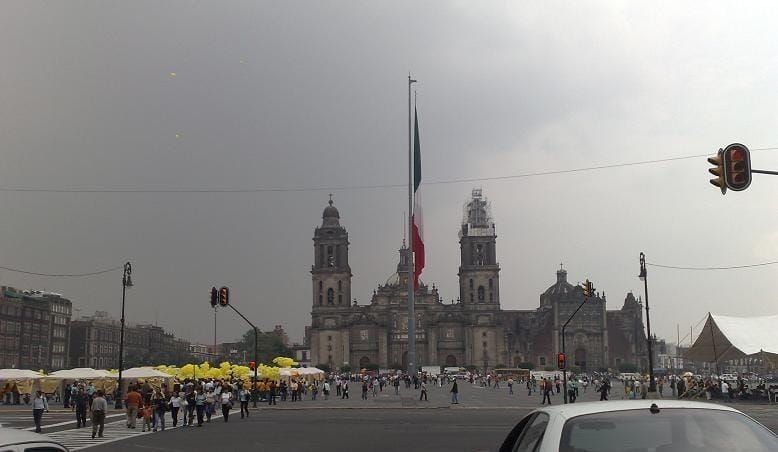
Historically, Mexico City has always had a series of contested nicknames. In the colonial period it was La Ciudad de los Palacios; nowadays it's just "CDMX" and other nicknames have come and gone. It's a city of rich and vibrant colors:
In Coyoacán, the walls are painted with the color of the sky and the trees whisper secrets of old triumphs. My house is a universe of blue and clay, rooted deep in the volcanic soil of this valley. - Frida Kahlo
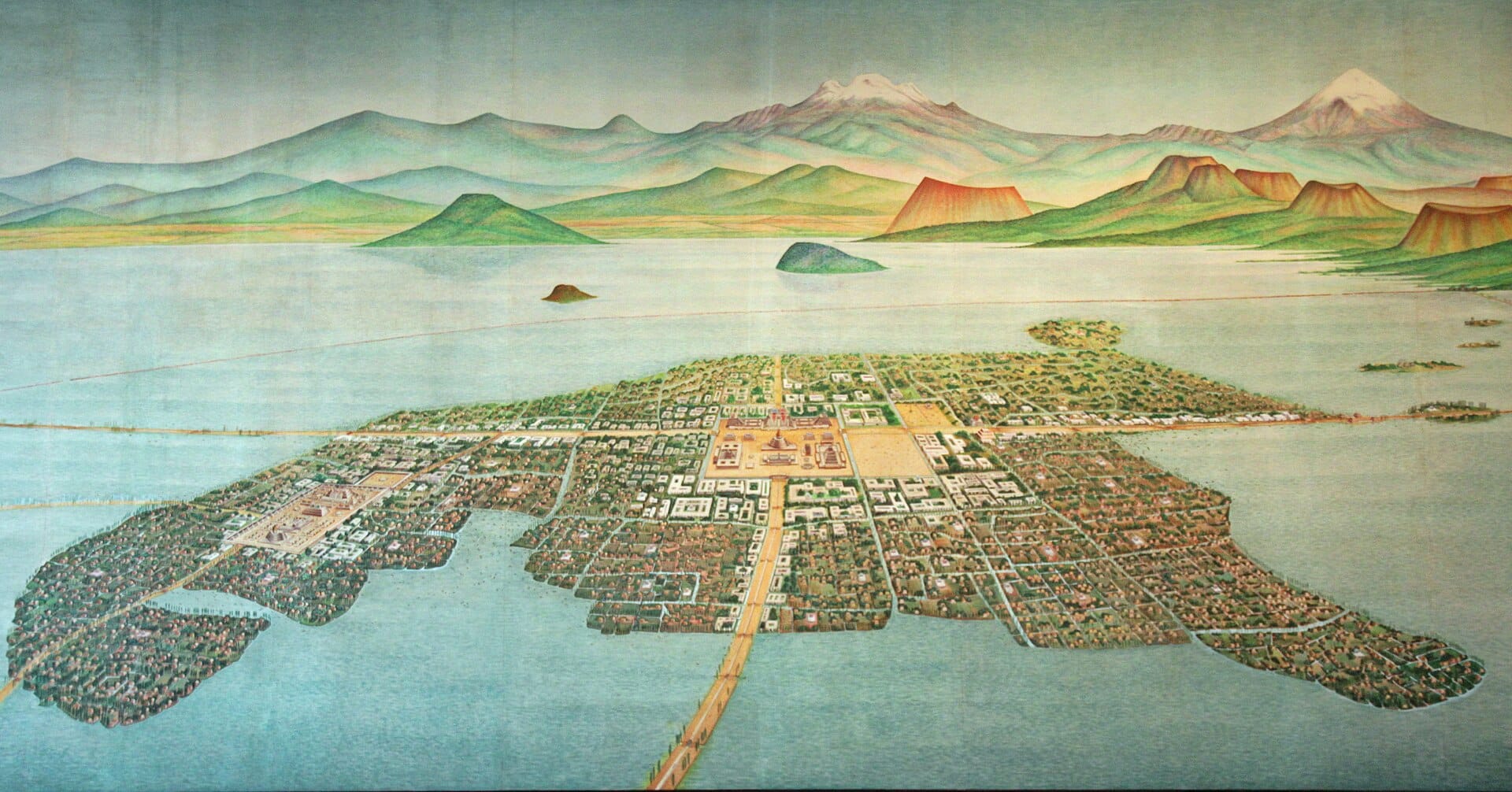
Lately though, it's also the "city that's sinking," by almost 10 inches (25 cms) per year according to NASA. The city sits in the Valle de México which has no natural drainage outlet for the water that flows down from the mountains. In Aztec times this resulted in Lake Texcoco, shown in the painting below, with the Aztec capital Tenochtitlan sitting in the lake. After the conquest, the lake was drained and the city sank slowly and gracefully into the spongy clay lake bed below. Today, Mexico City is huge - 22 million people - and its large appetite for water is satisfied mostly from drilling down to the aquifer for approximately 65% of its needs, but that water is running out and the city continues to sink as a consequence of this.
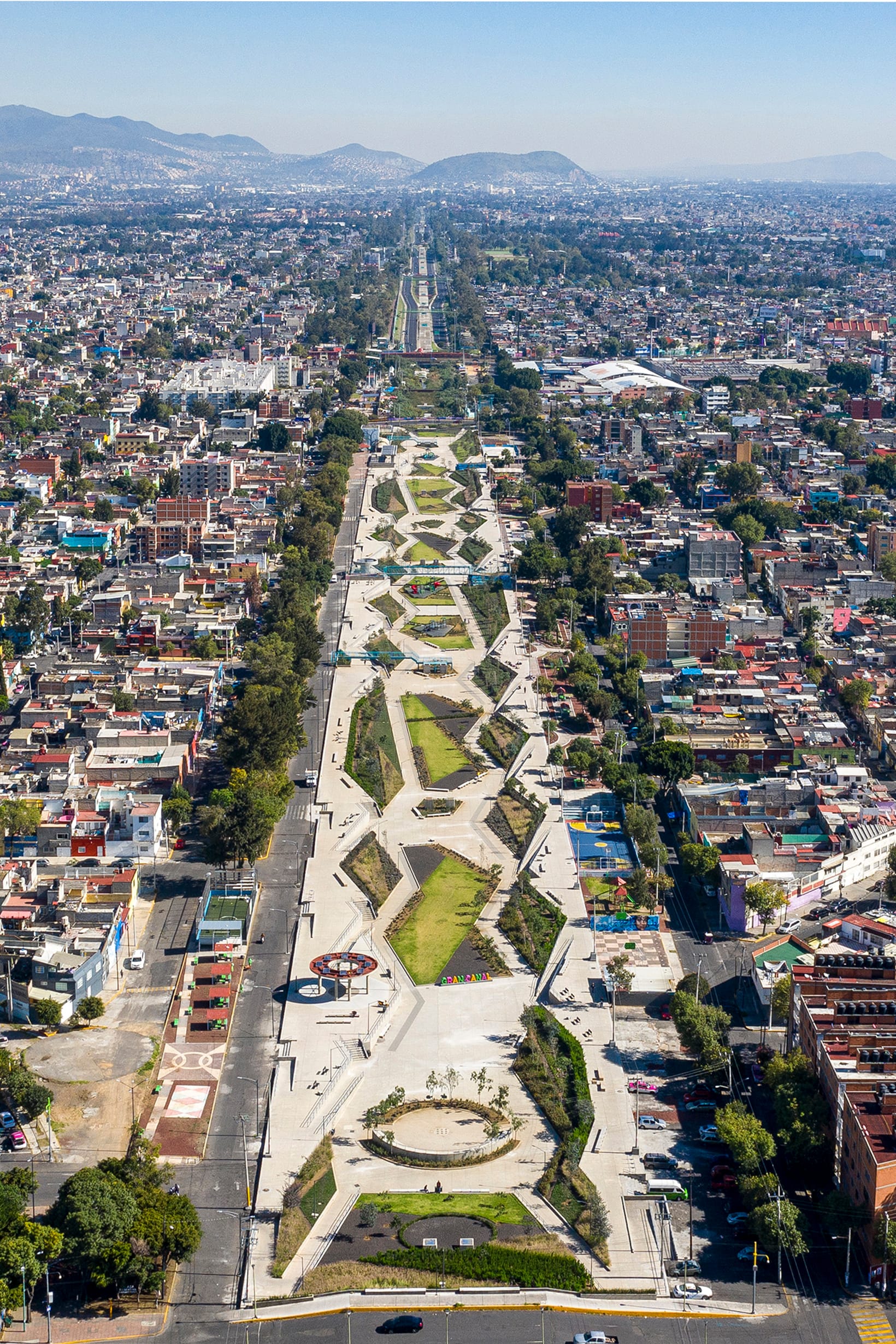
Yet, during rainy season, the city suffers from severe flooding in the basin. To alleviate this, the Gran Canal, a large 19th-century engineering project was built to drain stormwater, as well as wastewater/sewage, away to Hidalgo in the northeast from the city center, using gravity. Today, though, the wetlands that originally existed are dried out and paved over and - ironically - the city is running out of water! Can't have it both ways... The former canal has been transformed into a vast green space known as the Grand Canal Linear Park (below), reducing the urban heat island effect but, because the land has sunk, massive (and expensive) pumps are required to lift the stormwater/wastewater sufficiently to exit the basin.
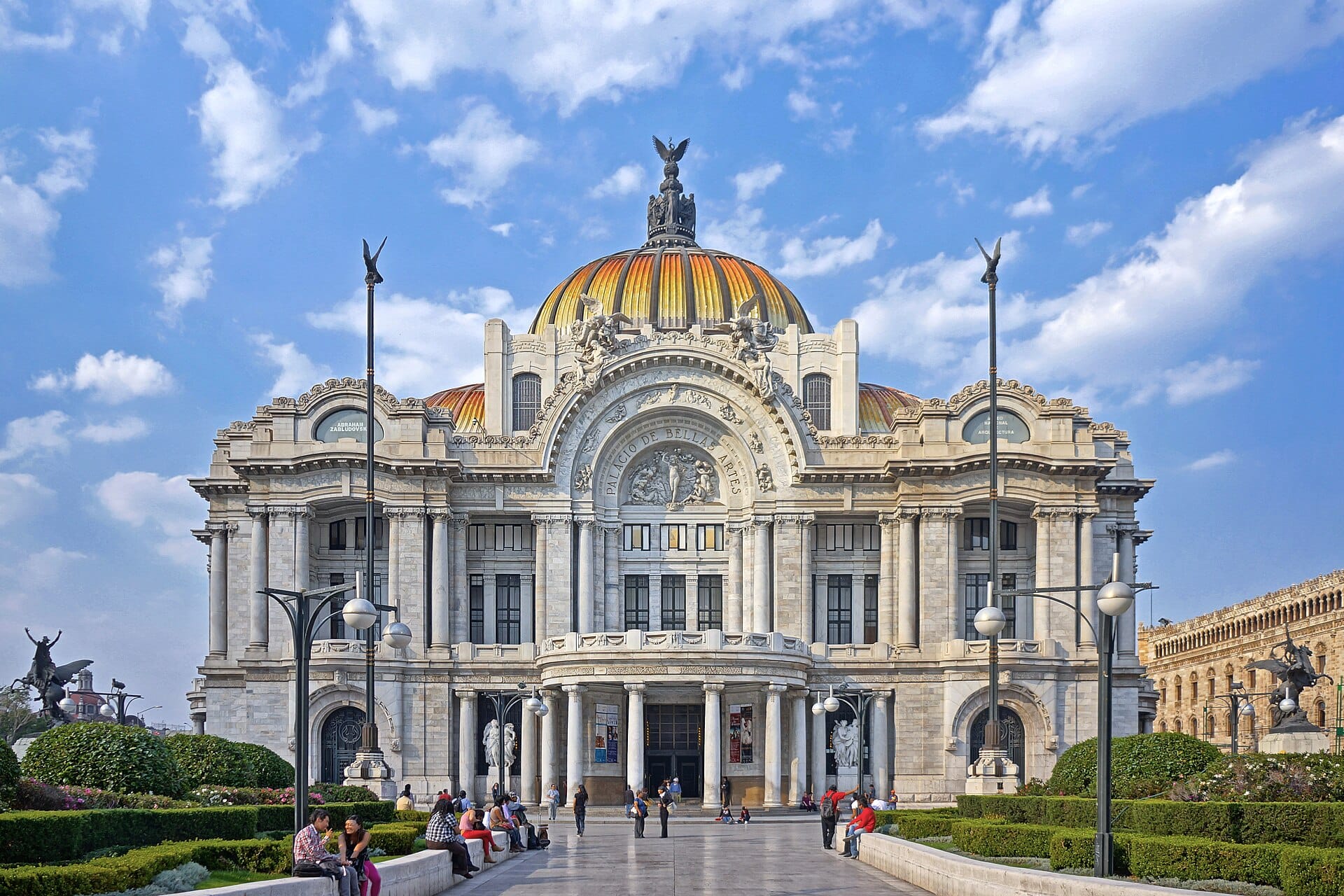
Another key side effect of the falling water table: the city's landmark buildings keep tilting, like the Metropolitan Cathedral, shown up top, where construction began in 1573 and which was visibly tilted until a restoration in the 1990's stabilized it. It is still sinking though. Then there is the theater Palacio de Bellas Artes, below, which has sunk 13 feet since construction began in 1904. Other prominent buildings tilting or sinking include the Old Basilica of Guadalupe, the National Palace in the Zócalo, and the Angel of Independence statue on Paseo de la Reforma. The sinking cannot be prevented, so efforts go into stabilization.
Walking through the Zócalo is like walking through the veins of Mexico itself. The stones beneath your feet are heavy with centuries of tears, music, and the relentless noise of a million lives overlapping. - Jaime Sabines
What else is being done?
Major new drainage/sewage projects are already underway as part of President Claudia Sheinbaum’s National Water Plan, announced in 2025, which includes investment in water storage, flood control, desalination, aqueducts, dam modernization, sanitation and water treatment plants all over the country. One area that needs heavy remediation is the Hidalgo spillover area mentioned above - the Endhó Dam may be the most polluted area in Mexico.
Mexico City does have the Cutzamala and Lerma reservoir systems for 25% or more of the drinking water for Mexico City and Toluca, depending on rainfall. But building more reservoirs is not really a solution, beyond upgrading what's already there, because reservoirs and pumping stations use a lot of electricity and are carbon emitters, and there are always conflicts with locals who are impacted. Instead, the city is focusing on local rainwater capture and filtering it back into the aquifer (while making sure to exclude contaminated streams and sewers), fixing an aging network of pipes that leaks 40% of its supply, and drilling new wells in surrounding regions.