Sex in ancient times: the tale of the wandering womb

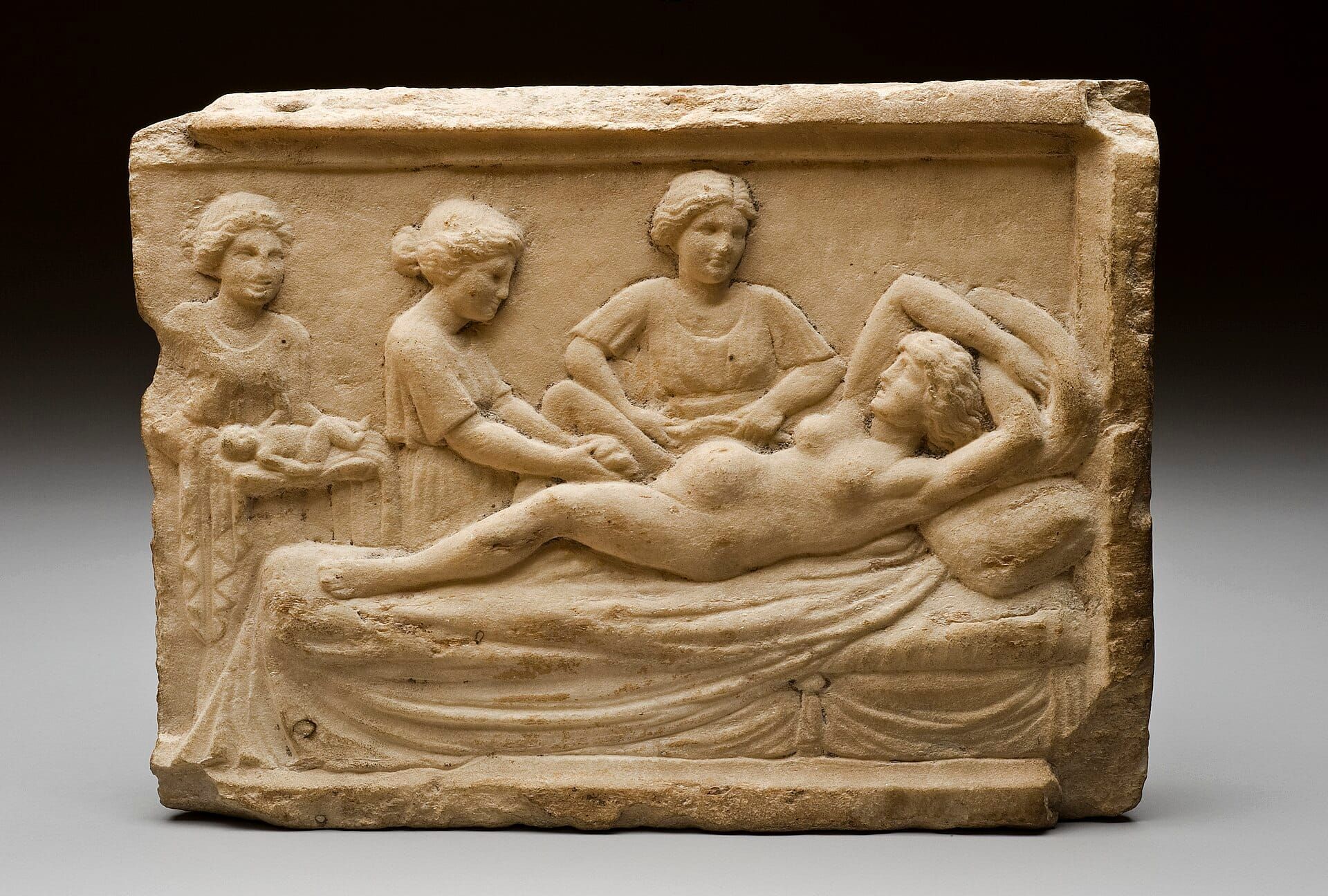
How on earth did men in ancient Egypt, Greece and early Rome accept the idea that the women in their lives had a wandering womb/uterus? Why did they think it was a convenient explanation for women's health problems? Did they know any women?
I can understand the fascination (by men) for how new lives could emerge from women's wombs; it is indeed amazing. But, to go from there to theorize that the womb could overheat or dry out, and that it needed to move around like an animal ("an animal inside an animal") to find moisture and, in so doing, push against the other organs, just doesn't seem intuitive to me. This is what the men believed! Plus, it doesn't help explain men's health problems, does it?
There is now a prodigious literature on the subject, written by, well naturally, women, who seem mostly amused that this theory persisted among men well into the 20th century. I mean, just look at this "pelvic massage" below, where "hysterical paroxysm" appears to be code for "orgasm."

But I digress. Back in antiquity, the good news was that the wandering womb theory excused the women who wanted to have regular sex ("oh it's just her wandering womb again and we need to have a lot of sex to get it back to where it belongs"). The bad news was, this arrangement tended to favor the men.
Dr. Jean Menzies, a Scottish writer, argues for a pessimistic interpretation:
The portrayal of women as the more sexual sex in antiquity – hornier, libidinous, lust-fuelled – was not a good thing. It was, in effect, an illness; an unfortunate side-effect of their wandering organs, one that society must find ways to satiate and, ultimately, control.

Maybe... The basic premise back then seems to have derived from Egyptian physicians (Kahun Gynaecological Papyrus). A thousand years later, with Egypt under Greek occupation (the Ptolemaic Period), Greek physicians (Hippocrates) and philosophers (Plato, Aristotle) had access to these ideas and they seem to have accepted them uncritically. This is Plato:
The same is the case with the so-called womb or matrix of women; the animal within them is desirous of procreating children, and when remaining unfruitful long beyond its proper time, gets discontented and angry, and wandering in every direction through the body, closes up the passages of the breath, and, by obstructing respiration, drives them to extremity, causing all varieties of disease.
In the ancients' defense, Athenian society was strictly segregated. Even if men were able to observe real symptoms in women, they had to fall back on the theory of humors to explain things any further. Since women were associated with the phlegmatic (watery) humor, if things had gone wrong, then she must be drying out! Quick, have sex. But, it was virtually illegal to dissect human bodies for medical purposes in ancient Greece, so the theory couldn't ever be tested. Instead, "aromatherapy" (or the appallingly translated "womb fumigation") was applied for the more than two millennia that followed - like this insertion device below, from 1610:
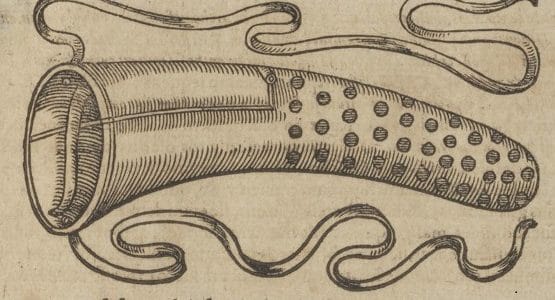
How did this work? The womb was thought to be attracted to pleasant smells like cinnamon and cloves and disgusted by foul smells like shit so, in this way, the womb could be coaxed back to its correct position. I have to believe this was partly driven by male disgust at how women smelled differently from them (the horror), but female self-disgust must have played a role too. By the late 1600's, this was a very common practice in Europe and therefore a target of satire. But, it was popular outside of Europe too, although there it was more for "cleansing" and fertility reasons, not wandering wombs. (Then there's the whole mythology of "hysteria," a story for another day.)
The whole thing is absurd from a medical or health point of view. What's worse is these ideas are still around today. Now, it's "vaginal steaming" (V-Steam) or "vaginal douches" or, more exotically, "yoni steaming," and what they all have in common is (as one puts it) "an age-old natural remedy that cleanses the vagina and uterus, regulating menstruation, and easing period cramps and bloating by using herb-infused steam. Some of the herbs we use for this vaginal steam are: mugwort, wormwood, chamomile, etc." Although the medical profession is harshly critical, these largely unregulated businesses are widespread in a city like Los Angeles and there's a ton of stuff available to buy online if you really want to do it at home.

Also see:
* Isis, Artemis and Aphrodite/New Age Feminism (here)
* Sex in the Middle Ages/Hildegard of Bingen (here)