Modern poisoners, food tasters and their victims: who survived and who didn't...
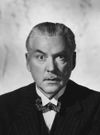
Last month, a journalist who exposed President Vladimir Putin’s secret relationship with an Olympic gymnast in 2008, died in Riga, reportedly after eating poisonous "false" honey mushrooms that he had foraged near his house. Was it an accident or a murder? Grigory Nekhoroshev, 69, had been living in exile after fleeing Russia, Latvian outlet Delfi reported. This death sounds accidental but these days who knows anymore? It's impossible to tell.
While being a journalist can be dangerous, when I think of the most nerve-wracking jobs in the world, presidential food taster is higher on the list. Imagine if every meal could be your last. I've read reports that every U.S. president since Reagan has relied on kitchen staff and the secret service to sample dishes, and today most world leaders rely on supply chain security, but what about people who are really hated?
It's not that easy to poison someone through food and drink. Certainly, this is how Alexander Litvinenko was poisoned - via polonium-210 in green tea. But, Putin's assassins have used other methods, like ricin (Georgi Markov - killed via a poisoned umbrella tip), and Novichok (Sergei Skripal, via his front door handle - unsuccessful - and then Alexei Navalny - again unsuccessful, via his underwear). Navalny was eventually killed in prison via epibatidine, a toxin found in Ecuadorian poison dart frogs. Aleksandr Perepilichny may have been killed by Gelsemium elegans ("heartbreak grass"), a rare variety of plant. There are many other such cases, but the Kremlin is responsible for most of them.
 Ron Synovitz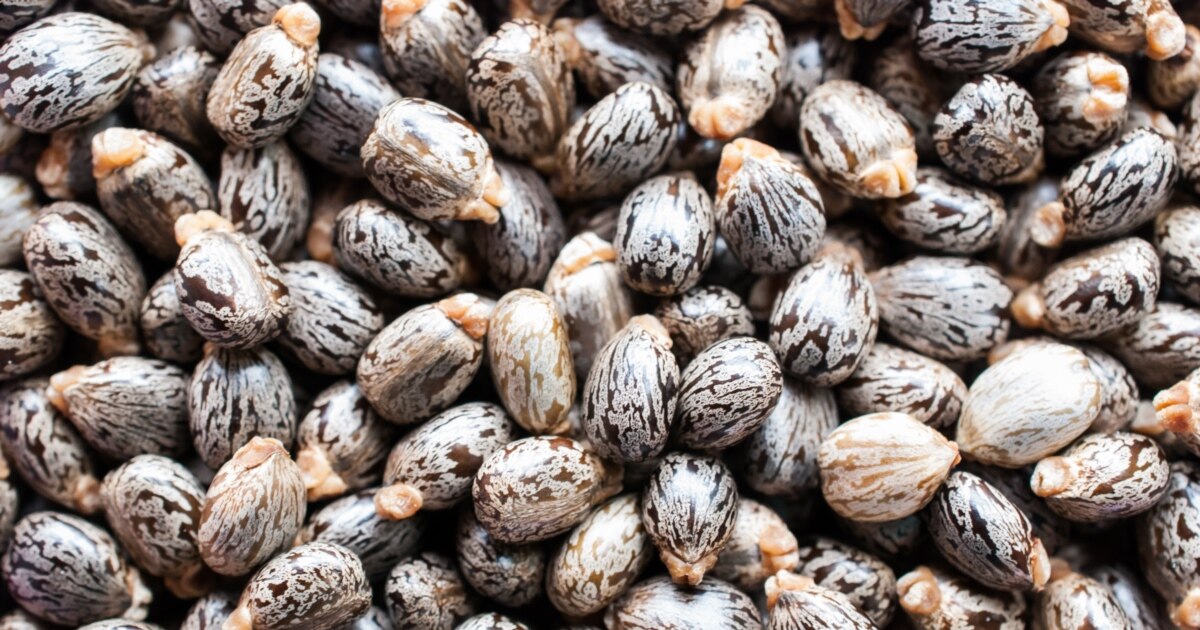
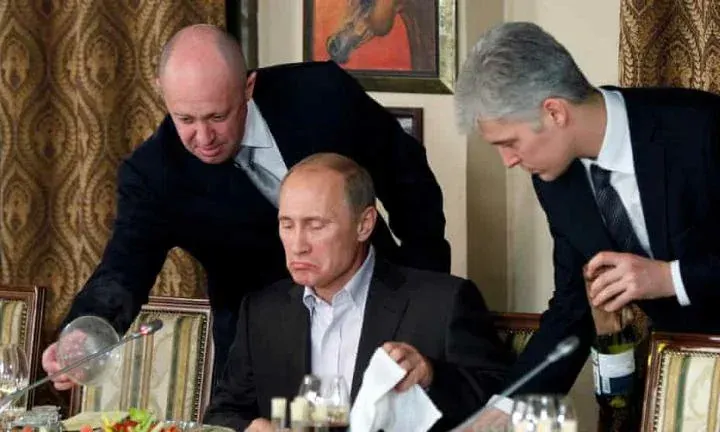
Does Vladimir Putin have food tasters himself? Judging by what leaks out of the Kremlin kitchens, he employs a full-time food taster as part of his security detail. I'm not surprised. The photo up top shows him with mercenary leader Yevgeny Prigozhin (once known as "Putin's chef"), whom Putin had killed in a plane crash after Prigozhin launched a rebellion in 2023. It wasn't because of his cooking.

Then there's Adolf Hitler, who employed teams of young women, including Margot Wölk, as food tasters. Wölk was the only survivor from Wolf's Lair - Hitler's bunker in remote Northern Poland - when she was assisted in an escape in late 1944. The other food tasters were killed by Soviet forces. The bunker is shown above.
 Fabienne Hurst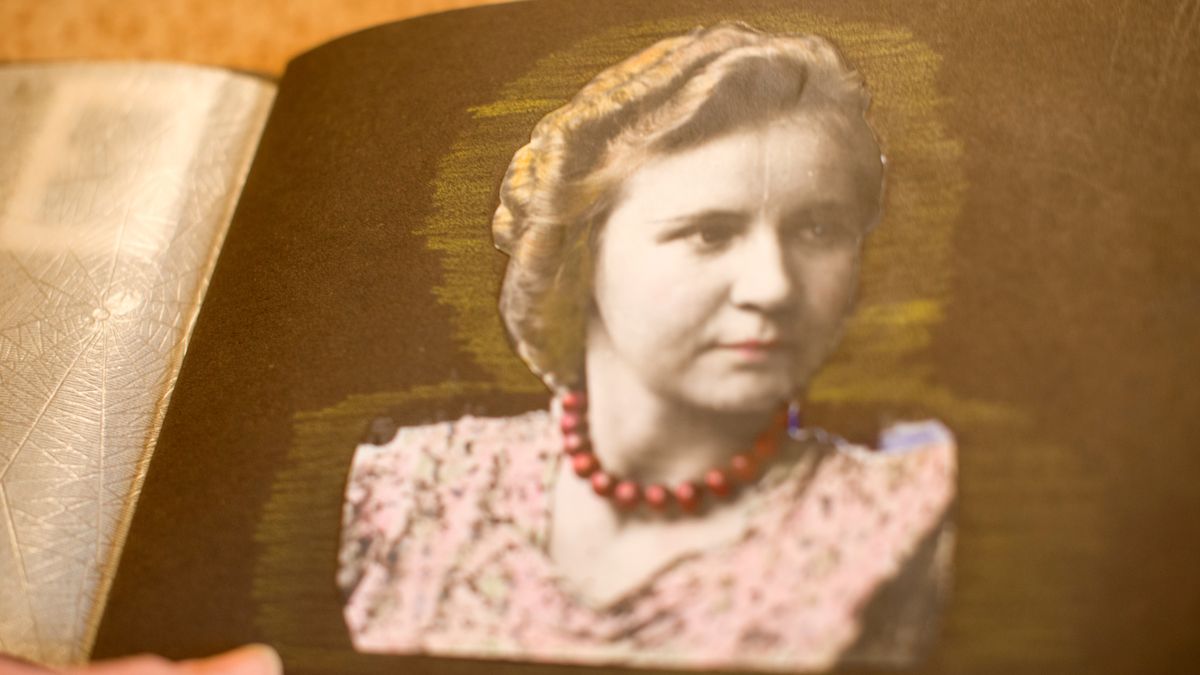
Back to Russia: Joseph Stalin employed an alleged half-brother (and restaurant owner) Alexander "Sasha" Egnatashvili (nicknamed "the Rabbit") as his personal food taster. Nicolae Ceaușescu of Romania, another unpopular and paranoid leader, employed food tasters. North Korea's Kim Jong-nam, the half-brother of the current leader, banished in 2003, was murdered in 2017 at Kuala Lumpur's airport by North Korean agents using nerve agent VX.
None of this is unique to the past 100 years. Two earlier eras known for poisonings were (1) in Roman times and (2) in the Medici era in Late Renaissance Italy. The most famous examples in Roman times: the poisoner Locusta and the food taster Halotus. The most famous Renaissance Italian poisoner was Giulia Tofana. They are a story or two for another time.