My thoughts on the 'Tao Te Ching,' the 'I-Ching' and 'Zhuangzi'
I have always preferred Taoism over other philosophies and religions because, if I have to choose a philosophy or a religion, this is the one I would choose, because I don't want to choose one at all. That is to say, Taoism is also the most helpful in dealing with a world order that is disintegrating around us. 乱
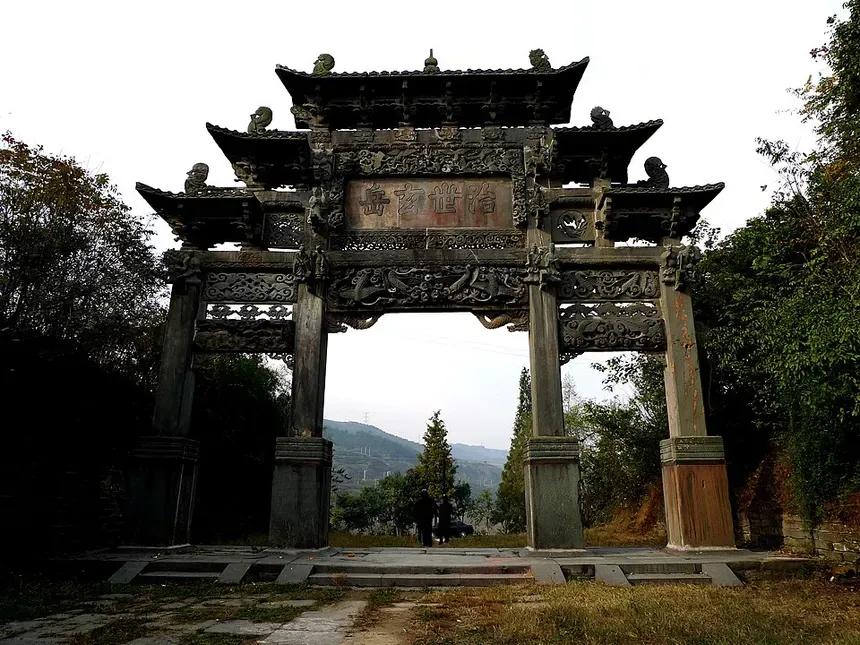
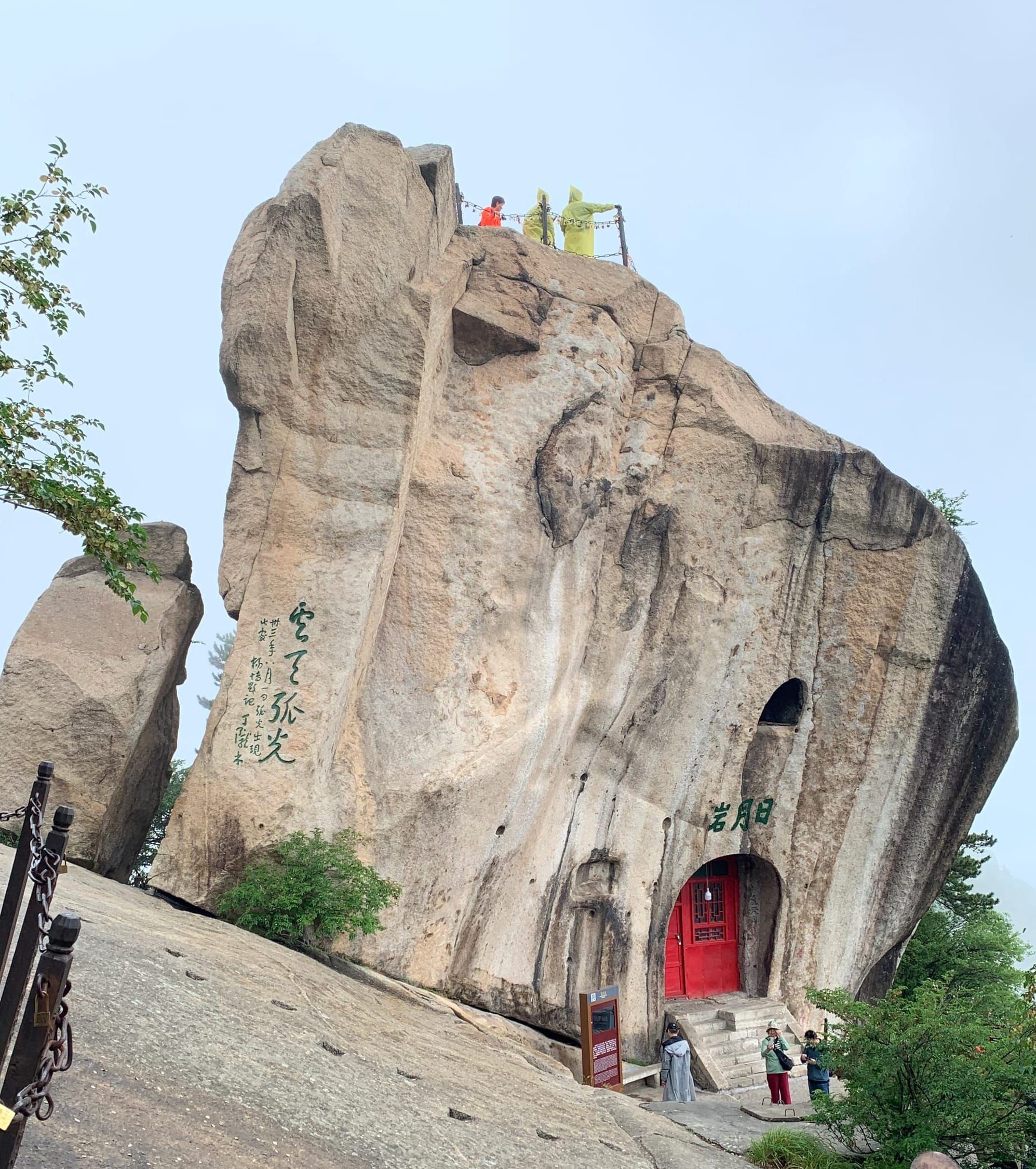
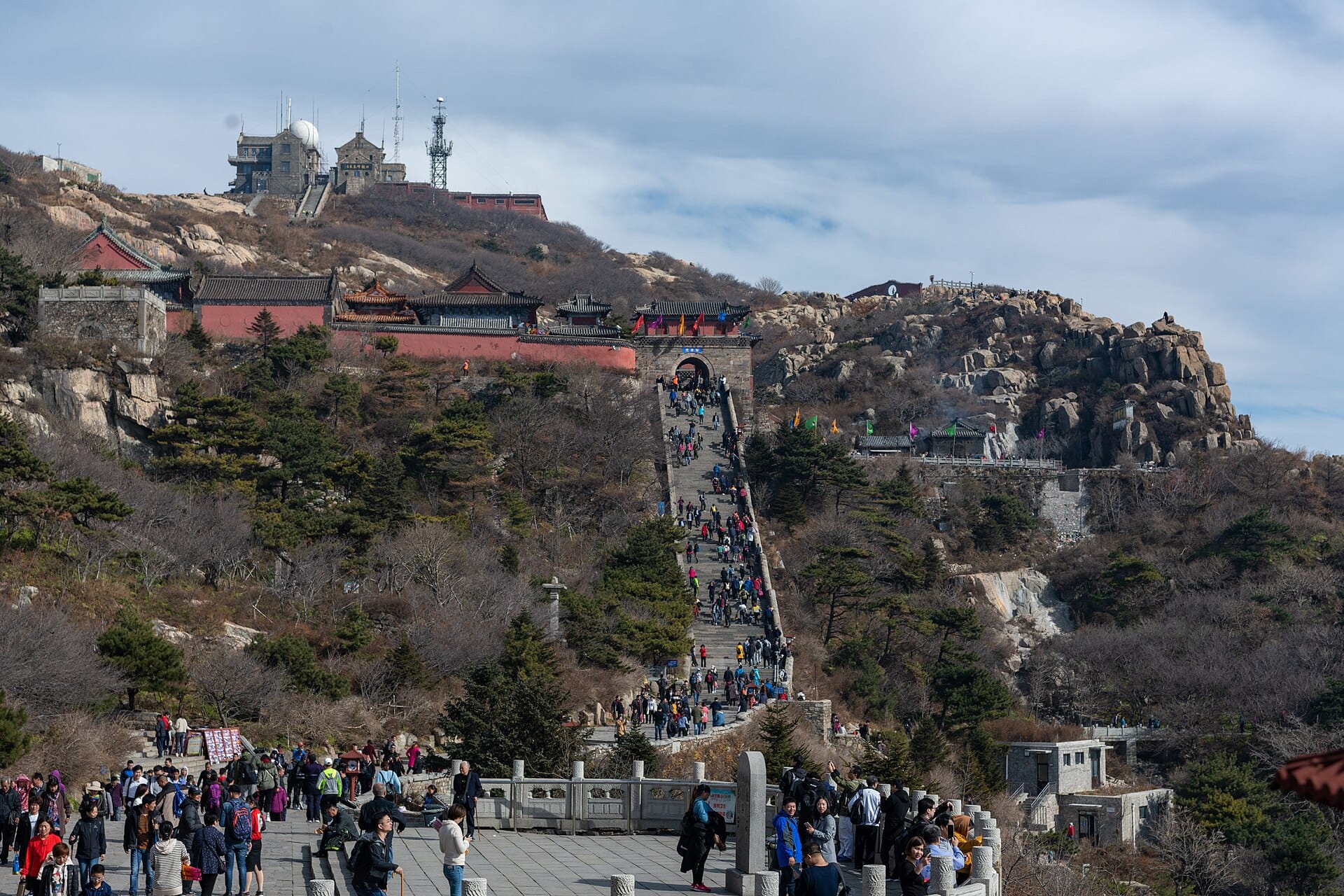
Some like to make a distinction between Philosophical Taoism, based on texts like the Tao Te Ching, the I-Ching and Zhuangzi, which emphasize "Wu-Wei"(effortless action) and the harmony between Yin and Yang, and Religious Taoism, which also has sacred mountains, temples, priests, and institutionalized rituals - like Buddhism does. This is a false distinction for most Chinese Taoists, but I think there's something to it, because living by the principles of Taoism - or at least in the way I view it - means NOT relying on any of this - not texts or rituals or cosmological symbols, like you find in Hinduism, Buddhism, Confucianism or institutionalized Taoism, let alone temples and priests and revelations, no matter how inspiring Wudang Mountain is. Taoism is definitely not about "power" or "virtue" (both are common translations of "Te") or an "inner being" that is independent from it. Rather, Taoism for me is defined by what it is not. Put another way, it is about knocking down rules and definitions, which is why I think of it as something partially glimpsed out of the corner of my eye, but never really seen.
Take its official texts, especially the Tao Te Ching (Dào Dé Jīng). It is considered a paradox of Taoism that the true Tao (the Way) cannot be put into words, since words are so inadequate. But, the paradoxes are really just outright contradictions, because they are designed to warn listeners and readers that you can't get there from here, wherever that is, if you rely on texts. Or actions for that matter.
The Tao that can be told is not the eternal Tao.
Writers and translators (and Orthodox Taoists) like the challenge anyway - to muse on the possible meanings - and the Tao Te Ching apparently is the most translated book in the world next to the Bible and the Bhagavad Gita. We can of course rely on the Tao's metaphors: to be water flowing naturally and leaving no trace (again like the concept of Wu-Wei), but "meaning" is a bit irrelevant here.
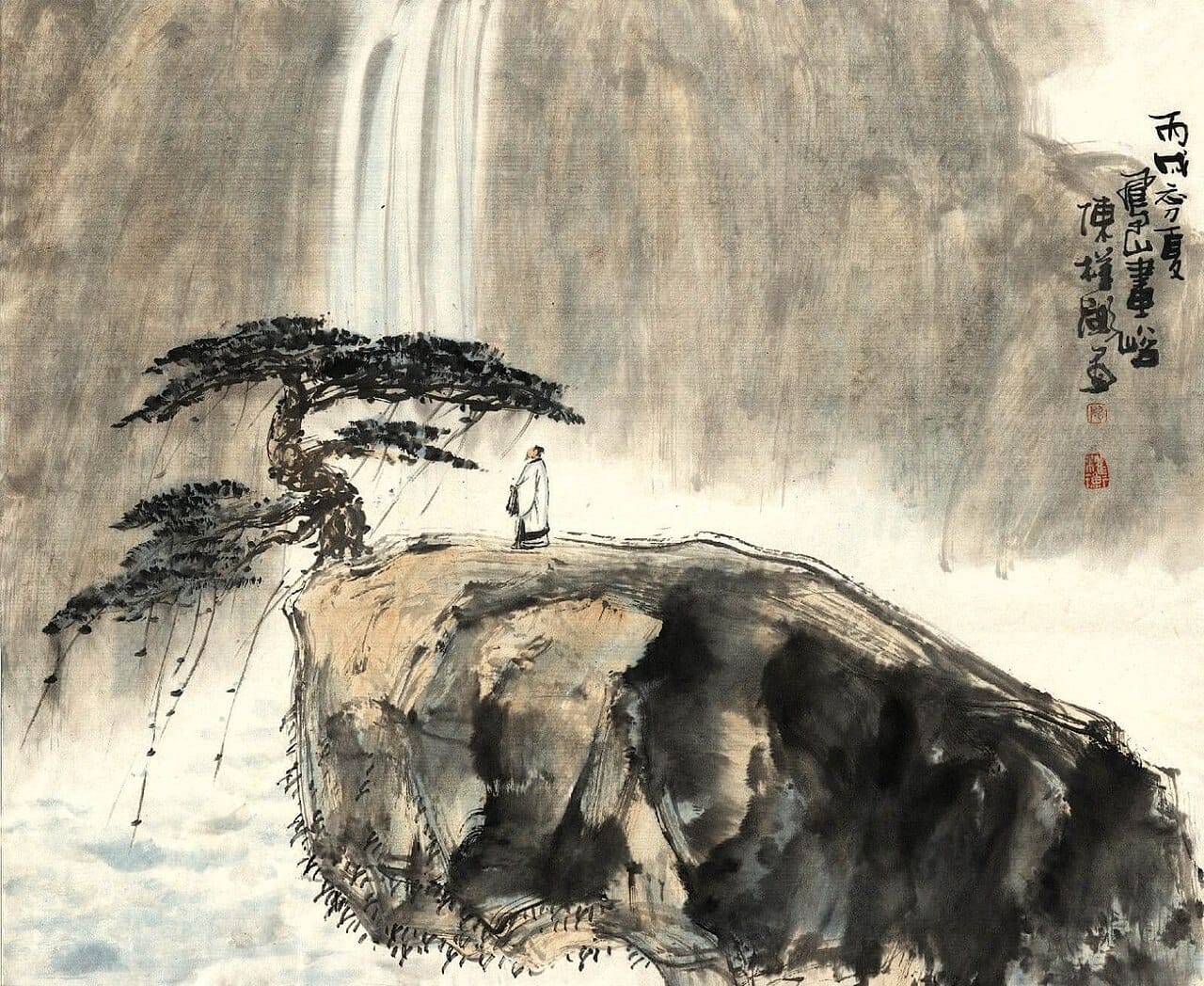
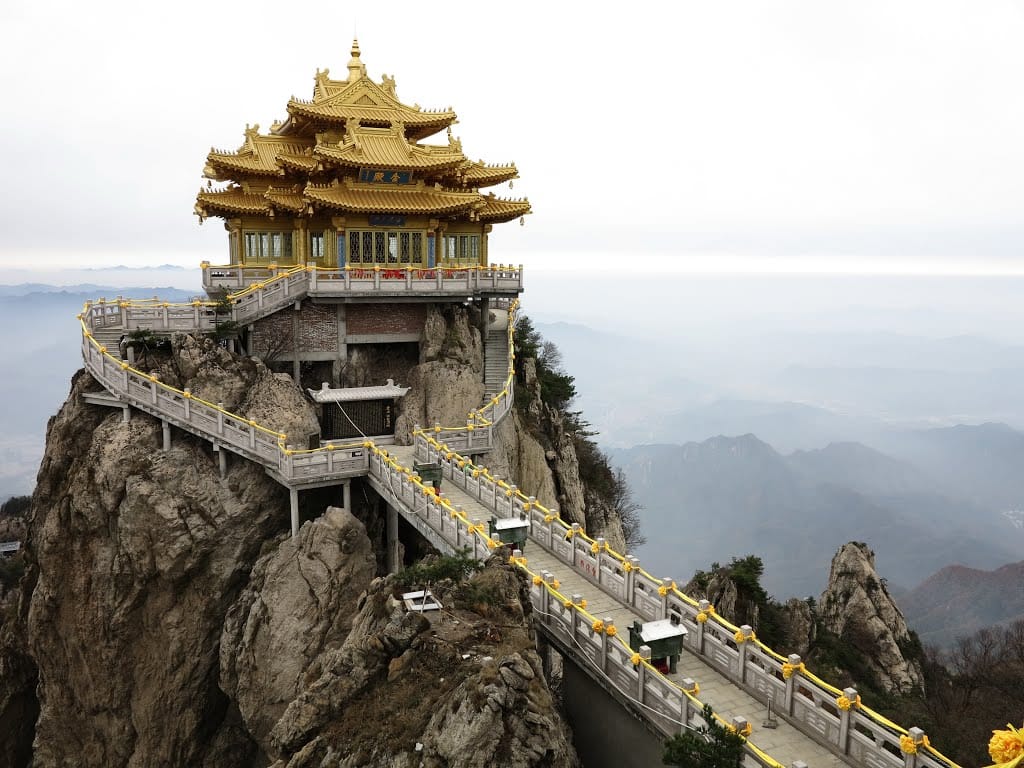
Laozi (Lao Tzu) literally means "Old Master" and the Tao's 81 chapters probably were compiled by multiple authors. But the mythology is more interesting: was "he" a royal archivist in the Zhou court capital of Luoyang, did Confucius visit him, and did he disappear into the western wilderness? The answers are almost certainly no, but "he" is associated nonetheless with retreat to the Lingquan Palace on Laojun Mountain, southwest of Luoyang in Henan Province - which currently is not open to foreigners, possibly because of nearby military installations.
The I Ching (or Book of Changes) is not a Taoist work, but some Taoists do use it as a divination tool or oracle using its 64 hexagrams. As such, it is either a strategic guide to making decisions or just a lot of fun seeing what pops up (I hold the latter view). There is a formula with coins or yarrow stalks or dice and building a yin/yang hexagram, rather like using Astrology or the Tarot. I enjoyed played around with the ambiguities and infinite meanings here.
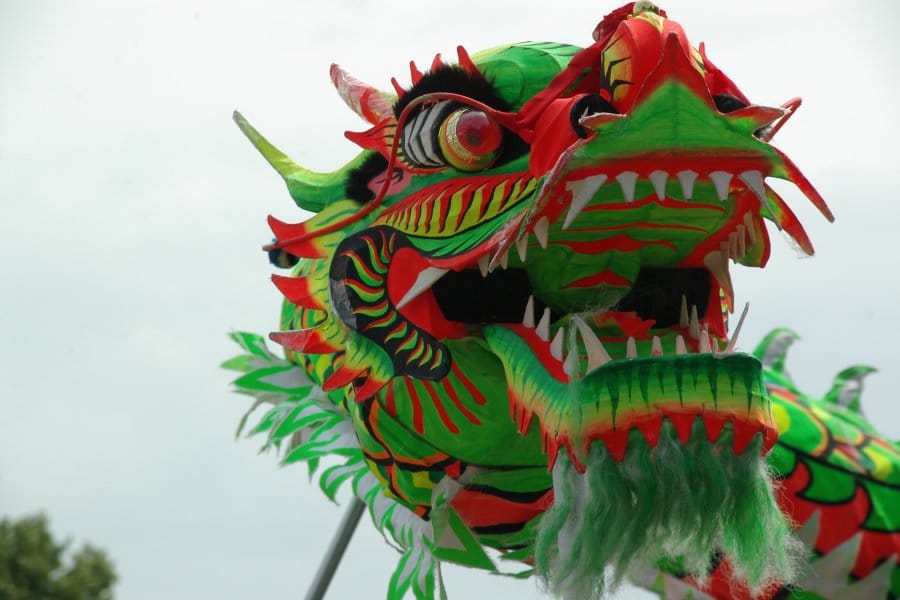
The image most associated with the I Ching in Chinese culture is the dragon, which appears in the first hexagram - Qian 乾 (Heaven):
Lastly, there is Zhuangzi, which is somewhat Taoist in spirit in the way it is whimsical and constantly undermines itself. But, I find much of it unintentionally didactic and even a bit boring, though maybe that's just me. It is the tales of Zhuang Zhou, who is as mythological as Laozi, but it's prose rather than poetry and Confucius puts in several appearances. The most famous story is the man who dreamed he was a butterfly and that one I like very much:
Now I do not know whether I was then a man dreaming I was a butterfly, or whether I am now a butterfly, dreaming I am a man.
This is an exquisite (and brief) story and it influenced many Chinese writers, as well as Jorge-Luis Borges who put it to good effect in The Circular Ruins. Of course, it's the man's point of view; we don't get the butterfly's point of view.
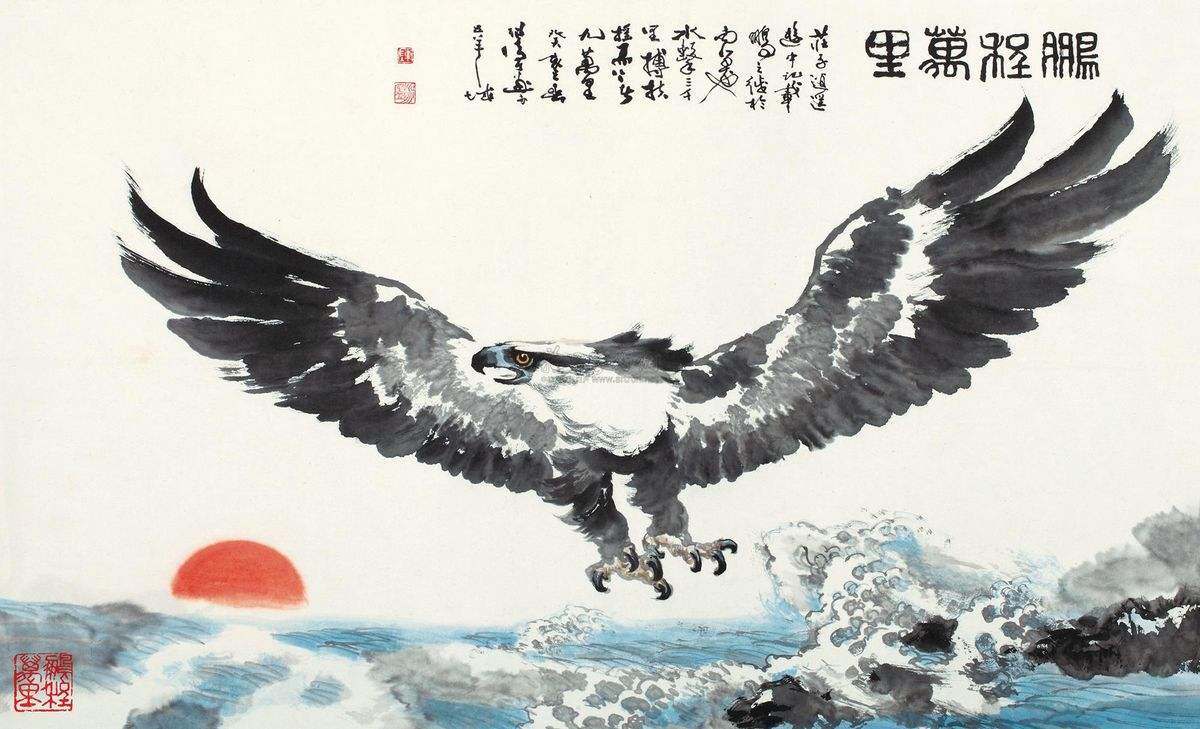
The first 7 ("inner") chapters are the essence of the Zhuangzi: the butterfly appears in chapter 2 and the giant bird below appears in Chapter 1 and those two chapters are the best.
Geographically speaking, the Tao Te Ching is associated with the western gate of China. It was said to have been written in a hurry by Laozi before he departed through the Hangu Pass in the west of Henan Province. This myth has always had a tremendous appeal and not just in China. It's said that Laozi may have been abandoning China in frustration at the corruption and chaos of the Zhou kingdom, or perhaps he just needed to get back to nature, or perhaps he just wanted to disappear at the end of the world. This myth is appealing today to those of us living in countries that are failing. The myth is about choosing to go into exile, and many are doing that today by leaving the U.S.
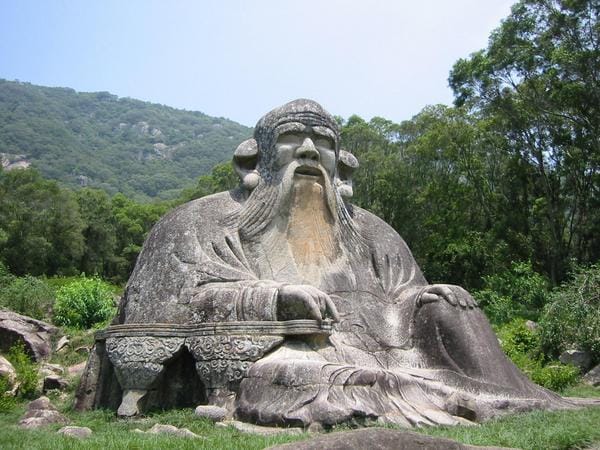
But, the myth is also a metaphor for death. Devotees insist on personalizing, deifying and romanticizing Laozi - like with the statue below - and I suppose I'm ok with that, because it's just a stone memorial after all.
In stillness all under heaven rests.