The Virgin of Guadalupe and President Sheinbaum

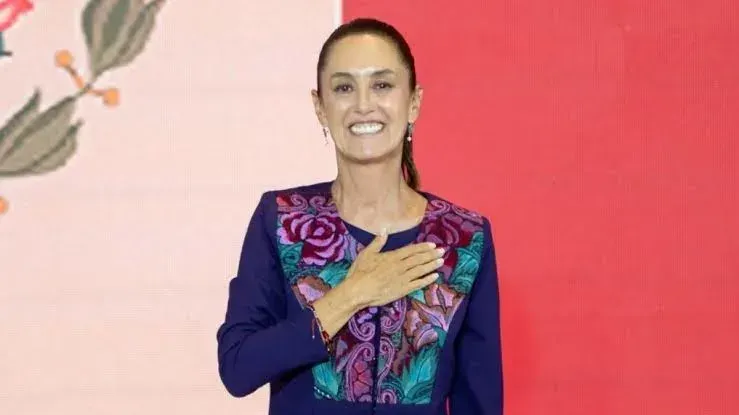
When México's President Claudia Sheinbaum wears clothing with red roses in the design, what is she saying? This is a seriously contested space in México today and has been ever since Frida Kahlo proudly appeared in Oaxacan Tehuana dress. With Sheinbaum, is it cultural appropriation by the new Morena elites or respect for México's indigenous cultures and religion? It depends who you ask.
Some say Sheinbaum, presidenta de los Estados Unidos Mexicanos, is evoking the Virgin of Guadalupe: the roses represent the miracle of her apparition to Juan Diego on Tepeyac Hill in 1531 (here). Sacrilege! Others, defending the president, argue that she is only celebrating indigenous handmade clothing designs from states like Oaxaca, Chiapas and Tlaxcala, and giving a voice to the people.
This issue came to a crisis point during the 2024 presidential campaign that Sheinbaum ultimately won easily. In one of the debates, rival candidate Xóchitl Gálvez accused Sheinbaum of "political opportunism" for wearing a skirt featuring the Virgin (it's shown below), despite allegedly not believing in God. I can understand Gálvez' position, but it struck me as a bit unfair and a veiled allusion to Sheinbaum being Jewish.
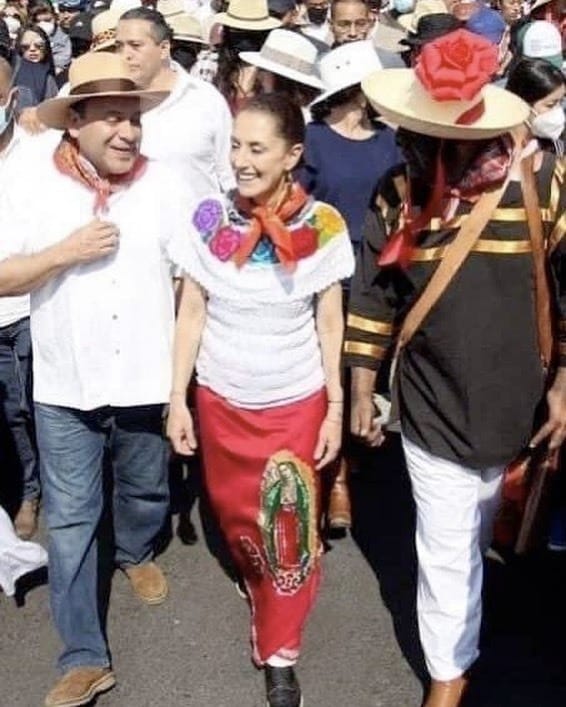
Sheinbaum defended herself. She argued that she wears such clothing because they are gifts from the people and she wants to promote indigenous textiles and women designers (as does Gálvez, in fairness), but what she didn't say (understandably) is that this policy is opposed to "White" male corporate and conservative interests. On this occasion, back in 2022, Sheinbaum had attended a traditional festival in Peñón de los Baños in Mexico City and some of the locals placed this red skirt (with the image of the Virgin of Guadalupe) on her and she wore it out of respect.
But I find the whole debate ridiculous. Not only was Sheinbaum obligated to accept the clothing offered to her because it would have been an appalling snub otherwise, but as a senior representative of Morena, she has always been actively promoting the rights of indigenous people, including the indigenous women artists who designed her clothes, AND the Virgin of Guadalupe as the country's premier religious icon. Out of caution, Sheinbaum hasn't worn anything with the Virgin on it since then, but the roses are still there and are worn proudly.
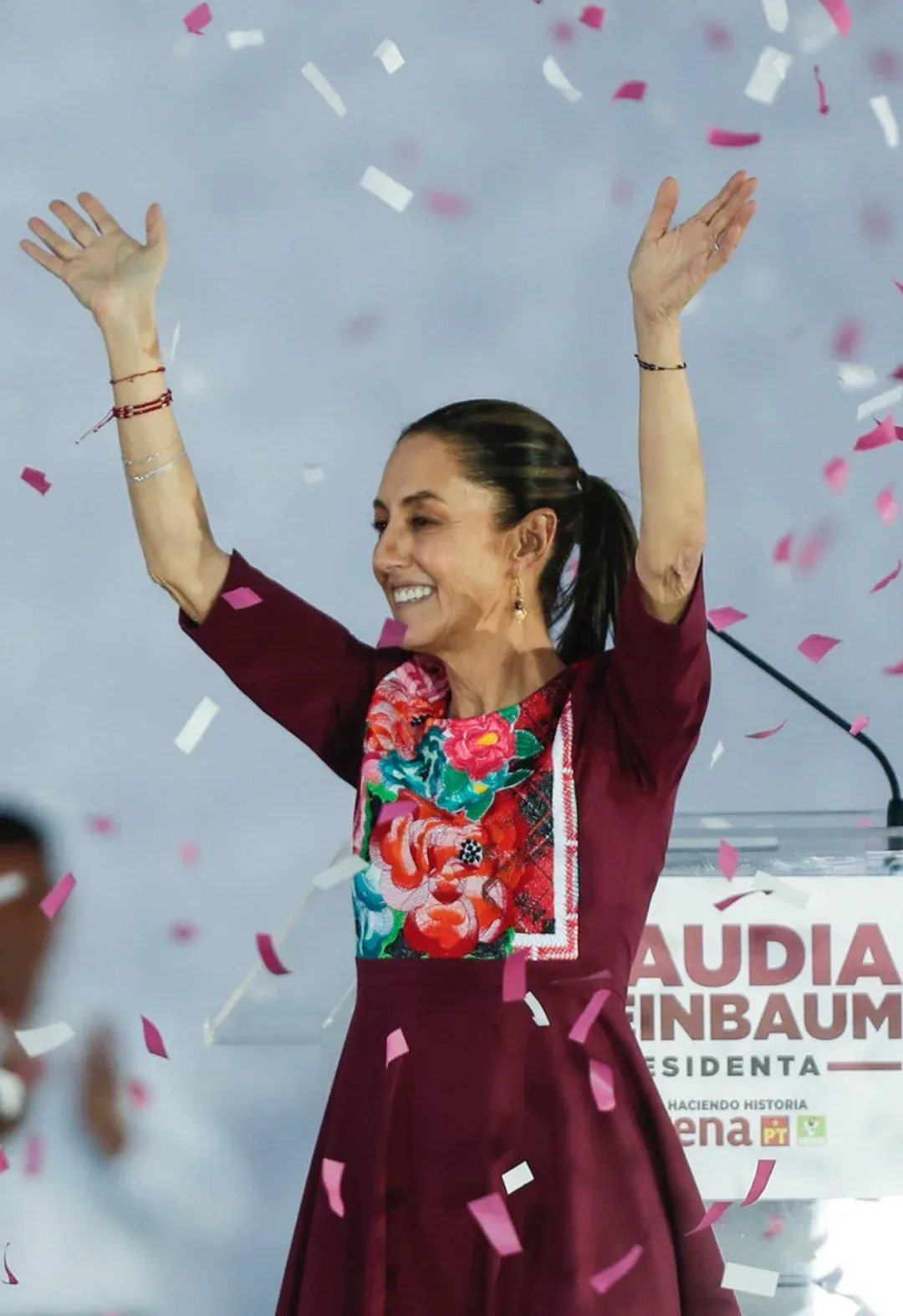
The importance of a woman president of Mexico wearing the clothing designs of indigenous women artisans cannot be overstated in a country still coming to terms with its colonial past, when even a generation ago it was (said to be) a bit embarrassing to be seen in such clothes. These designers are helping elevate indigenous textile arts not just among Mexicans but in the international community as well, and this is absolutely the right thing to do - see the Denver exhibit below. If designers include roses and the Virgin, then so be it. Sheinbaum's main designers so far include Claudia Vásquez Aquino (Zapotec) and Virginia Verónica Arce Arce (Nahua), as well as seamstress Olivia Trujillo, but it's fair to say that many other artisans (Huichol, Mayan, etc.) are now flourishing too, with all the international attention.
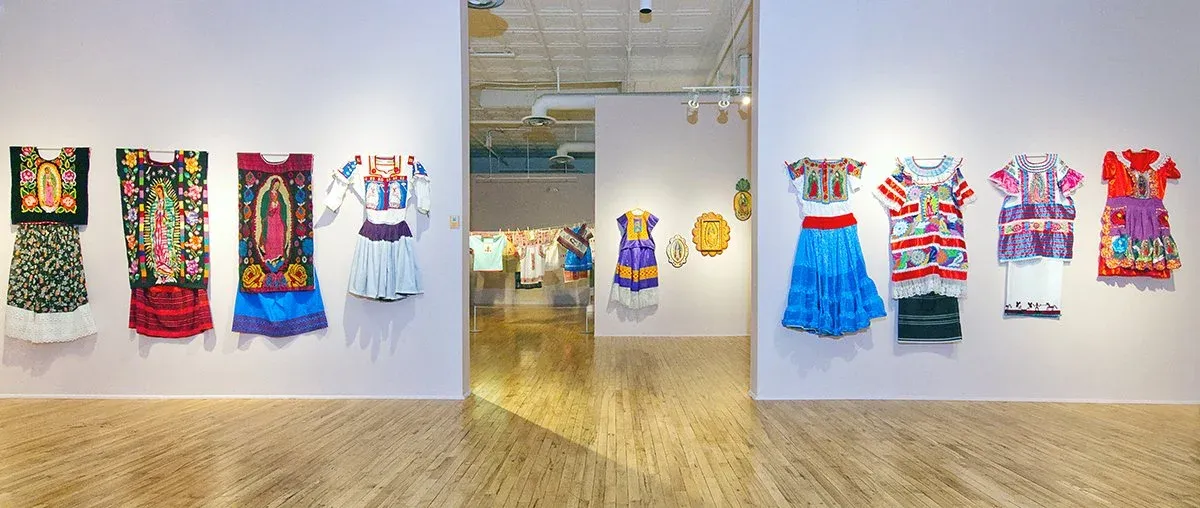
Even better, the Sheinbaum administration and its predecessor have taken legal action against major corporations (notably Adidas, but also Ralph Lauren, Isabel Marant, Shein, Zara, Carolina Herrera, Anthropologie) who have been accused of appropriating indigenous designs without compensation. This approach appears to be working, as public apologies and financial compensation have followed. Not only that, I like that Sheinbaum’s team often repurposes her clothes.
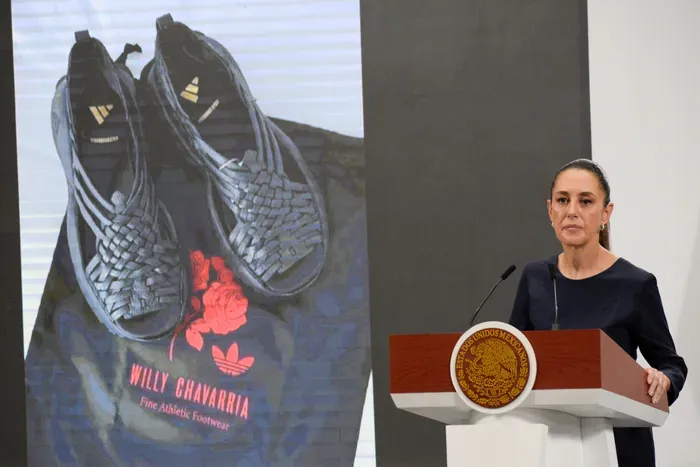
Finally, I like the way Sheinbaum has elevated the importance of respect (respeto) through inverting the traditional deference to power. I have waded through many media articles complaining she is not doing enough in tackling corruption, crime and the cartels, or lifting the lid on "the disappeared," etc. etc. This is especially the case with articles from outside Mexico, like recent, backwards looking articles in the Guardian and New York Times.
While those issues do matter, politics is extremely difficult everywhere in the world these days and it's the wise politician who delivers what can be delivered, especially in health care, water and electrical infrastructure, education and culture (including the World Cup), for the people who have the least. None of this gets reported in the U.S. media and Sheinbaum does it with style and grace. Perhaps we could say that the greatest gift any politician can have is to help people feel good about themselves.