When did St. Sebastian discover he was gay?

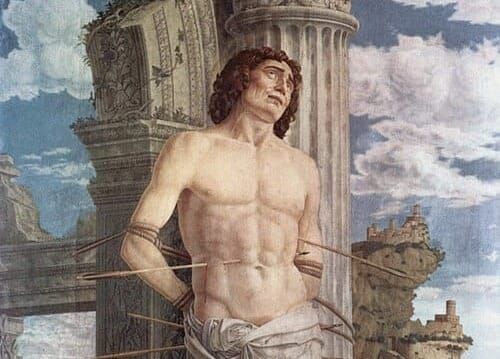
Saint Sebastian wasn't always gay. In his early years he was a Roman soldier and militant Christian in the Pete Hegseth style but, after making himself unpopular converting people, the authorities shot him full of arrows. He didn't die. That came later, when he was clubbed to death in 288 in Rome, on the orders of the emperor Diocletian. Or so said Saint Ambrose and later Christian writers.

But, by the Renaissance, clearly Sebastian had changed. Following the lead of Christ, in the 1470's, he began modeling for artists like Andrea Mantegna (up top) and Sandro Botticelli (below), drawn by his preference for displaying himself nude, penetrated by arrows. This aroused the interest of many artists, because it was certainly better material than the Crucifixion, and they chose to depict his martyrdom with a passivity, an indifference to fate, and even a spiritual bliss. Do you find these paintings homoerotic? I don't particularly, but a BBC writer asked recently whether a transition had begun occurring here in nude male paintings - from religious worship to homoerotic.
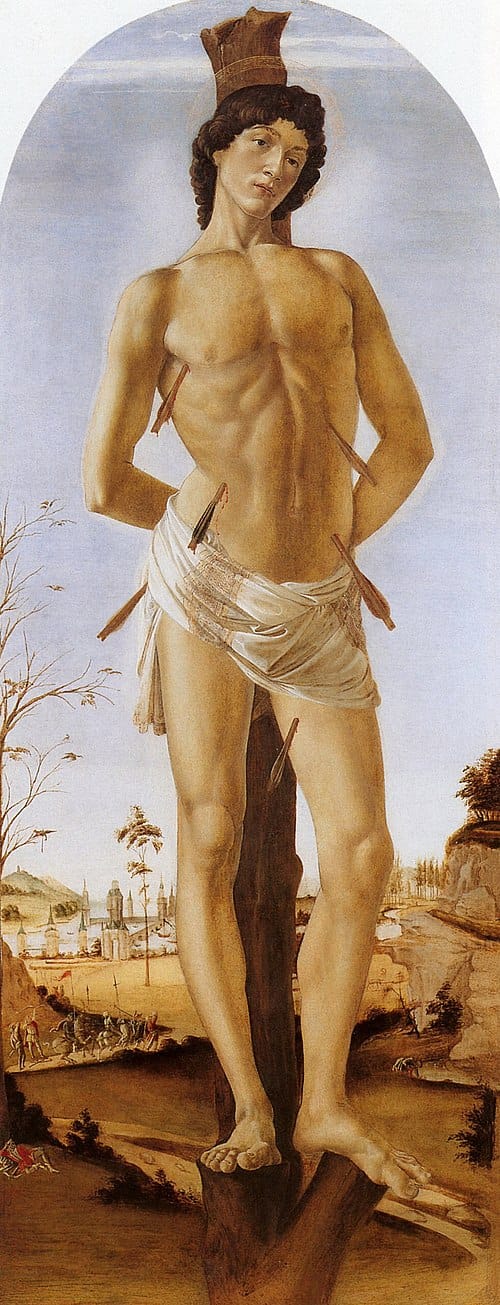
Side note: by placing the above painting in Santa Maria Maggiore in Florence during plague outbreaks, Botticelli also elevated Sebastian’s role as a patron saint against the plague, so more on that in a minute. As Sebastian rolled into the next century, there was less passivity and more prose in his pose. The paintings below are from 1525 and circa 1530:
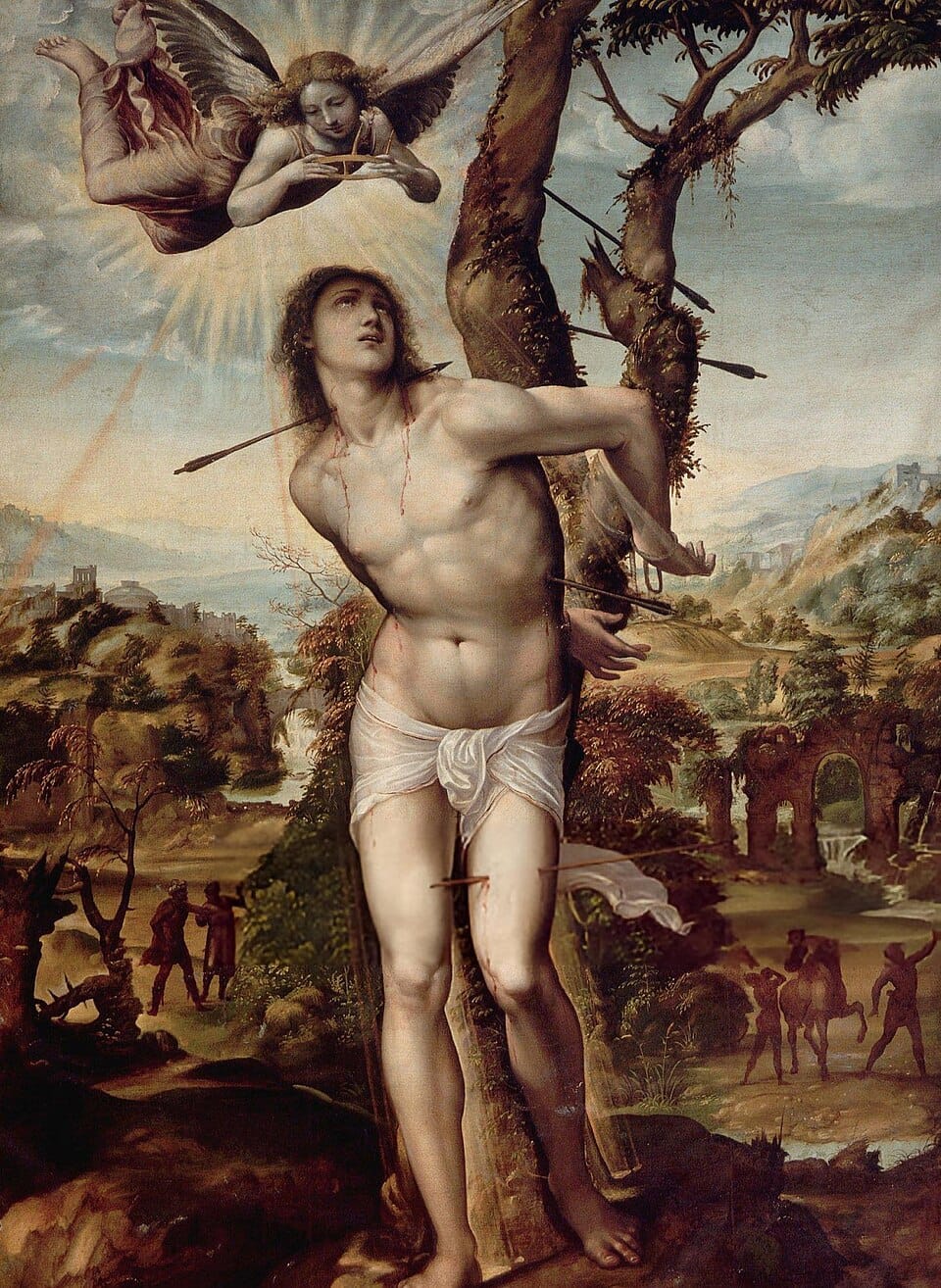
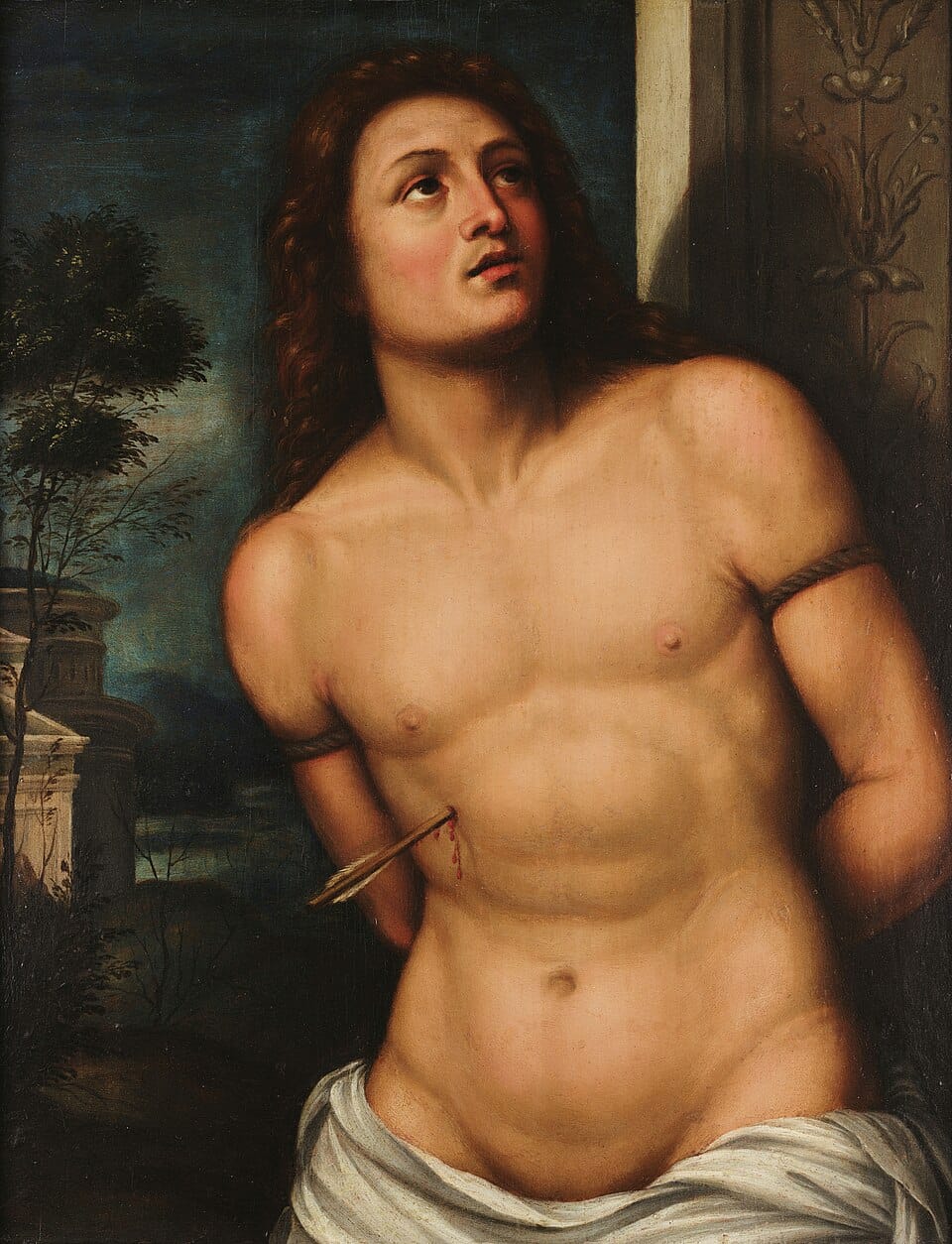
The loincloths Sebastian wore are called "drapery swag," which really is a fabulous term, isn't it? Later that century, when Sebastian modeled for El Greco, that painter stepped things up a bit with this portrait (below) of 1577. Has Saint Sebastian become erotic here? That loincloth is almost off entirely.
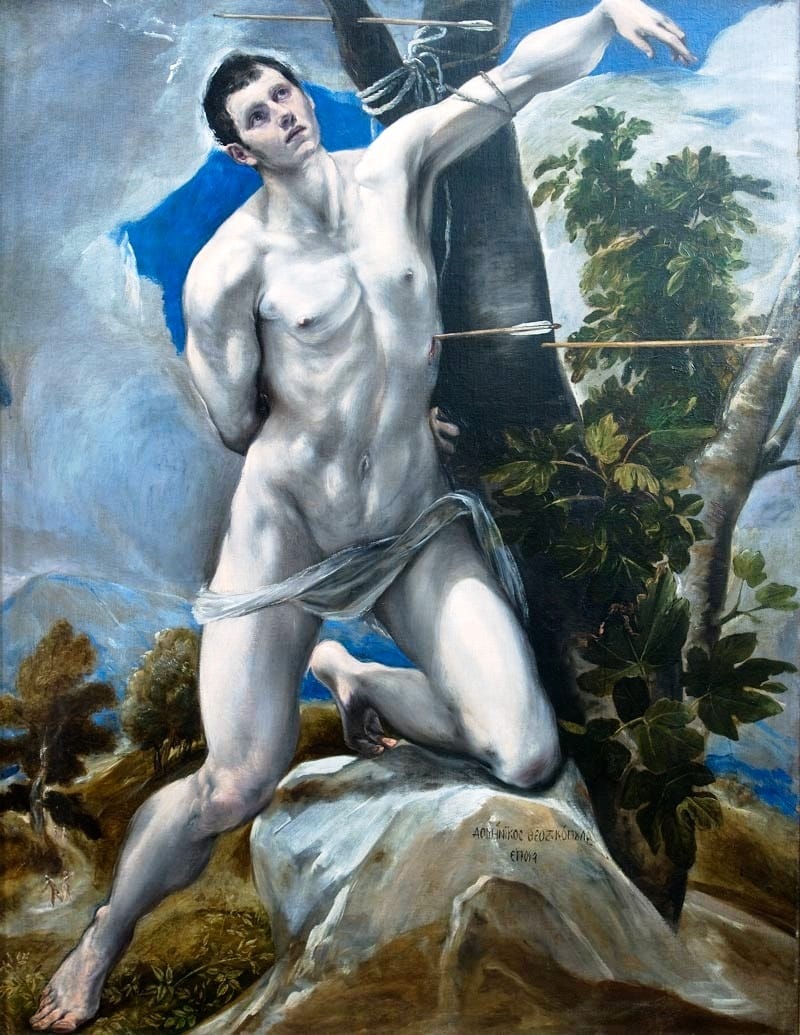
Question: at what point does Sebastian display a desirable masculine body? Most art historians say his makeover was complete by the early 1600's. Now it was vulnerability and penetration and even ecstasy that were being conveyed, rather than bewildered indifference, and this gives these paintings an obvious homoerotic dimension. I mean, in the painting below, why place the arrow there? Were the archers conveying a coded message?
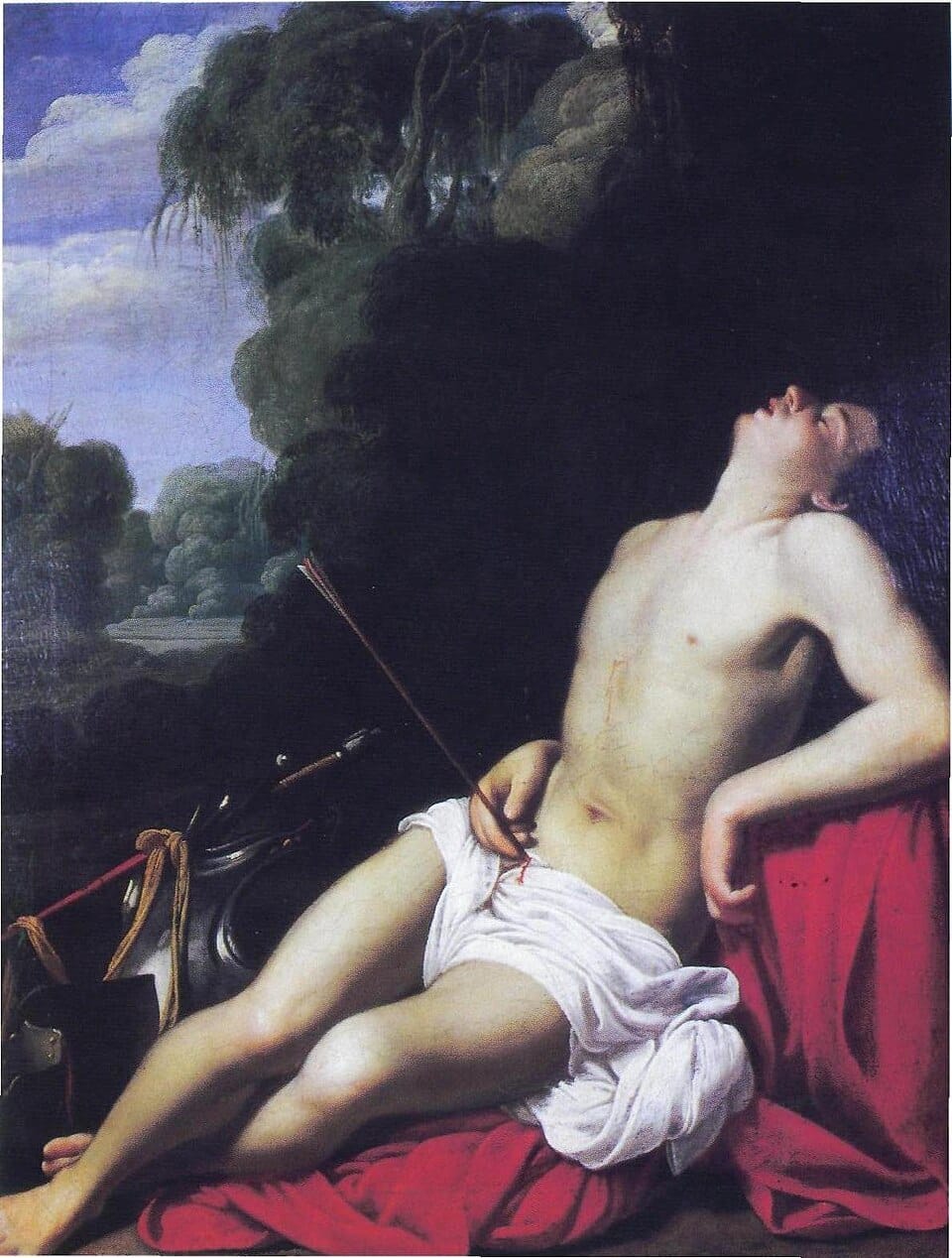
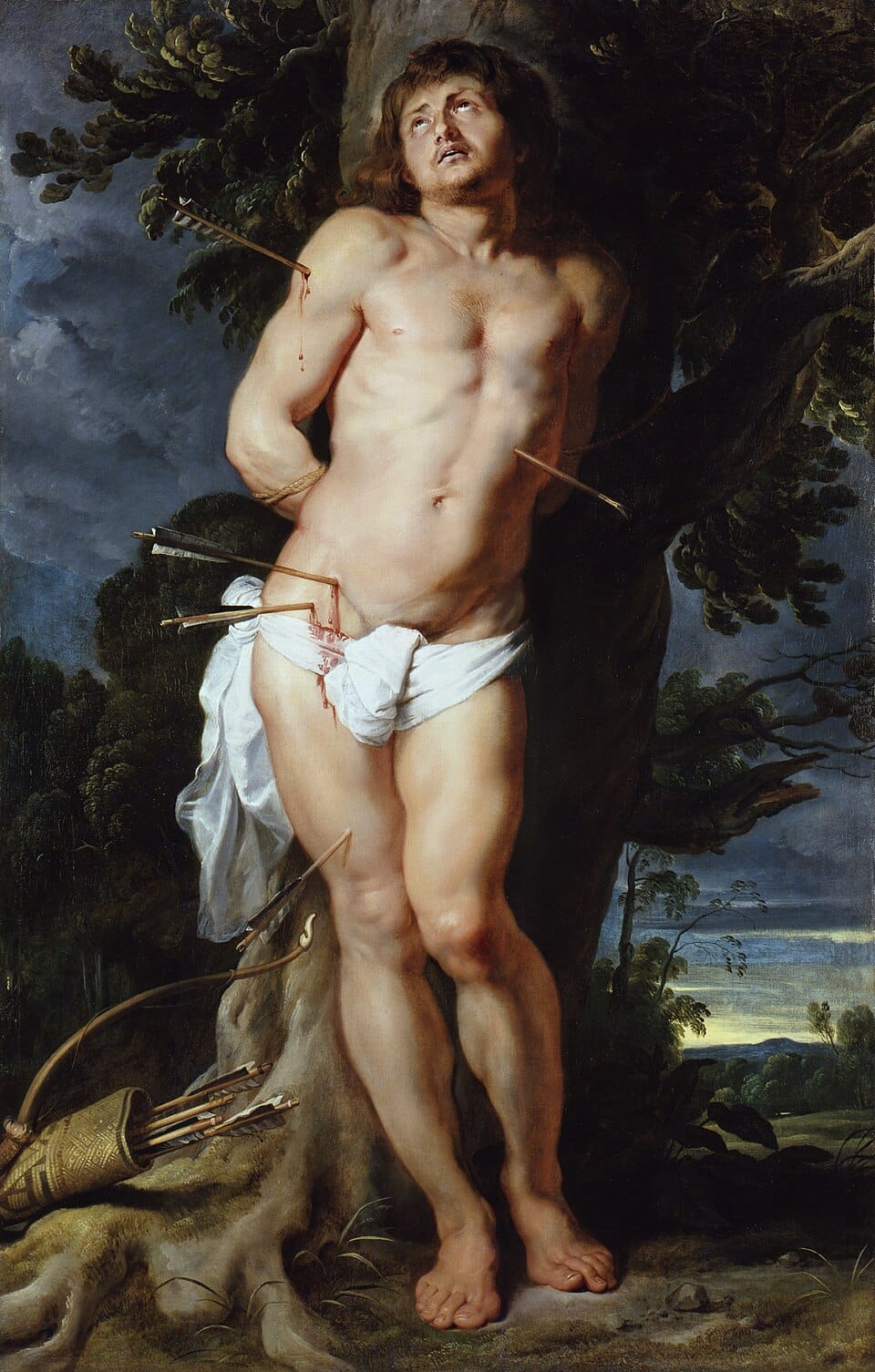
At this time, Saint Sebastian posed mainly for Guido Reni - at least six times - the 1615 version immediately below is the most recognizable. This painting has been adored by Oscar Wilde, Walter Pater and other gay artists throughout history and the homoerotic appeal appears to lie in the androgyny and the upward gaze as if he's pleading and there are the first hints of BDSM. Below that is a later painting by Reni, apparently inspired by Mark Zuckerberg.
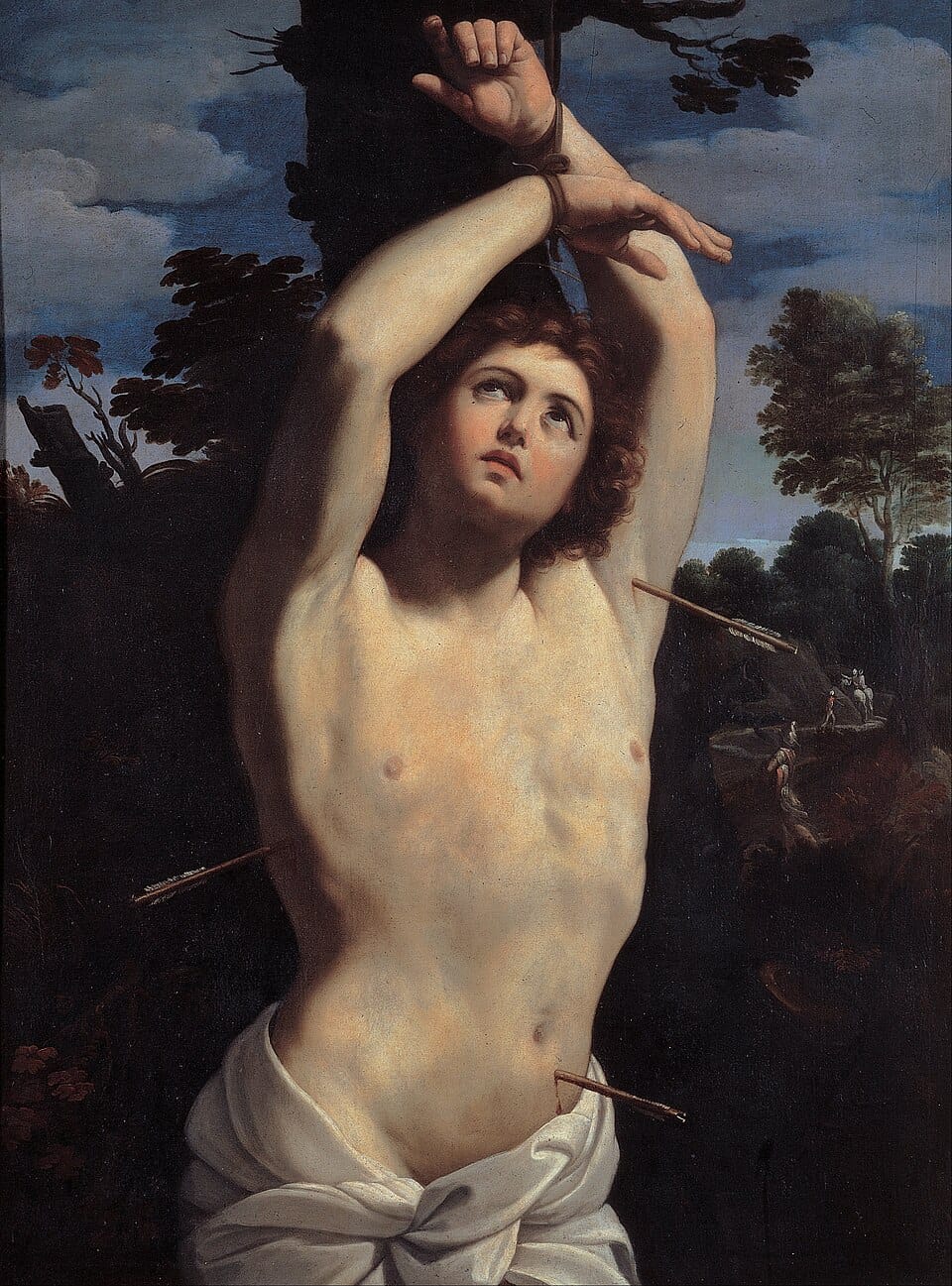
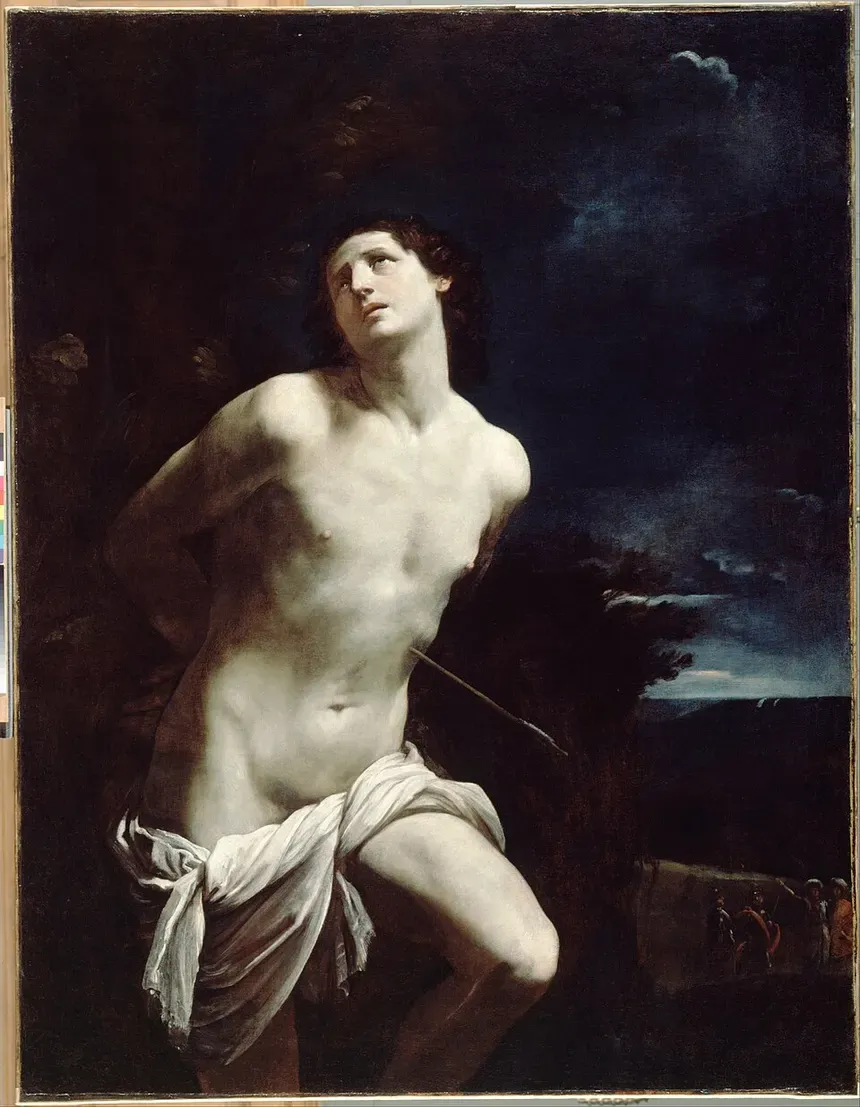
Finally, we have Nicolas Régnier's Sebastian. The influence of Caravaggio on most painters of the early 1600's is most noticeable here, in the exquisite lighting and composition, and I think this is one of the best from the Caravaggisti.
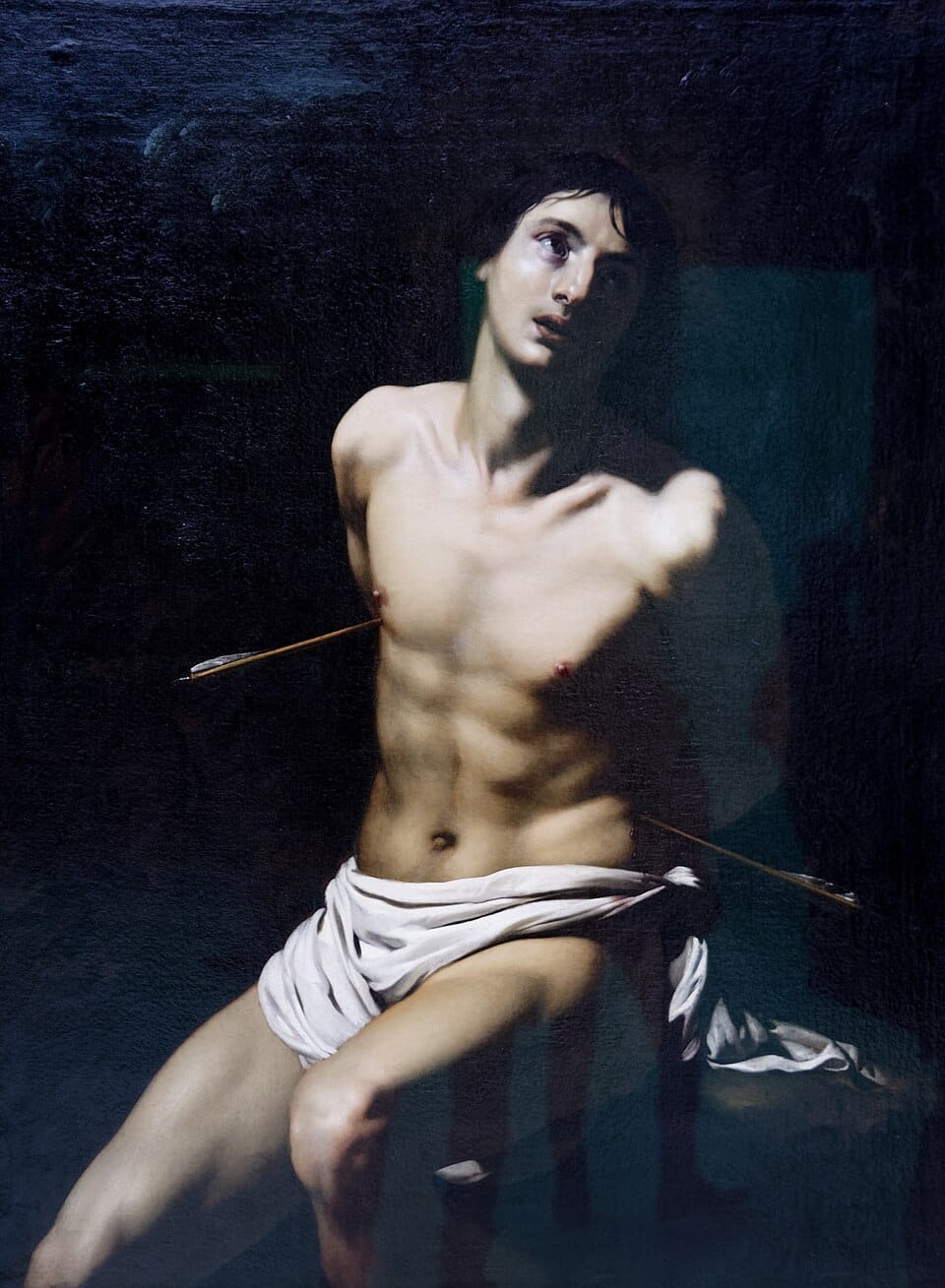
So, at this point, Saint Sebastian is clearly gay. The iconography of (male) beauty and his penetration by arrows has resonated with the LGBTQ+ community ever since, especially during the AIDS crisis, when Sebastian's role as a plague protector seemed very apt. Now, in 2026, he's everywhere, inspiring artworks and performance pieces on martyrdom, trans top surgery, and so on. Proud and out.