Women Power: Aristotle and Phyllis the dominatrix

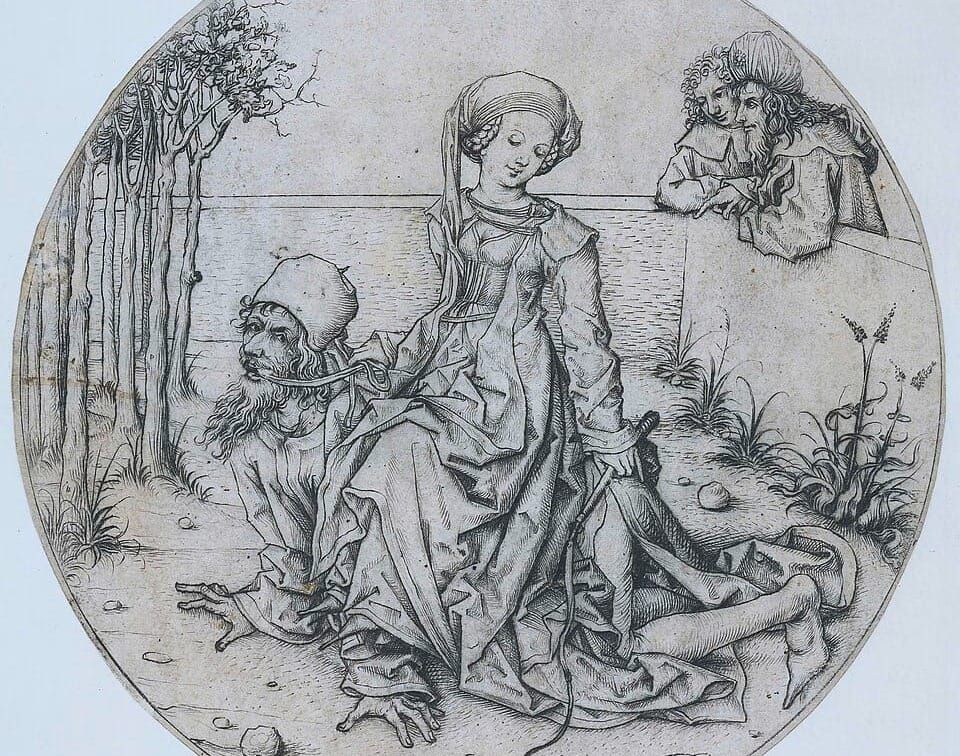
The tale of Phyllis and Aristotle is about how women can dominate intellectual men like Aristotle, physically and emotionally. She even has a leash on him and a whip! Perhaps he likes it? The tale itself belonged to a very popular literary and artistic genre in Europe from the 12th century until the 16th century, and it's sometimes dubbed "the battle for the trousers" (as in, who wears the pants in this marriage?).
Back in the day, Aristotle warned his student, Alexander the Great, to concentrate on his studies, not on the beautiful Phyllis (Phyllis is in fact a Greek name). This annoyed Phyllis who got her revenge on Aristotle by seducing him and riding him like a horse while Alexander watched. Lust always triumphs over intellect, it would seem.
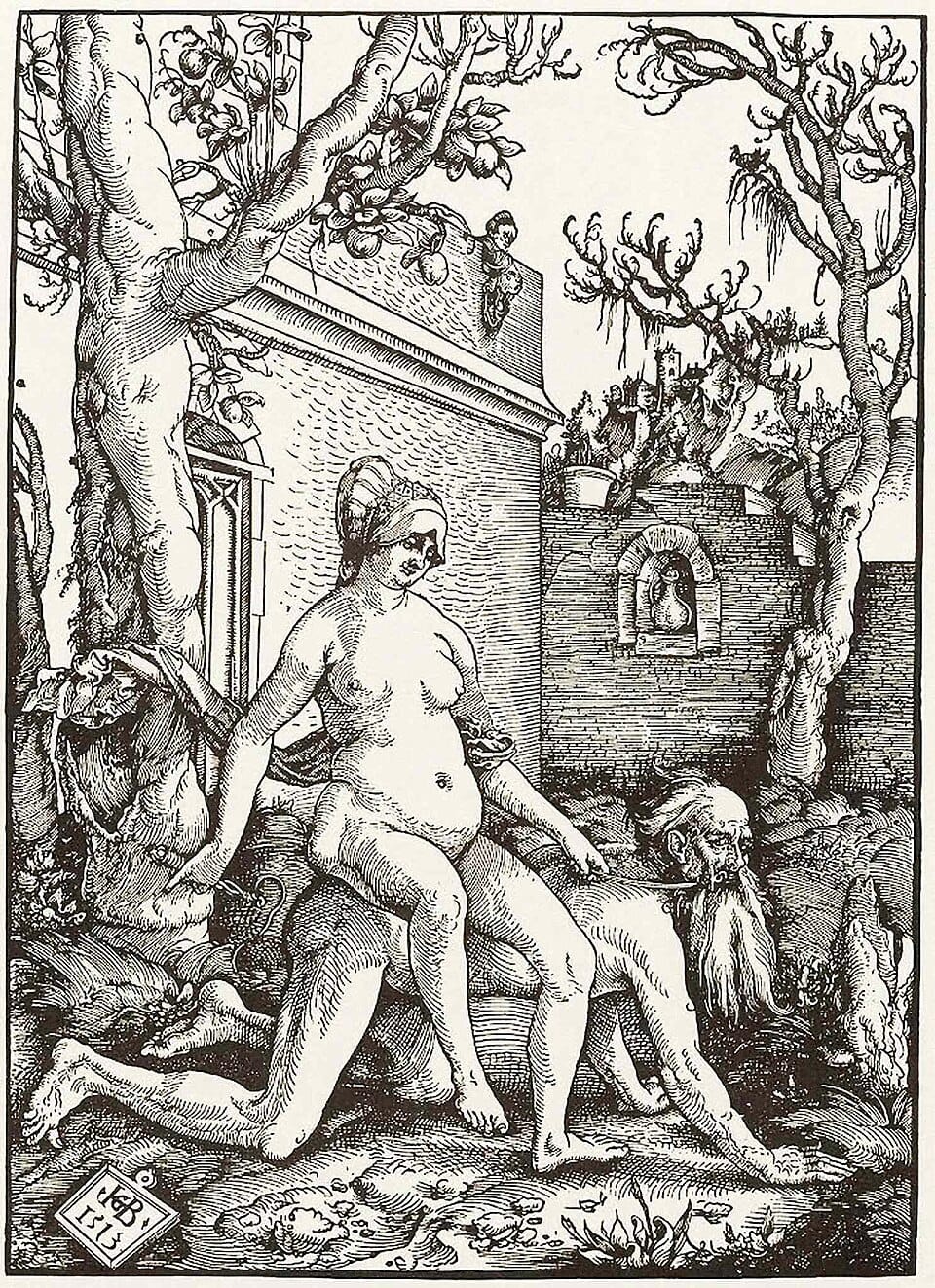
Spoilsport historians say this story was a medieval French or German morality tale and that it has "no connection to the historical Aristotle." They attribute it to an influential 13th century French priest named Jacques de Vitry, whose goal was to warn men not to allow themselves to be dominated by women. But later writers and artists - presumably the married ones - had more fun with it, seeing it as a satire on courtly love and perhaps their own marriages. After all, who doesn't enjoy a good story of a dominatrix?
The genre was especially popular in Germany and the Netherlands, taking on the name Weibermacht (literally "women's power") and attracting such artists as Master of the Housebook (top image), Hans Baldung Grien (image above), Albrecht Dürer, Lucas Cranach the Elder, Albrecht Altdorfer and Lucas van Leyden. Below is an extravagant bronze "aquamanile" on the subject; it was for the affluent to wash their hands before eating. Notice the spout on the front.
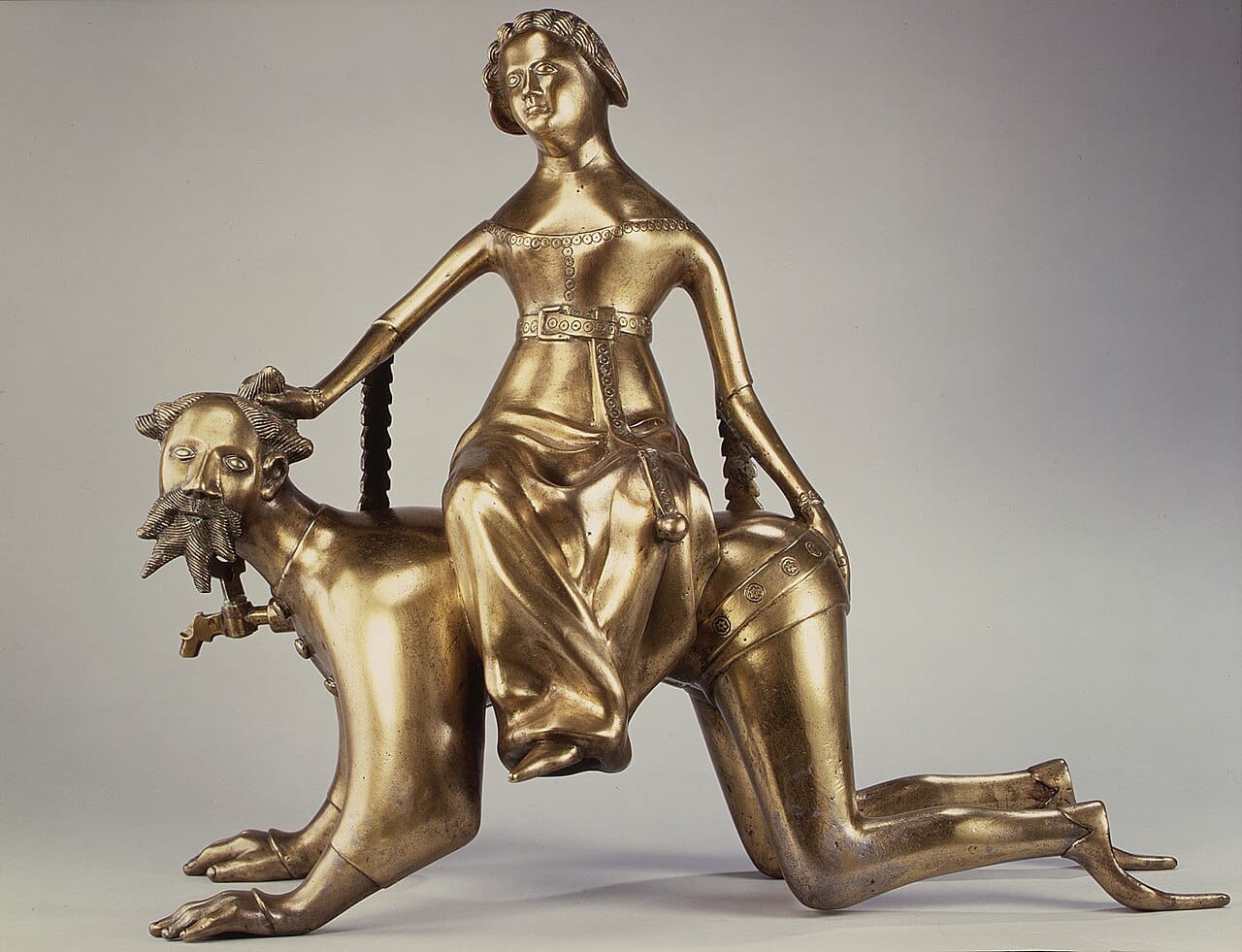
Although the genre appeared to celebrate women's power over men, some, like Christine de Pizan around 1400, saw it as misogynistic. She was proved right to the degree that the genre progressively lost its sense of humor and transformed into tropes of dangerous Biblical women, husband beaters, and gratuitous nudity. But, the modern view is that the genre can be viewed either positively or negatively, and I agree with that.
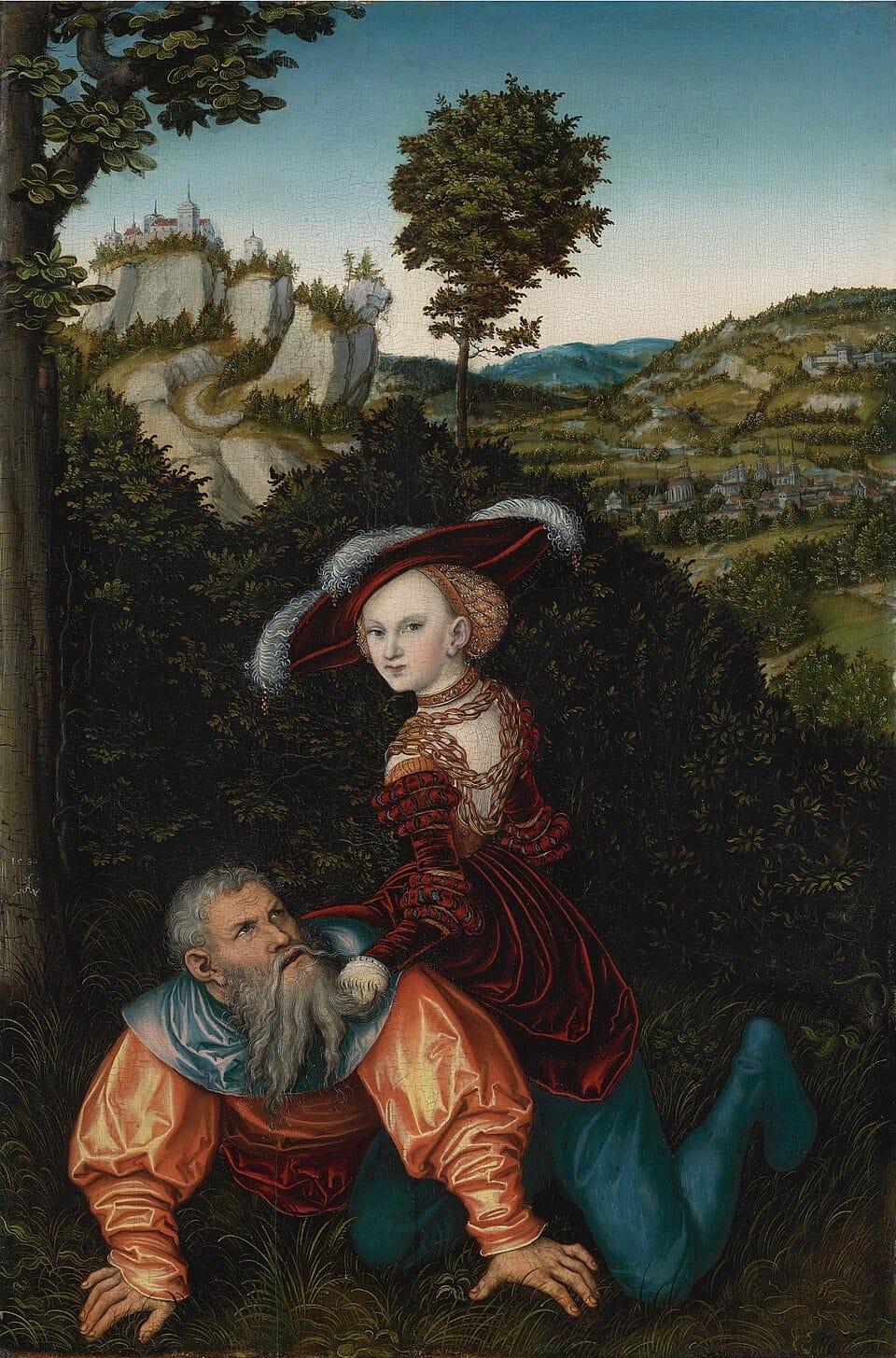
It's important to note that there are many variations on the theme and almost all of them come from the Old Testament Bible. Why is that? Is there a message in there somewhere, mostly about the power of ancient women - Jewish, Egyptian, Phoenician and so on - or perhaps as projections of male fears?
Adam and Eve - did she really manipulate Adam?
Delilah betraying Samson by cutting his hair
Joseph and Potiphar's wife
Jezebel and Ahab
Jael and Sisera - Artemisia Gentileschi tackled that story
Lot and his daughters - all the German painters tackled that one
Judith beheading Holofernes and Salome and John the Baptist's head
David and Bathsheba
and so on...